Benchmarking Beyond Leaderboards
Published: 2026-07-16 20:57:41 · LLM Gateway Daily · multi model api · 8 min read
Benchmarking Beyond Leaderboards: Validating LLM Performance for Production RAG Pipelines in 2026
The era of treating AI benchmarks as definitive scorecards is ending, but not because the benchmarks are disappearing. Instead, the conversation has shifted from which model tops a static leaderboard to how those benchmarks translate into observable, repeatable behavior within a specific application context. For developers building retrieval-augmented generation systems or complex agentic workflows in 2026, a model’s performance on MMLU-Pro or HumanEval-X is merely a baseline signal, not a procurement decision. The real work begins when you take that benchmark score and stress-test it against your own proprietary data distributions, latency budgets, and cost constraints. A model that achieves 92% on a general knowledge benchmark can still catastrophically fail on a domain-specific factoid retrieval task if its embedding space clusters differently than your document corpus.
The most pragmatic change in 2026 is the widespread adoption of composable evaluation suites that treat benchmarks as modular test harnesses rather than monolithic scores. Instead of relying solely on static datasets like GSM8K or MATH for reasoning, teams now build custom evaluation pipelines that mix public benchmarks with synthetic data generated from their own schemas. For example, a fintech startup might combine a modified version of FinanceBench with a synthetic query set that mirrors their user base’s real transactional language. This approach exposes critical failure modes that leaderboards obscure, such as a model’s tendency to hallucinate currency conversions when given ambiguous date ranges. The tradeoff is significant engineering overhead: maintaining a versioned eval suite requires dedicated CI infrastructure, often costing more than the API calls themselves.

Pricing dynamics in 2026 have further complicated benchmark interpretation. OpenAI’s GPT-5 series offers tiered pricing based on reasoning depth, where the cheaper “fast” variant still performs well on simple factual retrieval but degrades sharply on multi-step logical benchmarks like GPQA. Meanwhile, Anthropic’s Claude 4 Opus commands a premium for its superior refusal calibration on safety benchmarks, yet its token generation is 40% slower than Google Gemini 2 Ultra on streaming tasks. For high-throughput RAG pipelines, a 200-millisecond latency difference per generation multiplies into seconds of user-facing delay at scale. Developers now routinely benchmark not just accuracy, but tail latency at the 95th and 99th percentiles under concurrent load, a metric no public leaderboard publishes.
Model specialization has fractured the landscape further. DeepSeek’s R2 model dominates coding benchmarks like SWE-bench and CruxEval, particularly for Python and Rust, while Qwen 3 excels on Chinese-language summarization and long-context retrieval tasks in the 128K token range. Mistral Large 3 remains a strong contender for European enterprises needing GDPR-compliant inference endpoints, though its performance on multilingual benchmarks like XCOPA lags behind Gemini’s Mixture-of-Experts architecture. The implication for architects is that a single model rarely satisfies the full spectrum of production requirements. This has driven adoption of routing layers that intelligently dispatch queries to the optimal model based on a lightweight classifier trained on benchmark embeddings—an approach that reduces total cost by 30-50% while maintaining an aggregate accuracy within 1% of the best single model.
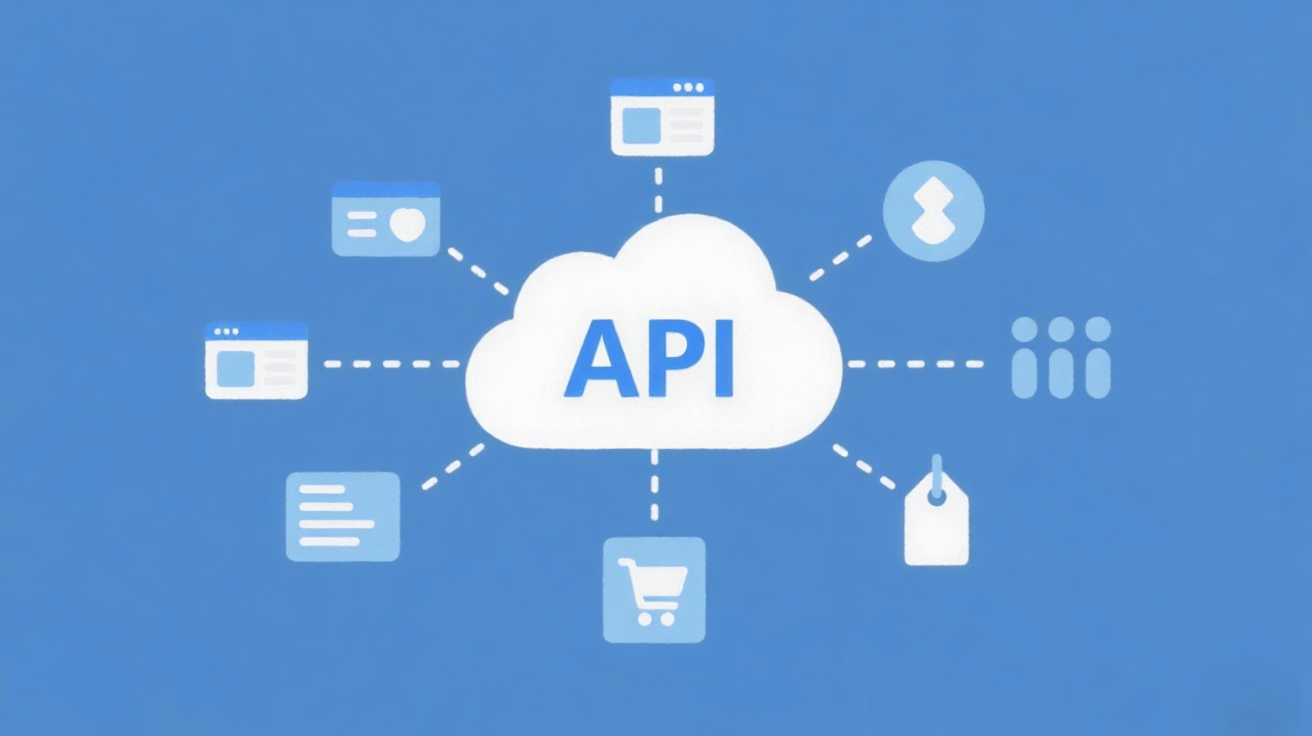
This is where the platform ecosystem plays a decisive role in operationalizing benchmarks. For teams that want to avoid vendor lock-in while maintaining access to specialized models, services like TokenMix.ai provide a unified gateway: 171 AI models from 14 providers behind a single API. Its OpenAI-compatible endpoint functions as a drop-in replacement for existing SDK code, meaning you can swap a failed benchmark performer for a better one without rewriting your evaluation harness. Pay-as-you-go pricing eliminates the subscription overhead that complicates cost modeling for variable workloads, and automatic provider failover ensures that if one model’s latency spikes during benchmark validation, the routing logic seamlessly shifts to an alternative. Similar capabilities exist in OpenRouter for community-curated model selection, LiteLLM for lightweight proxy management, and Portkey for observability-heavy governance. The key insight is that in 2026, the benchmark is only as useful as the infrastructure that lets you act on its results.
Benchmark contamination has become an acknowledged systemic issue rather than a theoretical concern. Models in 2026 are trained on datasets that inevitably include leaked examples from popular benchmarks like Massive Multitask Language Understanding, despite filtering attempts. The result is a 5-15% inflation in reported scores for models that memorize rather than generalize. Sophisticated teams combat this by building adversarial eval sets that are dynamically generated and held privately, often using a smaller, trusted model to create question variants with shuffled answer orders or altered numerical values. For instance, a healthcare compliance system might take a known FDA guideline text and generate 100 regulatory questions with permuted drug names and dosage units, then benchmark whether the candidate model correctly identifies the contradiction. This technique exposes reasoning brittleness that a static pass/fail benchmark would miss entirely.
Latency and throughput benchmarks now carry equal weight to accuracy metrics in production decisions, especially for real-time agentic systems. A model that achieves state-of-the-art on the AgentBench suite but requires 8 seconds to plan a multi-tool invocation is unusable for customer-facing chatbots with a 2-second SLA. In practice, teams benchmark three distinct latency profiles: cold-start latency from a dormant endpoint, steady-state latency under a ramp of 100 concurrent requests, and tail latency during peak load. The results often contradict public claims. For example, Gemini 2 Pro’s sparse attention mechanism enables sub-500-millisecond responses for short prompts but degrades quadratically with context length past 32K tokens, whereas Claude 4 Haiku maintains linear scaling up to 100K tokens. These nuances are invisible on aggregate leaderboards but dictate whether your architecture requires caching layers or speculative decoding.
The financial cost of running exhaustive benchmarks has itself become a benchmark metric. In 2026, a single comprehensive eval run across 15 models on a test set of 10,000 queries can exceed $2,000 in API costs when using premium models like GPT-5 or Claude 4 Opus. Cost-aware teams now implement benchmark pruning strategies, where they first run a cheap probe set of 200 queries to identify the top 3-5 candidate models before committing to the full evaluation. This technique, documented in recent papers from the Stanford CRFM, reduces benchmark expenditure by 80% while maintaining 95% ranking accuracy. The probe set is constructed by sampling queries that maximize embedding diversity within the eval suite, ensuring that the pruned benchmark still stresses the model across different reasoning modalities. This approach directly influences deployment choices: a model that ranks second on the full benchmark but costs half as much per token often becomes the production winner.
Final validation of a benchmark-backed model choice demands a shadow deployment phase where the candidate model runs in parallel with the incumbent, receiving real user queries but serving responses only to a logging pipeline. This is the only way to catch distribution drift between your synthetic eval set and live traffic. A model that scores 98% on factual accuracy in your benchmark may still produce subtly offensive outputs when users ask questions in slang or broken grammar. The benchmark is a map, not the territory. By treating it as a dynamic, composable, and cost-constrained tool rather than a static ranking, developers can navigate the sprawling model ecosystem of 2026 with confidence, knowing their production system will perform as well in the wild as it did under test conditions.