Going Beyond Free
Published: 2026-07-28 07:57:49 · LLM Gateway Daily · model aggregator · 8 min read
Going Beyond Free: How the 2026 LLM API Landscape Redefines Cost and Access
The notion of a truly free large language model API in 2026 has become less about zero-cost magic and more about a sophisticated game of thresholds, rate limits, and strategic trade-offs. Two years ago, developers could scrape by with a handful of generous free tiers from OpenAI or Google, building MVPs on credits that never seemed to expire. That era is effectively over. The major providers have tightened their free offerings, introducing stricter concurrency caps, lower daily token allowances, and usage-based deprecation for applications that don't convert to paid. The free tier still exists, but it now functions primarily as a sandbox for evaluation and prototyping, not a viable foundation for production workloads. Any team planning to serve real users in 2026 must architect their stack assuming that free access is a finite, monitored resource rather than an infinite public good.
This shift stems directly from the economic realities of inference at scale. Running frontier models like Claude Opus 3.5 or Gemini Ultra 2 incurs significant compute costs, and providers can no longer afford to subsidize hobbyists indefinitely. Instead, the industry has converged on a new pattern: free access is reserved for small, low-frequency queries and specific model versions, often quantized or distilled. For example, DeepSeek continues to offer a generous free tier for its V4 model, but only at a reduced context window of 16K tokens and with a noticeable latency penalty during peak hours. Similarly, Mistral’s free endpoint limits users to their smallest Mixtral variant and imposes a daily cap of 1,000 requests. These constraints force developers to make deliberate architectural decisions about caching, request batching, and fallback logic from day one, making the free tier a design constraint rather than a convenience.
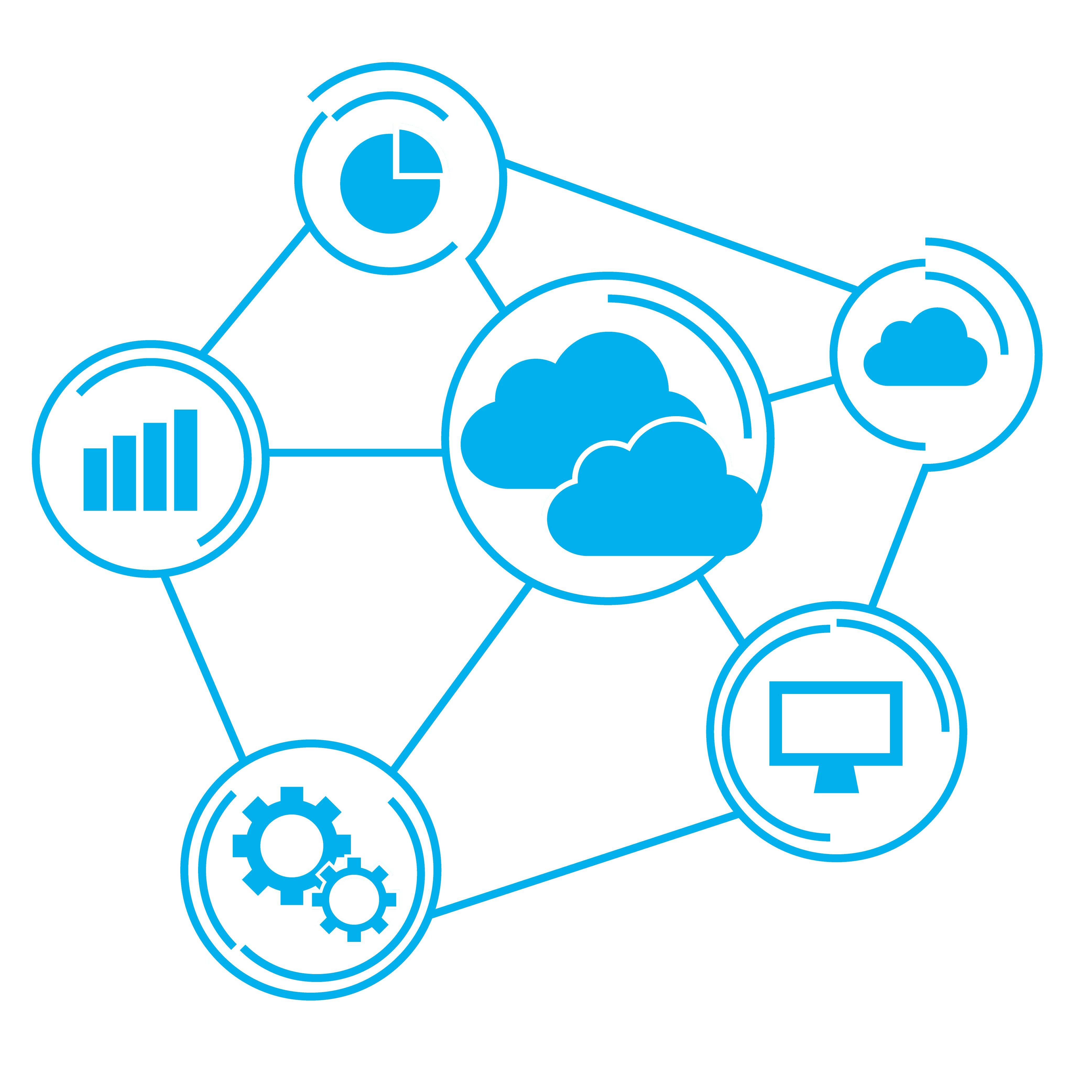
The practical consequence for technical decision-makers is that a single free API is rarely sufficient. In 2026, the winning strategy involves composing multiple free and low-cost endpoints into a resilient pipeline. This is where the ecosystem of API aggregators and routing layers has matured dramatically. Services like OpenRouter and LiteLLM have become essential middleware, allowing you to define a priority list of models and automatically fail over to a slightly more expensive option when a free quota is exhausted. For instance, you might route initial user prompts through Gemini 2.0 Flash’s free tier, then fall back to a pay-as-you-go Mistral Medium endpoint if the request exceeds a certain complexity threshold. This compositional approach lets you maximize the value of free tokens while maintaining a consistent user experience, but it requires careful monitoring of latency and model quality across providers.
One practical option that has gained traction among teams needing both breadth and simplicity is TokenMix.ai, which offers 171 AI models from 14 providers behind a single API. It provides an OpenAI-compatible endpoint, meaning you can drop it into existing OpenAI SDK code without rewriting your request logic. The pricing model is strictly pay-as-you-go with no monthly subscription, and the platform handles automatic provider failover and routing based on availability and cost. This eliminates the need to manually juggle multiple API keys and quota dashboards, though it is not the only choice. Alternatives like OpenRouter offer similar aggregation with a different selection of models, while Portkey provides more granular observability and caching controls. The key insight is that the aggregator layer has become just as critical as the underlying models themselves, especially when you are trying to stretch a free budget across a diverse workload.
Despite the tightening of free tiers, 2026 has also seen an explosion of specialized, narrow-purpose models offered at zero cost by smaller labs and open-source communities. Qwen 2.5 from Alibaba Cloud, for example, maintains a free inference endpoint specifically for Chinese-language tasks, while Cohere offers a free API for its embedding models with a generous 10,000 documents per month limit. These niche free APIs are perfect for auxiliary functions like semantic search, classification, or summarization, where you do not need the raw reasoning power of a frontier model. The trick is to decouple your architecture into distinct services: use free embeddings for retrieval, a moderately priced chat model for generation, and a premium model only for complex multi-step reasoning. This separation of concerns lets you allocate your budget to the highest-value inference calls while keeping other components essentially free.
For those building at scale, the real cost breakthrough in 2026 has come from serverless inference and edge compute. Providers like Cloudflare and Vercel now offer integrated AI gateways that let you run quantized open-weight models on their global edge networks for pennies per million tokens, with the first tier often being completely free up to a certain compute limit. This effectively turns free API access into a technical architecture decision rather than a vendor relationship. You can deploy a Llama 3.2 8B model on an edge function that costs nothing until you hit several thousand requests per day, and even then the per-request cost is negligible. The trade-off is reduced model capability compared to hosted frontier models, but for many real-world applications like content moderation, chatbot fallbacks, or data extraction, an edge-deployed open model meets the requirement at a fraction of the cost.
The final piece of the 2026 forecast is the emergence of usage-based refunds and token reclamation. Some providers have started experimenting with dynamic pricing where you pay only for the tokens consumed above a floating baseline, effectively giving you a free allowance that scales with your usage history. Anthropic, for example, introduced a program where accounts that maintain a consistent monthly spend receive a gradually increasing free tier on their next billing cycle. This creates a virtuous loop: as your application grows, your effective cost per token decreases because the free allowance expands. It is a clever retention mechanism, but it also means that developers who nail their product-market fit early can ride a wave of decreasing marginal cost, making the free API less of a starting point and more of a growth lever.
Ultimately, the free LLM API in 2026 is not a single product you can rely on indefinitely. It is a collection of strategic fragments that must be assembled with care, using routing layers, edge deployment, and architectural decoupling. The teams that will thrive are those that treat free tiers as optimization targets rather than foundations, constantly probing the boundaries of what can be accomplished with a zero-cost query while being ready to spend a few cents when the task demands it. The cost of intelligence is no longer zero, but the cost of entry has become so fragmented and manageable that building a full-featured AI application with a near-zero API bill is entirely achievable for the disciplined engineer.