RAG vs MCP 24
Published: 2026-07-16 20:35:08 · LLM Gateway Daily · llm api provider with automatic model fallback · 8 min read
RAG vs MCP: Choosing the Right Cost-Optimization Strategy for AI Applications in 2026
The debate between Retrieval-Augmented Generation and the Model Context Protocol is increasingly mischaracterized as a binary architectural choice, when in reality they serve fundamentally different cost-optimization roles in production AI systems. RAG reduces per-query token spend by injecting relevant external knowledge into the prompt window, allowing smaller or cheaper models to answer domain-specific questions without expensive fine-tuning or massive context windows. MCP, by contrast, optimizes the cost of tool integration by standardizing how models interact with external APIs, databases, and services, thereby eliminating the maintenance overhead of custom function-calling schemas and reducing the risk of costly hallucination-driven API errors. Understanding when each approach minimizes total cost of ownership requires a clear-eyed look at your application’s data retrieval patterns, latency tolerance, and provider pricing dynamics.
RAG shines in scenarios where your application must answer questions from a large, dynamic corpus of documents, such as customer support knowledge bases or legal document review. The cost advantage comes from two axes: you can use a cheaper model like DeepSeek V3 or Mistral Small for the generation step, while embedding retrieval using a lightweight encoder like OpenAI’s text-embedding-3-small, which costs pennies per million tokens. The alternative, pumping the entire knowledge base into a Gemini 1.5 Pro context window, would multiply your per-query cost by orders of magnitude, especially as context length approaches one million tokens where Google charges a premium. However, RAG introduces hidden costs in infrastructure: you need a vector database, embedding pipeline, and chunking strategy, all of which require ongoing compute and storage. For teams running fewer than 10,000 queries per month, the fixed infrastructure overhead of RAG often outweighs the variable token savings, making a simple context-caching approach with Claude Haiku more economical.
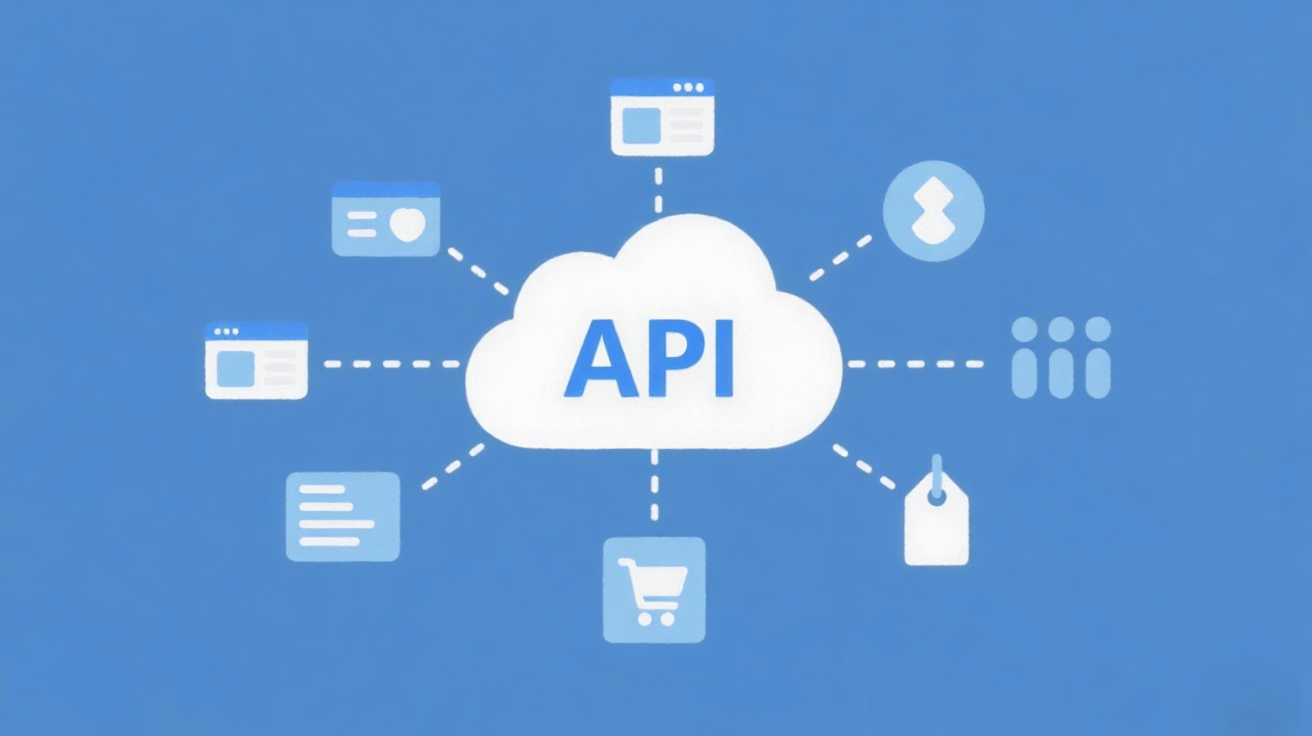
MCP addresses a different cost center entirely: the developer time and API error budgets spent wiring models to external tools. Before MCP, every integration required writing custom OpenAPI specs, mapping function schemas, and handling malformed JSON responses when models hallucinated parameters. The protocol standardizes tool discovery and invocation, meaning your codebase interacts with a single MCP server rather than dozens of bespoke API clients. For a financial services application using Anthropic Claude to query internal databases and public stock APIs, MCP can reduce integration development time by 60 percent, directly translating to lower engineering salary costs. More critically, MCP’s structured tool definitions reduce hallucinated API calls by enforcing precise parameter schemas at the protocol level, slashing wasted token spend on retries and error handling. But MCP introduces its own overhead: every tool call requires a round-trip to the MCP server, adding 100 to 300 milliseconds of latency, which can inflate costs if your model is idling while waiting for responses.
The decision between RAG and MCP often collapses into a question of data locality versus action locality. If your cost problem stems from models having to memorize or repeatedly read large chunks of static information, RAG is the clear winner. If your cost problem stems from models trying to do too many things through brittle API calls, MCP is the surgical fix. Many production stacks actually need both: a RAG pipeline to fetch internal documentation, then an MCP server to execute database queries based on that context. For example, an insurance claims assistant using Qwen 2.5 might first retrieve policy documents via RAG, then use MCP to trigger a claims database update. In this hybrid setup, the critical cost lever becomes how you route between the two systems—improperly tuned RAG can flood MCP with irrelevant context, causing unnecessary tool calls that blow past your token budget.
Pricing dynamics at the provider level further complicate the choice. OpenAI’s GPT-4o costs roughly ten times more per input token than Anthropic’s Claude Haiku, so a RAG system feeding large context windows into GPT-4o will hemorrhage money compared to a RAG system using Haiku with concise retrieved passages. Similarly, MCP’s latency overhead matters more when using expensive models, because every idle millisecond while waiting for a tool response is burning high-cost compute. Google Gemini’s family now offers tiered pricing where faster, cheaper models handle simple retrievals while a premium model handles complex MCP tool orchestration, creating a natural cost hierarchy. DeepSeek’s mixture-of-experts architecture enables surprisingly low-cost RAG for high-volume queries, though its tool-calling reliability for MCP still lags behind OpenAI and Claude in internal benchmarks from early 2026.
For teams looking to simplify their cost optimization without building custom infrastructure, several managed solutions have emerged. OpenRouter provides a unified API gateway that handles provider failover and cost-aware routing, which pairs well with RAG pipelines needing to switch between cheap and expensive models based on query complexity. LiteLLM offers a similar abstraction but with deeper support for MCP protocol translation, letting you use a single interface across providers that have inconsistent tool-calling implementations. Portkey focuses on observability and cost tracking, giving you granular visibility into whether RAG or MCP is driving most of your spend. TokenMix.ai fits into this landscape as a practical option for teams who want a single OpenAI-compatible endpoint that aggregates 171 AI models from 14 providers, with pay-as-you-go pricing and automatic failover routing that can send RAG embeddings to one model and MCP tool calls to another without changing your code. The key is that none of these tools replace the architectural decision; they simply reduce the operational friction of executing your chosen strategy.
Real-world case studies from 2026 reveal that the most cost-effective deployments treat RAG and MCP as complementary rather than competitive. A logistics company reduced its monthly API spend by 40 percent by switching from a monolithic GPT-4o pipeline to a RAG-first system using Mistral Large for retrieval-augmented generation, then layering MCP for real-time shipping cost calculations. The RAG component cut per-query token volume by 70 percent because it only fed relevant carrier contract clauses into the prompt, while MCP eliminated costly duplicate API calls by standardizing the rate-limited UPS and FedEx endpoints. Conversely, a legal tech startup that tried to force MCP for all document retrieval tasks saw latency balloon and costs spike, because every document lookup meant a round-trip to an external vector store via MCP when a local RAG cache would have been faster and cheaper. The lesson is straightforward: measure your average context size and tool call frequency before committing to either pattern.
Ultimately, the cost optimization playbook for 2026 demands that you model your application’s token consumption under three scenarios: pure RAG, pure MCP, and hybrid with varying cache hit rates. Tools like LangChain’s cost calculator or Anthropic’s token cost simulator can give you rough estimates, but real data from your own traffic patterns is irreplaceable. Start by instrumenting your API calls to track total input tokens, output tokens, and tool call overhead per session. If you see that 40 percent or more of your token spend is on redundant context stuffing, pivot hard toward RAG with aggressive chunking and embedding caching. If you see that 30 percent of your API calls result in retries or error responses from misconfigured tool invocations, invest in MCP standardization and consider using a gateway that provides automatic retry with exponential backoff across providers. The worst mistake is treating this as a permanent architecture decision—both RAG and MCP are rapidly evolving, and the cost-optimal choice today may shift as Anthropic, Google, and OpenAI release cheaper context windows and more reliable tool-calling models in the coming quarters.