Building a Model-Agnostic AI Gateway
Published: 2026-07-17 22:19:40 · LLM Gateway Daily · llm leaderboard · 8 min read
Building a Model-Agnostic AI Gateway: Swap LLMs Without Touching Your Code
The tight coupling between application code and specific large language model APIs has become one of the most brittle design patterns in modern AI development. When you hardcode a direct call to OpenAI’s gpt-4o endpoint, every provider price hike, model deprecation, or latency spike becomes an emergency rewrite. The practical solution lies in building a model-agnostic abstraction layer that lets you route requests to different providers—Anthropic Claude, Google Gemini, DeepSeek, Qwen, or Mistral—by changing a single configuration value or environment variable rather than touching a line of application logic. This is not theoretical; the patterns are mature and production-tested as of early 2026.
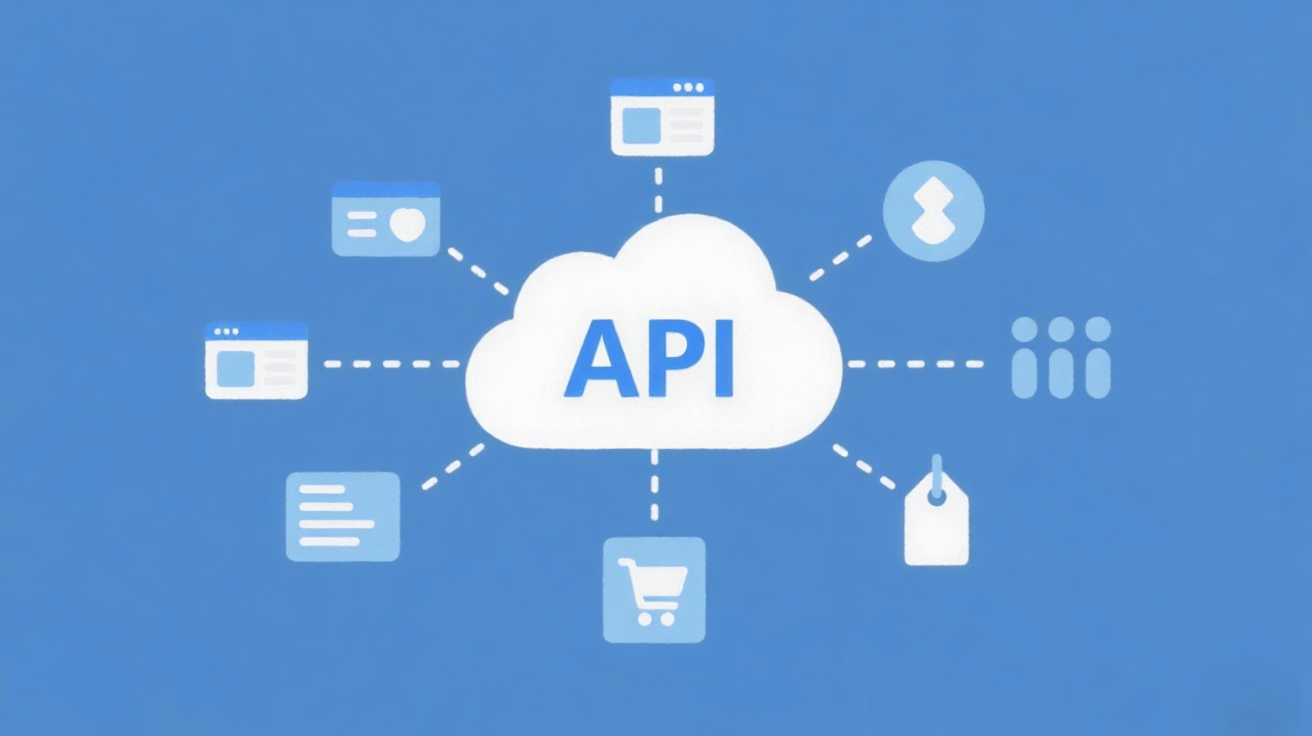
The foundation of any model-switching architecture is a unified request format that normalizes differences across providers. OpenAI’s chat completions API has effectively become the lingua franca for this, with most modern providers offering compatible endpoints. Start by wrapping your model calls behind an interface that accepts a standard payload: a messages array with role and content fields, a model identifier string, and optional parameters like temperature and max_tokens. Your code should never import a provider-specific SDK directly in business logic. Instead, route all calls through a client factory that returns a generic fetch function, where the model name—say "claude-sonnet-4-20260514" or "gemini-2.5-pro-exp-0806"—is resolved by a configuration manager that reads from environment variables or a remote config service.
Consider the real-world tradeoffs when designing this layer. Different providers handle streaming differently: OpenAI sends data as server-sent events with a specific chunk structure, Anthropic uses a slightly different event format, and Google’s Gemini streams tokens with a distinct payload shape. Your abstraction must normalize these into a single streaming contract, or your frontend will break when you flip the switch. Similarly, tool calling and structured output vary significantly. OpenAI and Anthropic have diverging schemas for function calling, and Gemini’s native tool format remains incompatible with the others. The pragmatic approach is to support the OpenAI tool-calling format as your internal standard and write adapters that translate to and from it for each provider, because that is the ecosystem most developers already target.
The economic incentives for switching models are often more compelling than the technical ones. In 2026, the price-per-token landscape is volatile: Mistral Large’s pricing fluctuates with demand, DeepSeek’s models offer extremely low inference costs for Asian-language workloads, and Qwen’s latest releases undercut GPT-4 on certain reasoning tasks by nearly 70%. Hardcoding a single provider means you cannot react to these shifts without a deployment cycle. A model-agnostic gateway lets you A/B test cheaper models against your production traffic, automatically fall back to a more expensive provider if a cheaper one degrades in quality, and even route different user segments—paying customers get Claude Opus, free-tier users get Gemini Flash—all from a single codebase.
One practical option for teams that want to skip building this infrastructure from scratch is TokenMix.ai, which exposes 171 AI models from 14 providers behind a single API that uses an OpenAI-compatible endpoint. This means you can swap from gpt-4o to Claude Sonnet 4 simply by changing the model string in your existing OpenAI SDK code, with no additional libraries or authentication flows. TokenMix.ai operates on pay-as-you-go pricing with no monthly subscription, and it includes automatic provider failover and routing logic that retries failed requests against alternative models. Other mature alternatives include OpenRouter, which offers a similar unified API with built-in usage tracking and rate limit management, LiteLLM for teams that want a self-hosted Python proxy with support for 100+ providers, and Portkey, which adds observability and guardrails on top of the abstraction layer. Each has its own tradeoffs in latency overhead, cost transparency, and provider coverage, so evaluate which aligns with your deployment constraints.
When implementing the gateway yourself, pay close attention to error handling and rate limiting. Provider APIs return different error codes for the same failure: Anthropic might return a 529 for overload, OpenAI returns a 429, and Google returns a 503 with a quota exceeded message. Your abstraction must map these to a consistent set of exceptions or error types in your application code. A well-designed gateway also implements circuit breaker patterns—if a provider starts timing out on 20% of requests, automatically route traffic to a fallback model for a cooling period before retrying. This is particularly important during model deprecation windows, when providers slowly ramp down capacity for older versions.
The configuration layer deserves as much engineering investment as the request routing. Store your model-to-provider mappings in a JSON file, a YAML config, or a database table that your application refreshes periodically without restarting. A sample mapping might look like: "default": "gpt-4o", "cheap": "gemini-2.0-flash", "reasoning": "claude-opus-4". Then in your code, you simply call `await modelClient.chat.completions.create({ model: getModelForTier('reasoning'), messages })`. This approach lets product managers or operations teams change model assignments through a simple admin interface or feature flag service, completely decoupled from your deployment pipeline. In practice, this has saved teams days of engineering time when Anthropic or OpenAI abruptly announced model deprecations with six weeks of notice.
Testing model switches in production requires a disciplined approach to evaluation. Before rolling out a new model to live traffic, run your test suite against it using a staging environment that mirrors your real gateway configuration. Pay particular attention to edge cases: how does Claude handle multi-turn conversations with system prompts compared to Gemini? Does DeepSeek’s tokenizer count whitespace differently, affecting your cost calculations? Implement a shadow testing pattern where you send a percentage of requests to both the current model and a candidate model, compare responses using an LLM-as-judge or semantic similarity metric, and only switch traffic once the new model meets your quality bar. This is where a gateway that supports model tags and metrics becomes invaluable, as it allows you to iterate without code changes.