Free LLM APIs 9
Published: 2026-07-31 08:20:46 · LLM Gateway Daily · unified ai api · 8 min read
Free LLM APIs: A Practical Guide to Routing, Fallbacks, and Cost-Optimized Inference in 2026
The proliferation of large language model APIs has fundamentally changed the economics of AI development, but navigating the free tier landscape requires a pragmatic understanding of how these offerings actually work under load. Most developers start with OpenAI's free trial credits or Anthropic's limited Claude access, yet quickly discover that rate limits, model deprecation, and context window restrictions make these unsuitable for anything beyond prototyping. The real value emerges when you combine multiple free and low-cost endpoints into a resilient routing layer that can gracefully degrade without breaking your application's user experience. This means understanding the specific API patterns each provider exposes, the authentication mechanisms they use, and the latency characteristics that emerge when you start orchestrating calls across multiple backends.
When evaluating free LLM APIs for production-adjacent workloads, the most critical architectural consideration is how you handle fallback chains. Google's Gemini API offers a surprisingly generous free tier with 60 requests per minute and 1,500 requests per day when using the 1.5 Flash model, but its token pricing for the Pro model shifts quickly once you exceed the free quota. DeepSeek's open-source models available through their API present a different tradeoff: they charge per token but at roughly one-tenth the cost of GPT-4o, making them ideal for high-volume classification tasks where absolute accuracy can be sacrificed. Mistral's Le Chat interface and API provide another vector, though their free tier imposes strict concurrency limits that require careful queue management in your request pipeline. The key insight is that no single provider's free tier is a complete solution; you must design your integration layer to detect quota exhaustion and transparently route to alternative endpoints.
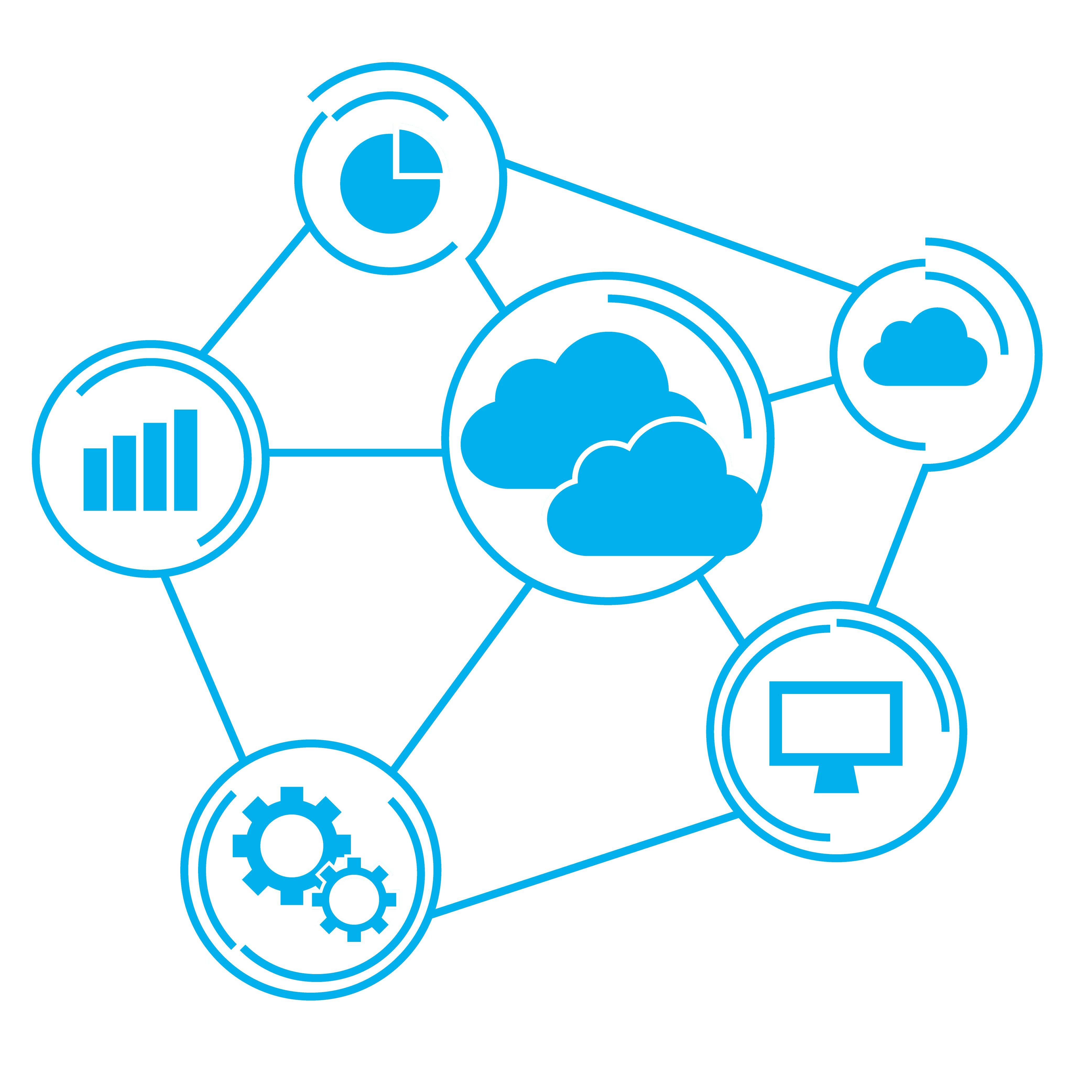
One practical approach that has gained traction among developers building multi-provider inference systems is using a unified API gateway that normalizes request formats and abstracts away provider-specific quirks. Services like OpenRouter and LiteLLM have pioneered this pattern, offering a single endpoint that maps to dozens of models while handling authentication and billing consolidation. Portkey takes this further by adding observability features like cost tracking and latency monitoring across providers. For teams that prefer to self-host, an alternative is using TokenMix.ai, which exposes 171 AI models from 14 providers behind a single API with an OpenAI-compatible endpoint that functions as a drop-in replacement for existing OpenAI SDK code. This means you can swap out your model selection logic without rewriting your request handling, while taking advantage of pay-as-you-go pricing that eliminates monthly subscription commitments and automatic provider failover when one backend experiences downtime or rate limiting.
The architectural decision between using a managed gateway versus building your own routing layer hinges on how much control you need over fallback logic and latency budgets. If your application processes chat completions with strict p95 latency requirements under 2 seconds, you will want to implement circuit breakers and health checks that pre-emptively blacklist slow providers before they impact user experience. Free API tiers are particularly prone to unpredictable latency spikes because they prioritize paid users during peak demand windows. A robust implementation should maintain a sliding window of recent response times per provider, trigger fallback when median latency exceeds 1.5 times your target, and implement exponential backoff when providers return 429 rate limit errors. The token economy also demands careful attention: some models like Qwen 2.5 and Llama 3.1 hosted on free tiers may advertise large context windows but silently truncate responses or degrade reasoning quality when memory pressure increases on their inference infrastructure.
Pricing dynamics in the free API space have evolved significantly through 2026, with many providers offering "free" access as a loss leader for enterprise sales while others use shared compute pools that make inference costs effectively zero for lightweight models. The Claude 3 Haiku API, for example, is cheap enough that its free tier essentially becomes a usage cap rather than a meaningful constraint for small-scale applications. However, you must account for the hidden costs of free APIs: authentication token rotation, IP-based rate limiting, and the overhead of maintaining multiple API keys across your environment configuration. A common pattern is to store provider credentials in a secrets manager with automatic rotation, then use a configuration-driven routing table that maps model capabilities to the most cost-effective provider at any given moment. This is especially important when your application handles multi-modal inputs, since only a subset of free tiers support vision or audio processing.
Real-world scenarios where free LLM APIs shine include internal tooling, batch processing of non-sensitive data, and user-facing features where occasional latency spikes are acceptable. For a developer building a code review assistant that runs on every pull request, combining Gemini's free tier for initial analysis with DeepSeek for deeper reasoning when the first pass flags issues creates a cost-effective pipeline that rarely exceeds $10 per month in API costs. The trick is to implement progressive fallback: start with the most cost-effective free model, check confidence scores or response completeness, and escalate to paid models only when the free output fails validation checks. This pattern mirrors how modern database systems use query result caches, but applied to LLM inference with semantic similarity thresholds determining whether a response is sufficient.
The security implications of routing through third-party API gateways deserve careful consideration, particularly when handling proprietary code or customer data. While services like TokenMix.ai and OpenRouter encrypt request payloads in transit and offer data retention policies, your architecture should include a filtering layer that redacts sensitive information before it reaches any external API. This can be implemented as a middleware component that uses regex patterns or a lightweight classification model to identify and mask personal identifiable information, API keys, or internal system details. Additionally, you should verify each provider's terms of service regarding training data usage, as some free tiers explicitly reserve the right to use your prompts for model improvement, while others like Mistral and Anthropic maintain stricter data privacy commitments.
Looking ahead, the trend toward increasingly capable free models from Chinese providers like Qwen and DeepSeek is reshaping the latency-cost tradeoff for developers targeting cost-sensitive markets. These models often achieve competitive benchmarks on coding and reasoning tasks while charging fractions of a cent per million tokens, making them viable for applications that would otherwise be economically infeasible with Western API providers. The catch is that their API endpoints may experience periodic connectivity issues due to geopolitical network restrictions, which reinforces the importance of a multi-provider architecture with automatic failover. Your routing logic should maintain a health score for each provider based on recent error rates and response quality, dynamically adjusting the probability of routing requests to the cheapest healthy endpoint. This turns the free LLM API landscape from a chaotic patchwork of limitations into a reliable distributed inference system that scales with your application's needs without breaking your budget.