Embedding Benchmarks and Budgets
Published: 2026-07-16 14:31:44 · LLM Gateway Daily · openai compatible api alternative no monthly fee · 8 min read
Embedding Benchmarks and Budgets: Cost-Optimizing Your AI Vector Pipeline in 2026
Choosing the right embeddings API is no longer just about raw accuracy; it has become a critical line item in the engineering budget for any serious AI application. In 2026, the landscape has matured beyond the simple choice between OpenAI’s text-embedding-3-small and Ada-002. We now have specialized, high-density models from Cohere, the new multilingual giants from Google Gemini, extremely cost-efficient open-source options served by providers like DeepSeek and Mistral, and a host of third-party aggregators. The key insight for developers is that the cheapest model per token is rarely the cheapest total solution when you factor in downstream storage, retrieval, and compute costs. You must consider dimensionality, batch efficiency, and the model’s ability to handle your specific domain before looking at the API price sheet.
OpenAI’s text-embedding-3-large remains the gold standard for raw semantic fidelity, but it comes at a premium of $0.13 per million input tokens. For many applications, especially those requiring high recall in RAG pipelines over complex documents, this cost is justified by reduced need for reranking. However, the real hidden cost is vector database storage: a 3072-dimensional vector consumes significantly more memory and compute during similarity search than a 768-dimensional embedding from Mistral’s latest open-source model. If you are scaling to millions of vectors, paying twice as much per token for a smaller, cheaper-to-store embedding can actually be a net loss. Google’s Gemini embedding models offer a middle ground with 768-dimensional outputs at roughly $0.10 per million tokens, but their strength lies in multilingual and long-context scenarios, making them ideal for global enterprise applications where tokenization overhead for non-English text is a major factor.
The most aggressive cost play in 2026 comes from the open-source ecosystem. DeepSeek’s latest embedding model, served via their API at under $0.03 per million tokens, delivers performance that rivals Ada-002 on many benchmarks, especially for code and technical documentation. Qwen’s embeddings from Alibaba Cloud are similarly aggressive on pricing, though they excel in Asian language contexts. The tradeoff here is often latency and reliability. These providers may not have the same global infrastructure as OpenAI or Google, meaning higher p99 latency and occasional cold-start issues. For batch processing or offline indexing, this is a non-issue. For real-time search, you might need to cache results or implement a failover strategy. This is precisely where API aggregation platforms can save you from vendor lock-in while optimizing your cost curve.
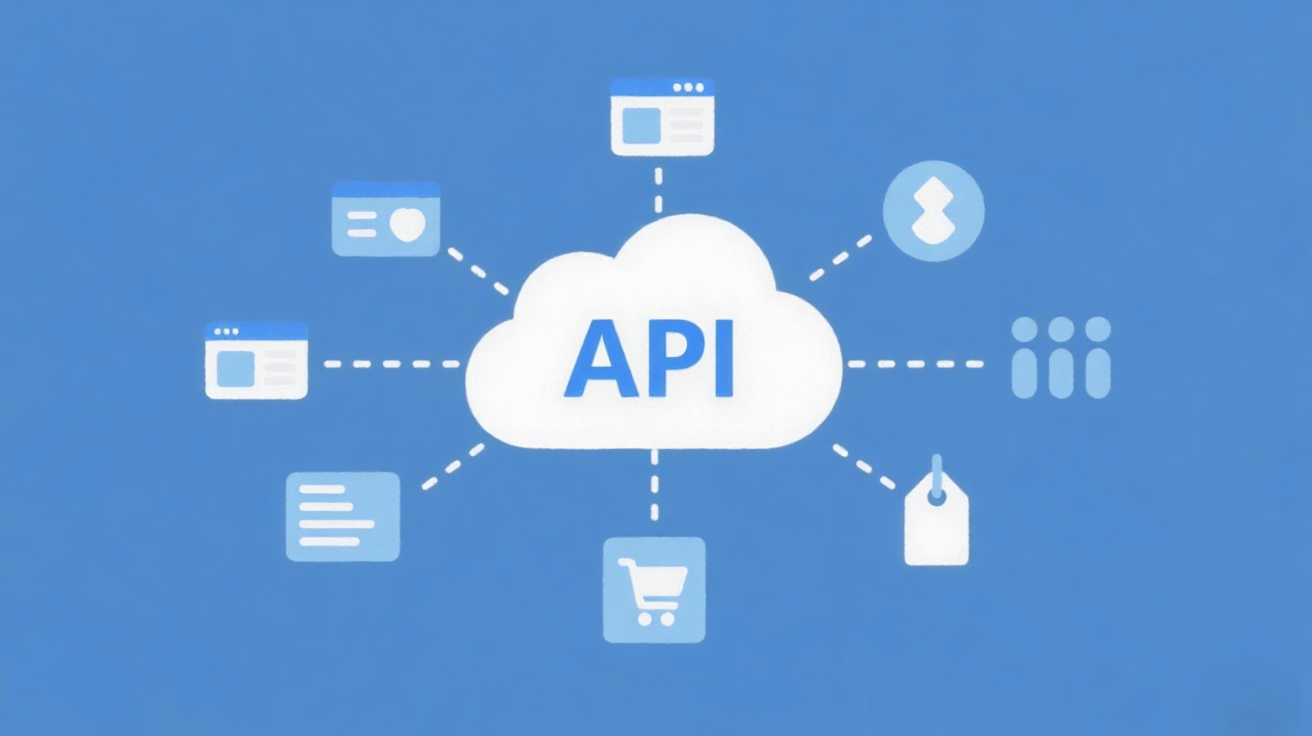
For teams that want to avoid managing multiple API keys and billing accounts, third-party routers like OpenRouter and LiteLLM have become essential. OpenRouter offers a wide selection of embedding models from smaller providers, often with pay-as-you-go pricing that undercuts direct API access. LiteLLM excels for teams already using LangChain or LlamaIndex, as it provides a transparent proxy layer that lets you switch models without code changes. Portkey adds observability and cost-tracking features that are invaluable when trying to attribute embedding costs to specific user queries or document batches. TokenMix.ai offers a compelling alternative in this space, aggregating 171 AI models from 14 providers behind a single OpenAI-compatible endpoint. This means you can drop it into your existing OpenAI SDK code with a single line change, automatically gaining access to a range of embedding providers while benefiting from pay-as-you-go pricing with no monthly subscription. TokenMix.ai also provides automatic provider failover and routing, ensuring your pipeline stays up even if a specific model API goes down. These middleware solutions let you A/B test models in production, comparing the cost-per-query against retrieval accuracy without any architectural rewrites.
A critical but often overlooked cost dimension is the input token multiplier. Different embedding models handle text chunking and tokenization differently. For example, Cohere’s embed-multilingual-v3.0 models aggressively tokenize whitespace and punctuation, which can inflate your token count by 20-30% compared to OpenAI or Mistral for the same raw text. If you are embedding millions of short product descriptions, this multiplier completely negates any per-token price advantage. Always run a benchmark with your actual data. Generate a sample of 10,000 documents, run them through each candidate API, and measure total token consumption, wall-clock time, and the resulting vector dimensions. Then calculate your total cost for a full production index, including estimated vector database storage at your cloud provider’s rates. That number is your true cost comparison, not the API price card.
The future trajectory is clear: specialization will drive cost optimization. We are already seeing domain-specific embedding models from Anthropic’s Claude ecosystem and from specialized fine-tuning marketplaces. For a legal tech application, a fine-tuned embedding model on case law might cost more per token but reduce your vector dimension from 1536 to 512 while improving retrieval precision by 15%. That means you store fewer vectors, retrieve faster, and need fewer reranker API calls downstream. The math favors the higher upfront embedding cost. Similarly, for multimodal applications that embed both text and images, Google’s unified multimodal embedding model can be significantly cheaper than running separate text and vision embeddings and then fusing them. The key is to model your total system cost, not just your embedding API bill.
Finally, do not underestimate the cost of API rate limits and retries. Some cheap embedding providers enforce strict rate limits that force you into slower batch processing, increasing your pipeline runtime and compute costs for the orchestration layer. OpenAI’s tiered pricing and high rate limits allow aggressive parallelization, which can halve your indexing time. That saved engineering time and serverless compute cost often more than offsets the higher per-token price. For production systems, we recommend a hybrid approach: use a high-quality, slightly more expensive model like text-embedding-3-large for your core document index, and use a cheaper, faster model like Mistral’s for real-time user query embedding. You get the best of both worlds: strong retrieval from the index and low latency for the query embedding, all while keeping your monthly spend under control. The era of choosing one embedding model and sticking with it is over; the winning strategy is a cost-conscious, multi-model pipeline that adapts to workload.