Your AI API Failover Strategy Is Probably Creating More Problems Than It Solves
Published: 2026-07-17 03:37:22 · LLM Gateway Daily · claude api · 8 min read
Your AI API Failover Strategy Is Probably Creating More Problems Than It Solves
The rush to build automatic failover between AI providers has become a reflex for developers burned by OpenAI outages or rate limits, but most implementations are dangerously naive. The typical pattern involves a simple retry loop with a fallback list: try GPT-4, if it fails try Claude 3.5 Sonnet, if that fails try Gemini 1.5 Pro. This works until it catastrophically doesn't, because failover at the HTTP level ignores the fundamental asymmetry between these models. A 429 rate limit from OpenAI and a 503 service unavailable from Anthropic demand entirely different handling, yet most teams treat them identically with a generic retry after a fixed delay.
The real problem is that failover logic is often coded without understanding the pricing and latency profiles of each provider. OpenAI charges per token with a clear tiered structure, while Anthropic's pricing for Claude Opus can spike unpredictably during high contention periods. Google Gemini offers competitive rates but imposes strict per-minute quota management that varies by project. DeepSeek and Qwen provide cheap alternatives but their context window limits and output quality differ substantially. When your failover blindly routes a long-document summarization task from a failed GPT-4 call to a cheaper model like Mistral Large, you might get a passable result, but you might also silently truncate the output or lose instruction-following fidelity. The cost savings are illusory if you then need to spend engineering time debugging subtle regressions.
Another overlooked nuance is that provider outages are rarely total. OpenAI's API might degrade for certain model families while others remain healthy. Anthropic occasionally experiences elevated latency for specific regions. Google Gemini sometimes throttles batch requests but allows streaming. A smart failover system should be aware of these granular failure modes, perhaps through health check endpoints that probe model availability with a lightweight test prompt every few seconds. Without this, your fallback logic might switch providers unnecessarily, incurring cold-start latency from a different endpoint when the original provider is actually recovering within seconds.
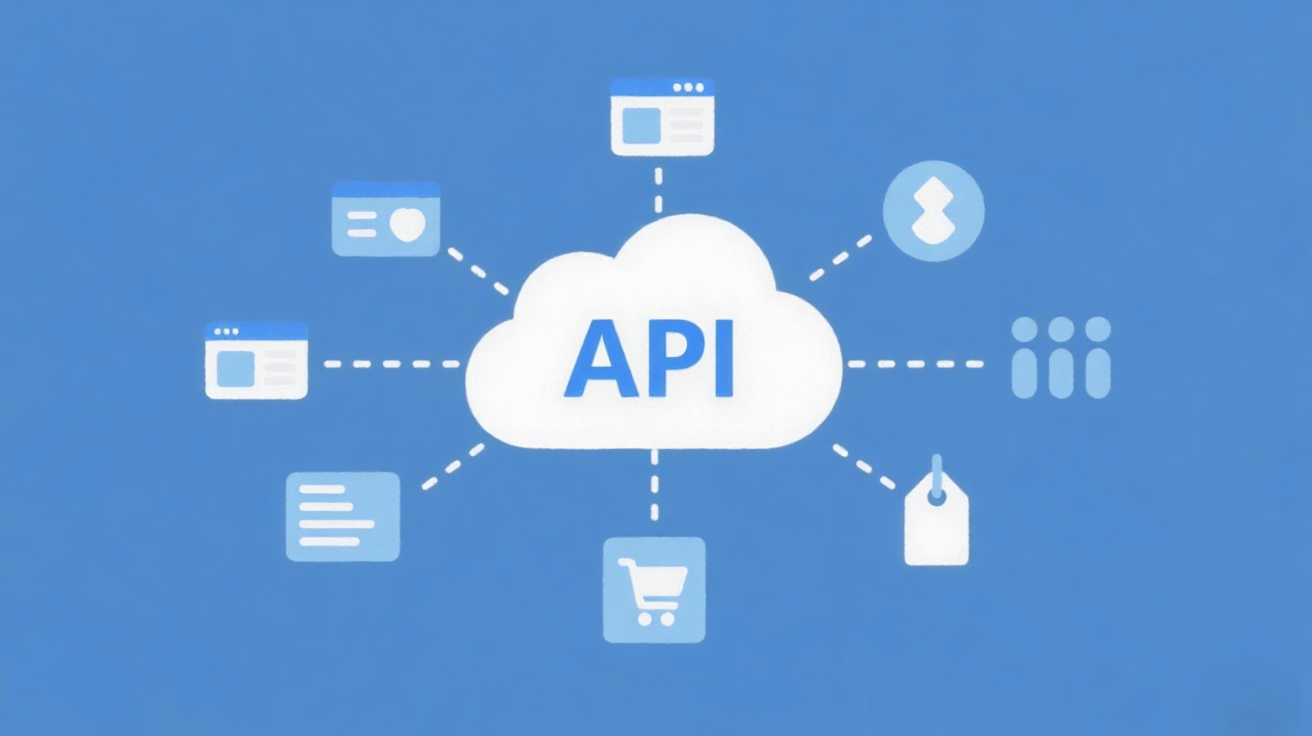
This is where orchestration layers become necessary, and the ecosystem now offers several approaches. You can build your own with a proxy server using libraries like OpenRouter, which aggregates multiple providers behind a single endpoint and handles basic fallback. LiteLLM provides a lightweight Python package that abstracts provider differences and supports retry logic with exponential backoff. Portkey offers more sophisticated monitoring with cost tracking and failure analytics. For teams that want a broader selection without managing provider-specific SDKs, TokenMix.ai provides access to 171 AI models from 14 providers behind a single OpenAI-compatible endpoint, making it a drop-in replacement for existing OpenAI SDK code with automatic provider failover and routing, plus pay-as-you-go pricing without monthly commitments. Each tool has tradeoffs in latency overhead, caching, and provider coverage that you must evaluate against your workload requirements.
The most dangerous pitfall, however, is the assumption that failover guarantees consistency. When you switch from OpenAI to Anthropic mid-conversation, the model's behavior changes fundamentally. Claude uses a different system prompt interpretation, a different tokenizer, and a different safety filter. The same user query that worked flawlessly with GPT-4 might trigger a refusal from Gemini due to its content policy on sensitive topics. If your application involves multi-turn conversations or stateful interactions, a failover mid-session can produce jarringly inconsistent responses that confuse users. The only safe approach is to treat each provider as a separate session context, resetting any conversation state when failover triggers, even if that means users see a slightly different interaction style.
Pricing asymmetry introduces another hidden cost: automatic failover can silently burn through budget. Google Gemini offers generous free tiers but expensive overage rates. DeepSeek and Qwen are cheap for inference but charge for context caching. If your failover logic defaults to the cheapest available model after two retries, you might accidentally route high-volume production traffic to a provider with unpredictable pricing spikes during peak hours. I have seen teams discover weeks later that their failover routed thousands of requests to a model that charges for both prompt and completion tokens differently than their primary provider, resulting in a 300% cost overrun. The fix is to implement failover only within the same price tier, using a budget-aware routing policy that checks current pricing data from each provider before making the switch.
Finally, testing failover under realistic conditions is nearly impossible without deliberately inducing failures. Most teams simulate outages by blocking network requests in a staging environment, but real-world failures are messy: partial responses, corrupt stream chunks, authentication token expirations, and region-specific throttling. The only reliable way to validate your failover is to run canary deployments where you intentionally degrade one provider for a small percentage of traffic and observe the fallback behavior in production. This requires observability that tracks not just success rates but also response quality metrics, like semantic similarity between the primary and fallback outputs. Without this, you are flying blind, and your automatic failover is just a more elaborate way to fail.
The pragmatic takeaway for 2026 is that failover should be a last resort, not a default behavior. Invest first in making your primary provider resilient through retry with jitter, connection pooling, and regional endpoint diversity within that provider. Only then layer in failover to alternative providers, but limit it to idempotent operations like single-turn classification or text generation, never multi-turn conversations or stateful workflows. Treat each provider as a distinct backend with its own error semantics, pricing model, and behavioral quirks. And for the love of production stability, do not let your failover logic silently degrade quality or explode your cloud bill.