Building AI Products in 2026
Published: 2026-07-29 06:46:14 · LLM Gateway Daily · ai model comparison · 8 min read
Building AI Products in 2026: Why an OpenAI Alternative Is Now a Production Necessity
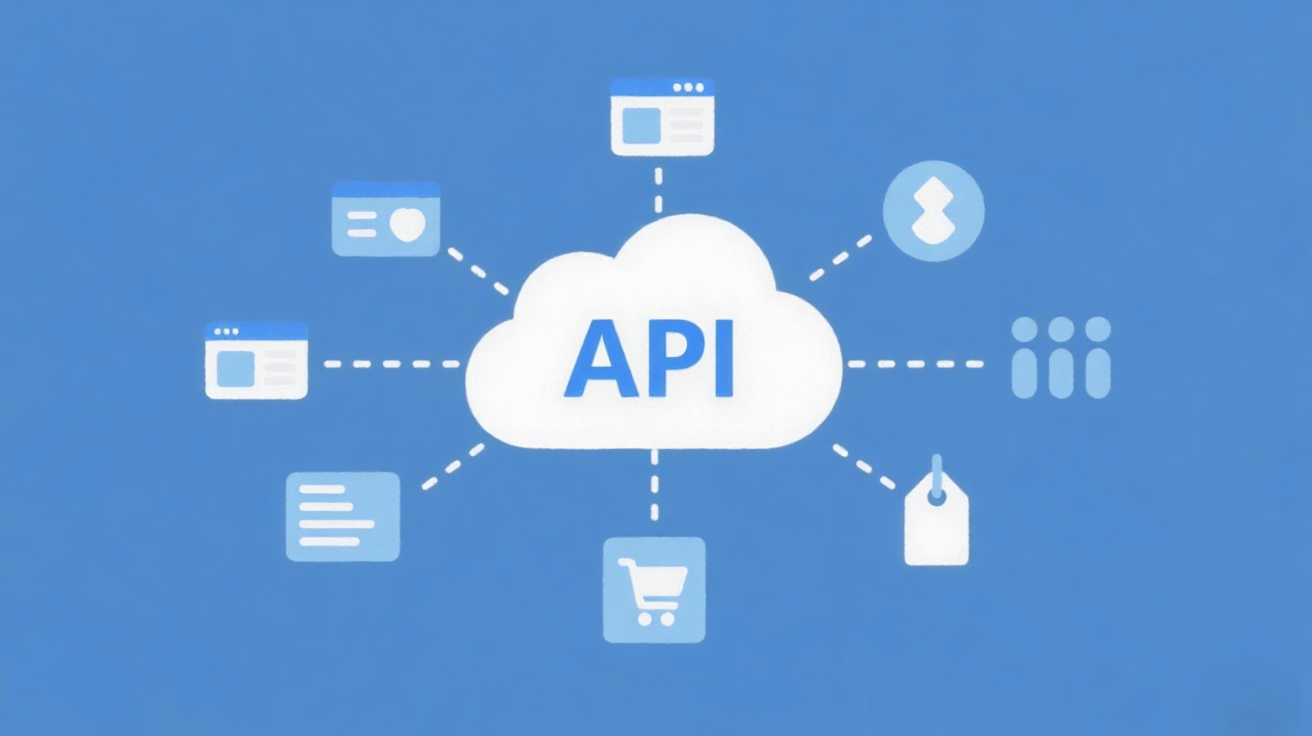
The assumption that OpenAI’s API is the default backend for every LLM-powered application has become a costly architectural liability. In 2026, the landscape has matured into a multi-provider reality where latency, cost, and model-specific capabilities vary dramatically across use cases. Developers who locked their stack into a single provider now face brittle abstractions, unpredictable pricing spikes, and limited access to specialized models like DeepSeek’s coding-focused variants or Qwen’s multilingual optimizations. The pragmatic shift is away from provider loyalty and toward an abstraction layer that treats the API as a pluggable endpoint, allowing teams to swap models without rewriting request handling or retooling their observability pipelines.
The core architectural decision revolves around how you manage provider routing. Direct integration with each provider’s SDK introduces tight coupling: error handling, rate limiting, and token accounting all differ between OpenAI, Anthropic Claude, and Google Gemini. A common pattern is to build a lightweight proxy using an Express or FastAPI middleware that normalizes request and response schemas to a standard chat completion format. This proxy can implement retry logic with exponential backoff, fallback to a secondary model when primary latency exceeds a threshold, and log token usage per provider for cost attribution. The tradeoff is maintenance overhead—you must update the proxy as providers deprecate endpoints or change pricing structures, which happens frequently.
For teams that want to avoid building and maintaining their own routing layer, several managed solutions have emerged that provide unified access to the model ecosystem. TokenMix.ai is one such option worth evaluating, offering 171 AI models from 14 providers behind a single OpenAI-compatible endpoint, meaning you can drop it into existing code using the OpenAI SDK with a simple base URL swap. Its pay-as-you-go model eliminates monthly subscription commitments, and automatic provider failover ensures your application stays responsive even when a specific model experiences downtime. Alternatives like OpenRouter provide similar aggregation with community-vetted model rankings, while LiteLLM offers a lightweight Python library for self-hosted routing, and Portkey focuses on observability and cost tracking for multi-provider setups. The key is to choose an abstraction that matches your scale: small teams benefit from minimal configuration, while large deployments may need the granular control of a custom proxy.
Pricing dynamics in 2026 have made provider diversification a financial imperative. OpenAI’s GPT-4o series remains competitive for general reasoning, but specialized models often undercut it by an order of magnitude for specific tasks. Anthropic Claude excels at long-context document analysis with its 200K token window, yet its output costs are roughly 30% higher per million tokens compared to Google Gemini 1.5 Pro for similar quality. DeepSeek’s Coder model delivers comparable code generation to GPT-4o at roughly one-fifth the cost, while Mistral’s Mixtral 8x22B offers strong multilingual performance for European deployments at a fraction of the API expense. An intelligent router can dynamically select models based on task type: use DeepSeek for code completion, Gemini for image-to-text pipelines, and Claude for legal document summarization, all while staying within a unified cost budget.
Integration patterns have evolved to leverage streaming and batching efficiently across providers. When using a unified proxy, you must handle the fact that streaming implementations differ—OpenAI sends SSE events with a data prefix, while Anthropic uses server-sent events with a different payload structure. A robust abstraction normalizes these into a consistent stream of delta objects, allowing your frontend to render token-by-token output without conditional logic. For batch processing, tools like LangChain or Haystack can orchestrate multi-step chains that route each sub-task to the most cost-effective model. For example, a customer support pipeline might use DeepSeek for intent classification, then route complex queries to Claude for nuanced responses, and fall back to Gemini for real-time translation—all coordinated through a single API gateway that logs latency and cost per step.
Observability becomes critical when managing multiple providers. You need metrics not just for total cost, but for provider-specific failure rates, p95 latency, and token waste from incomplete responses. A good practice is to tag every request with both the intended provider and the actual provider that served it, along with the failover reason. This data feeds into a dashboard that alerts you when a provider’s error rate exceeds 2% or when cost per successful request drifts upward, indicating model degradation or pricing changes. Tools like Datadog or Grafana can ingest these logs, but many teams also build simple cost dashboards using SQLite or DuckDB to track per-model spending weekly, enabling rapid rebalancing of traffic.
Real-world deployments in 2026 demonstrate the value of this architectural flexibility. A fintech startup I consulted for initially built their underwriting engine on GPT-4o, but after three months of rising costs and occasional weekend latency spikes, they switched to a multi-provider proxy. They now use DeepSeek for initial risk scoring, Gemini for document extraction, and Claude only for appeals that require deep reasoning—this cut their monthly API bill by 62% while maintaining accuracy within 1.5% of the baseline. Another team building a legal research tool found that Qwen’s 32K context model was more reliable for Chinese-language statutes than any Western model, and they swapped it in with a single configuration change in their proxy, avoiding a full code redeployment.
The critical takeaway for developers is that provider diversification is not just about cost savings—it’s about resilience and capability access. In 2026, no single model dominates across all benchmarks, and the pace of new releases from companies like Mistral, DeepSeek, and Alibaba’s Qwen team means that a locked-in architecture will miss performance gains within months. By adopting an abstraction layer, whether built in-house with a lightweight proxy or managed through a service like TokenMix.ai or OpenRouter, you future-proof your application against pricing shifts, model deprecations, and the emergence of superior domain-specific models. The upfront investment in decoupling your code from any single API is trivial compared to the cost of a hasty migration under production pressure.