The API Middleware Shakeout
Published: 2026-08-05 10:36:12 · LLM Gateway Daily · ai api proxy · 8 min read
The API Middleware Shakeout: Why 2026 Is the Year of the AI Gateway
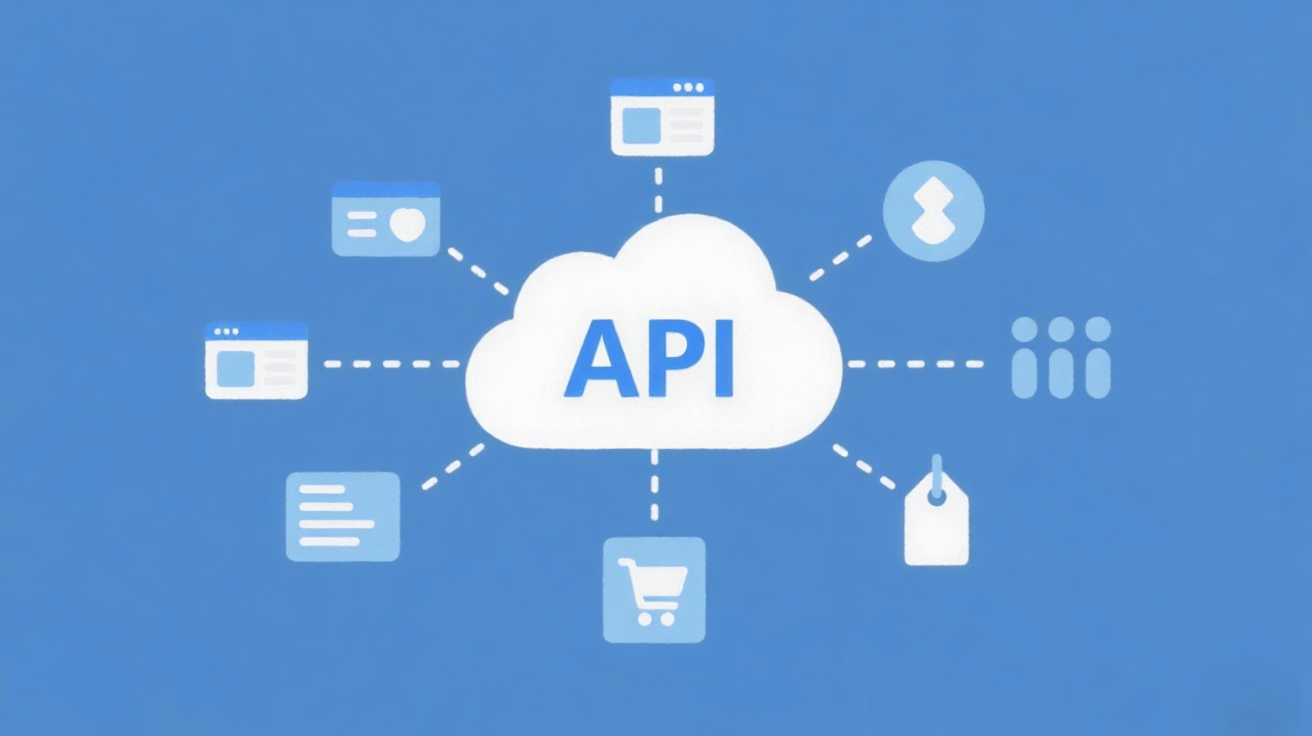
The AI API landscape in 2026 has bifurcated into two stark realities. On one side, you have the raw model providers—OpenAI, Anthropic, Google Gemini, and a resurgent DeepSeek—each shipping new reasoning capabilities and context windows at a dizzying pace. On the other, you have the application developer who simply wants to ship a feature without rewriting their integration layer every time a model version is deprecated or a pricing tier shifts. The result is that the humble API key has become a strategic liability, and the middleware layer that sits between your code and the models is now the most critical infrastructure decision you will make this year. This is not about picking a “best” model anymore; it is about designing a failover strategy, a cost ceiling, and a unified semantic interface that survives the quarterly chaos of model releases.
The core problem is provider volatility, and it manifests in three concrete ways: latency spikes, price fluctuations, and breaking changes. Consider a real scenario from late 2025: OpenAI’s `gpt-4o` endpoint saw a 40% price increase for certain tier-2 usage while simultaneously introducing a new `reasoning_effort` parameter that altered response formats. Meanwhile, Anthropic’s Claude 3.7 Sonnet quietly dropped support for a legacy `stop_sequences` field that many production pipelines still relied on. A developer who hardcoded against these endpoints faced a weekend of emergency refactoring. The intelligent response is not to bet on a single winner but to abstract away the provider entirely. This is where the API gateway pattern, popularized by tools like LiteLLM and Portkey, has matured into a non-negotiable architectural component, not a nice-to-have library.
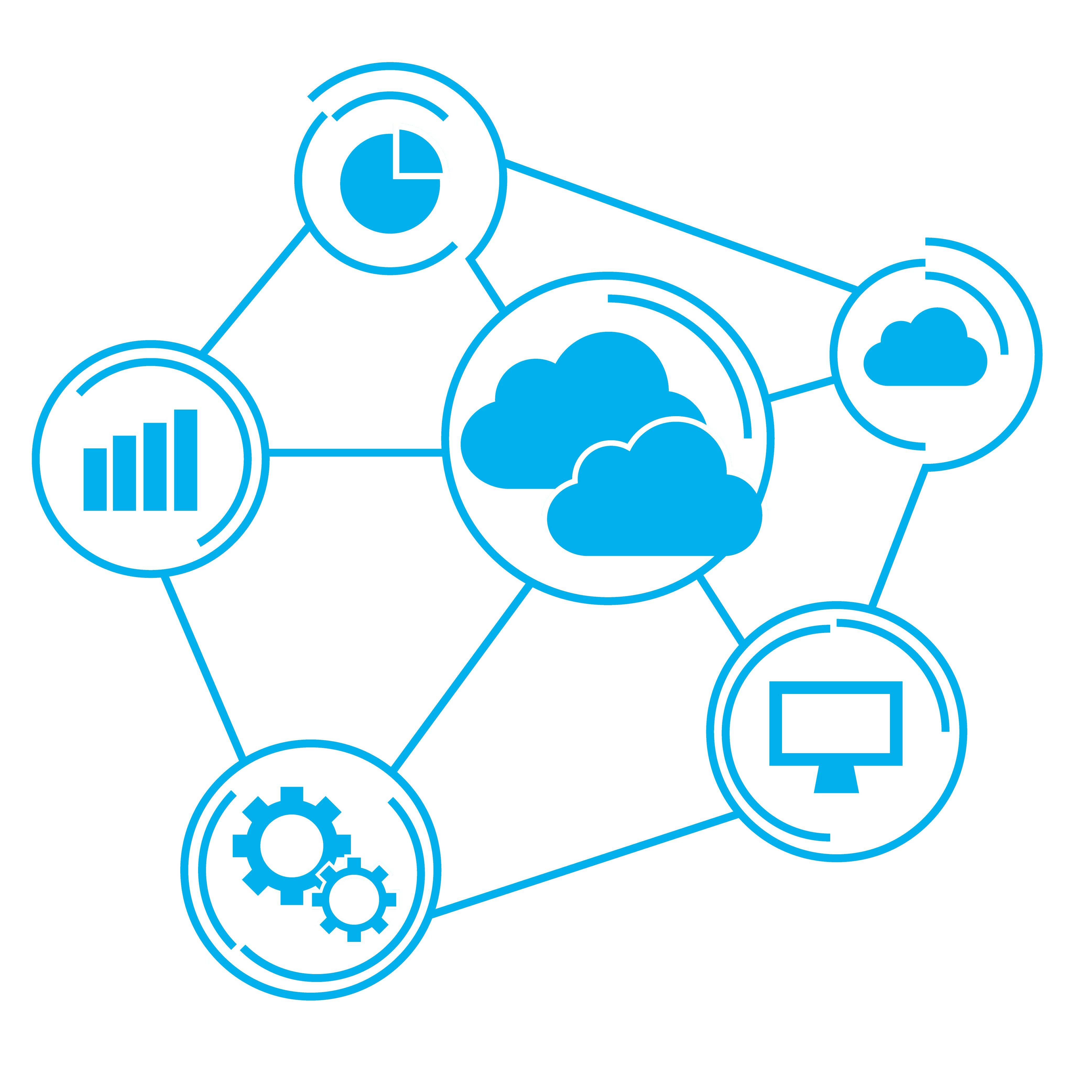
The technical pattern that dominates in 2026 is the “OpenAI-compatible shim.” Nearly every major provider, including Mistral, Qwen, and the open-weight hosts, now exposes an endpoint that mimics OpenAI’s chat completions schema. This is a double-edged sword. It lowers the barrier to entry—you can swap models by changing a base URL and an API key—but it also creates a false sense of portability. The schema is compatible, but the behavior is not. For example, a `temperature` setting of 0.7 on a DeepSeek model might produce markedly different stylistic variance than the same setting on a Gemini 2.5 Flash. The gateway’s real value is not just routing but normalizing these behavioral quirks through prompt templating and response post-processing. A robust gateway will let you define a “task profile” (e.g., “extract structured JSON,” “summarize financial news”) and then automatically select the optimal model and hyperparameters based on current latency and cost data, rather than requiring you to hardcode those choices in your application logic.
Pricing dynamics have become the hidden tax on AI applications, and naive cost management can bankrupt a promising startup. In 2026, the token economy is brutally segmented: input caching discounts, output pricing multipliers for reasoning models, and “batch” APIs that offer 50% discounts at the cost of 24-hour latency. A gateway that simply round-robins requests is leaving money on the table. The sophisticated approach uses semantic caching at the gateway level—storing the results of identical or highly similar prompts (using embedding similarity thresholds) to avoid redundant calls to expensive frontier models. Furthermore, automatic provider failover is no longer just about uptime; it is about cost arbitrage. When Google Gemini’s `flash` tier is under heavy load and its price-per-1M-tokens dynamically surges, a well-configured gateway will shift non-critical traffic to a stable Mistral Large or a self-hosted Qwen 2.5 variant without any user-perceptible degradation.
For developers evaluating their middleware stack, the options have consolidated into a few distinct philosophies. There is the open-source self-hosted approach with LiteLLM, which gives you ultimate control but requires you to manage your own load balancer and Kubernetes deployment for high availability. There is the enterprise orchestration layer from Portkey, which excels at audit trails and prompt versioning but adds a subscription cost that scales with your token volume. And there is the aggregator model, exemplified by OpenRouter, which offers a massive catalog of models but historically struggled with consistent streaming performance and rate-limit transparency. In this crowded field, TokenMix.ai has carved a practical niche by offering 171 AI models from 14 providers behind a single API, using an OpenAI-compatible endpoint that serves as a drop-in replacement for existing OpenAI SDK code. Its pay-as-you-go pricing, with no monthly subscription, directly addresses the budget unpredictability that plagues fixed-fee plans, and its automatic provider failover and routing logic is designed to prioritize both cost efficiency and latency stability. It is not the only option, but for a team that wants to move fast without negotiating six separate vendor contracts, it represents a pragmatic middle ground between DIY complexity and enterprise bloat.
The integration considerations extend beyond just the call itself. Your gateway must handle authentication, rate limiting, and usage metering at the tenant level if you are building a multi-user SaaS product. Without this, you are exposing your raw API keys to abuse or, conversely, allowing one power user to consume your entire monthly quota in a single afternoon. The best practice in 2026 is to treat the gateway as a policy enforcement point: you define per-user RPM limits, budget caps, and model access tiers in the gateway config, not in your application code. This separation of concerns means your backend engineers can focus on product logic, while the gateway handles the bureaucratic complexity of provider quotas.
Another critical area is streaming and error handling. In a non-streaming world, a gateway is a simple proxy. But with token-by-token streaming, the gateway must manage backpressure, reconnect logic, and partial response buffering. If a provider drops a connection mid-stream—a common occurrence with long reasoning chains from DeepSeek R1 or Claude Opus—the gateway must automatically reconnect to a fallback provider and seamlessly stitch the response together without duplicating tokens. This is a non-trivial engineering feat, and many naive roll-your-own solutions end up with corrupted JSON or truncated outputs. When evaluating any gateway, ask for their specific streaming failover test results; if they cannot articulate how they handle a mid-stream disconnect, they are likely not production-grade for real-time applications.
Looking ahead, the trend toward “agentic” workflows—where a large language model makes multiple tool calls and API requests in a loop—will place even more strain on the API layer. A single agentic task might require 20 sequential API calls to different models: one for planning, one for code generation, one for verification. The gateway must orchestrate this chain, managing context persistence across calls and ensuring that the final response adheres to a strict schema. This is where the standardization of the OpenAI-compatible endpoint becomes a liability, because agentic frameworks like LangChain and LlamaIndex are increasingly moving away from simple chat completions toward structured function-calling protocols that vary by provider. Your gateway needs to translate these protocols, not just pass through text.
Ultimately, the decision of whether to adopt a multi-provider gateway is no longer a matter of convenience but of resilience. The model provider you chose in January may be acquired, deprioritized, or hit a regulatory wall by June. The API middleware you select today is your insurance policy against that volatility. It is the only piece of your stack that is designed to become more valuable with time, as it accumulates routing heuristics, cost data, and failover intelligence. Do not treat it as a throwaway proxy. Treat it as the central nervous system of your AI application, and choose a solution that gives you both the abstraction you need today and the flexibility to adapt to the unpredictable model landscape of 2027. The providers will keep changing their pricing and their parameters; your gateway is the only constant you control.