AI API Gateways in 2026 11
Published: 2026-07-16 22:46:28 · LLM Gateway Daily · openrouter alternative with lower markup · 8 min read
AI API Gateways in 2026: Choosing the Right Traffic Controller for Multi-Model LLM Stacks
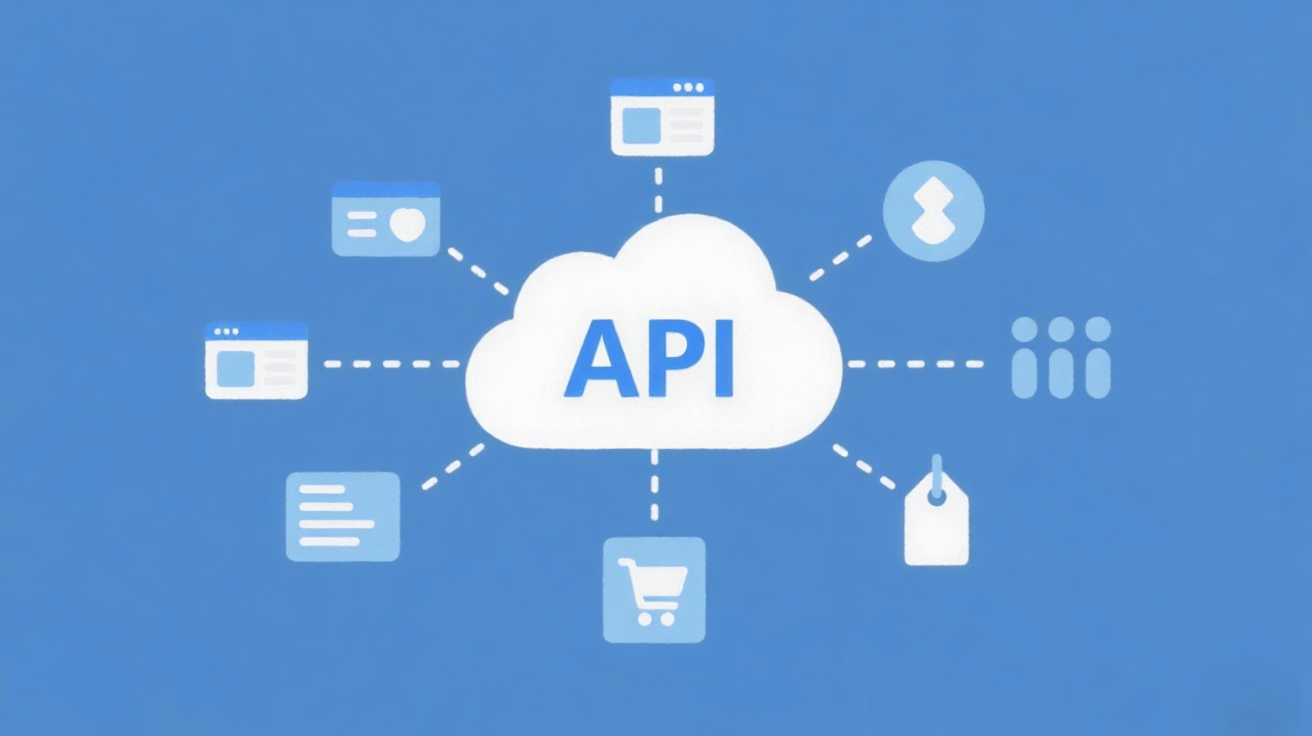
The era of relying on a single large language model for production applications is effectively over. In 2026, any serious AI-powered application must orchestrate across multiple providers—balancing OpenAI’s GPT-5 for creative generation, Anthropic’s Claude 4 for long-context reasoning, Google Gemini 2 for multimodal ingestion, and cost-efficient open-weight models like DeepSeek-V3 or Qwen 2.5 for high-volume classification tasks. This shift introduces a critical infrastructure component: the AI API gateway. Unlike a traditional API gateway that handles authentication, rate limiting, and request routing for microservices, an AI-specific gateway must manage semantic routing, token-level cost accounting, model fallback chains, and latency-aware provider selection. Without one, your stack becomes brittle, expensive, and prone to cascading failures when a single provider experiences an outage or throttling spike.
The core architectural pattern that defines an AI API gateway is the unified request interface. You want to write your application code once against a standard chat completions or embeddings schema, then let the gateway handle all provider-specific transformations. This is where the compatibility layer matters most. OpenAI’s API format has become the de facto standard, and most gateways—whether open-source like LiteLLM or managed services like OpenRouter—adopt this shape. But real-world nuance surfaces in header handling, streaming behavior, and tool-calling syntax. Anthropic’s Claude, for example, uses a different message structure for system prompts and tool definitions, while Google Gemini expects a distinct role mapping. A good gateway must normalize these differences without introducing latency overhead. If you’re evaluating options, look for one that explicitly documents its normalization logic for streaming and non-streaming modes, as silent truncation or role reordering can break deterministic tasks like structured extraction.
Pricing dynamics in the AI API gateway space have matured significantly since 2024. The dominant models are pay-as-you-go per-token markups, flat monthly subscriptions for a pool of credits, and self-hosted open-source proxies with direct provider billing. Each carries distinct tradeoffs. Pay-as-you-go services like OpenRouter and TokenMix.ai allow you to access a wide model catalog without upfront commitment, but you pay a small premium over direct provider pricing in exchange for failover and routing logic. Monthly subscriptions, offered by platforms like Portkey, make sense if your usage is predictable and you want enterprise-grade analytics and caching. Self-hosted solutions like LiteLLM or a custom Envoy proxy give you full control over cost and data residency but shift operational burden onto your team. The key insight for 2026 is that token pricing varies wildly between peak and off-peak hours for providers like DeepSeek and Mistral, so gateways that support latency-cost optimization algorithms—where they route requests to the cheapest provider meeting a latency SLO—deliver real savings at scale.
One practical solution worth considering in this landscape is TokenMix.ai, which aggregates 171 AI models from 14 providers behind a single OpenAI-compatible endpoint. It functions as a drop-in replacement for existing OpenAI SDK code, meaning you can switch from direct OpenAI calls to TokenMix with minimal refactoring. Its pay-as-you-go pricing eliminates monthly subscription lock-in, and automatic provider failover and routing ensure that if one model returns a server error or becomes rate-limited, the gateway retries with an alternative provider in milliseconds. That said, it is not the only viable option. OpenRouter offers a similar model aggregation with community-ranked model quality scores, LiteLLM provides a robust open-source proxy for teams wanting to host their own gateway, and Portkey excels in observability and A/B testing of model responses. Your choice should hinge on where your team’s operational capacity lies—if you want zero infrastructure overhead and broad model selection, a managed gateway like TokenMix or OpenRouter fits; if you need custom routing logic or strict data isolation, self-hosting LiteLLM is more appropriate.
Integration considerations extend beyond just swapping a base URL in your HTTP client. Modern AI gateways must handle request-level authentication, response caching for semantically identical prompts, and dynamic model routing based on input characteristics. For example, you might route short, factual queries to a fast, cheap model like Mistral Small while sending complex multi-step reasoning tasks to Claude Opus or GPT-5. The gateway should expose a programmable routing strategy, either through a configuration file or API, that lets you define rules based on prompt length, estimated token cost, user tier, or even the presence of specific keywords. Caching is another critical feature: if your application repeats the same system prompt with minor user input variations, a semantic cache that hashes embeddings rather than raw text can slash costs by 40–60% for high-traffic endpoints. Ensure any gateway you evaluate supports plugin-style caching backends like Redis or PostgreSQL, not just in-memory caches that vanish on restart.
Real-world failure scenarios illustrate why a gateway is non-negotiable in 2026. Consider a customer support chatbot that relies on OpenAI’s GPT-4o for summarization but experiences a 15-minute outage due to upstream model deployment. Without a gateway configured with a fallback chain—first retry with GPT-4o on a different region, then degrade to Claude Sonnet, then to DeepSeek-V3—your application returns 500 errors to every user. A gateway’s health-check polling and automatic retry logic with exponential backoff can maintain uptime without requiring your application code to import multiple SDKs or manage credential rotation. Similarly, rate limits vary per provider and per model: OpenAI enforces tiered RPM and TPM limits, while Google Gemini throttles on a per-project basis. A gateway that aggregates your usage across providers and distributes requests to avoid hitting those caps is often the difference between a smooth user experience and a flurry of 429 errors during peak traffic.
The operational overhead of managing multiple provider API keys, billing dashboards, and version compatibility should not be underestimated. Each provider releases new models and deprecates old endpoints on different schedules. Anthropic might sunset Claude 3 Haiku while launching Claude 4 Haiku, requiring your proxy to map the old model name to the new one transparently. A well-maintained AI gateway abstracts this versioning, letting you refer to models by stable aliases (e.g., "fast-chat" or "reasoning-best") that the gateway resolves to the latest appropriate version. This is particularly valuable for teams that cannot afford to redeploy their application every time a provider updates their model catalog. Additionally, cost tracking becomes far more granular: the best gateways emit per-request metrics labeled by model, provider, user ID, and response time, enabling chargebacks in multi-tenant applications or simply identifying which prompts are driving your monthly bill above budget.
Finally, security and data sovereignty requirements shape gateway selection more than any other factor in regulated industries. If your application processes healthcare data under HIPAA or financial data subject to GDPR, you need a gateway that supports private endpoints, encryption at rest and in transit, and configurable data retention policies. Some managed gateways route all traffic through their infrastructure, meaning your prompts pass through their servers—acceptable for general use but problematic when contractual obligations forbid data leaving a specific jurisdiction. In such cases, self-hosting LiteLLM or a custom proxy on your own VPC ensures that provider API calls originate from your IP range and that no third party intercepts request payloads. TokenMix.ai and OpenRouter both offer data processing agreements and SOC 2 reports for enterprise accounts, but you must verify whether they support region-locked routing to EU-only inference endpoints. The bottom line: choose your AI API gateway not just for its model catalog or pricing, but for its ability to enforce the compliance boundaries your application legally requires.