Taming the Token Meter
Published: 2026-08-03 11:29:16 · LLM Gateway Daily · mcp server setup · 8 min read
Taming the Token Meter: A Practical Guide to LLM Cost Control in 2026
The era of blindly pasting an API key into your prototype and hoping the invoice stays reasonable is over. By 2026, the cost of large language models has become the single most significant variable in the total cost of ownership for AI applications, often dwarfing compute and engineering time. The problem is no longer just about choosing the cheapest model; it is about architecting a system that dynamically balances latency, quality, and price across a fragmented landscape of providers. If you are building a production-grade application today, you need a cost strategy that is as rigorous as your prompt engineering, because a single careless loop can burn through hundreds of dollars in an afternoon.
The first habit to break is treating model choice as a static decision made at deployment. The pricing differentials between providers have widened dramatically, with DeepSeek and Qwen undercutting OpenAI and Anthropic on certain tasks by an order of magnitude, while also offering distinct reasoning capabilities. A practical approach is to implement a router that classifies incoming requests by complexity. For a simple extraction or classification task, a small, distilled model like Mistral's Tiny or a quantized Qwen variant will deliver acceptable accuracy at a fraction of the cost. Only when the request demands deep reasoning, multi-step tool use, or nuanced creative writing should you escalate to a frontier model like Claude Sonnet or GPT-5. This tiered routing is not a future concept; it is a basic cost-control mechanism that should be built into your SDK layer from day one.
Beyond static tiering, the real savings come from mastering the nuances of token accounting, specifically the difference between input and output tokens and the impact of caching. Most developers underestimate how much they pay for repeated context. When you send a large system prompt or a chunk of retrieved documents with every request, you are paying full freight for those tokens each time. In 2026, explicit prompt caching is a standard feature across OpenAI, Anthropic, and Google Gemini, but it requires deliberate code changes to leverage. You must structure your API calls to separate stable instructions from variable user input, and you must monitor cache hit rates. A poorly structured call that misses the cache is paying up to ten times more for the same input data, so implementing a caching strategy is often the single highest-ROI refactoring you can perform.
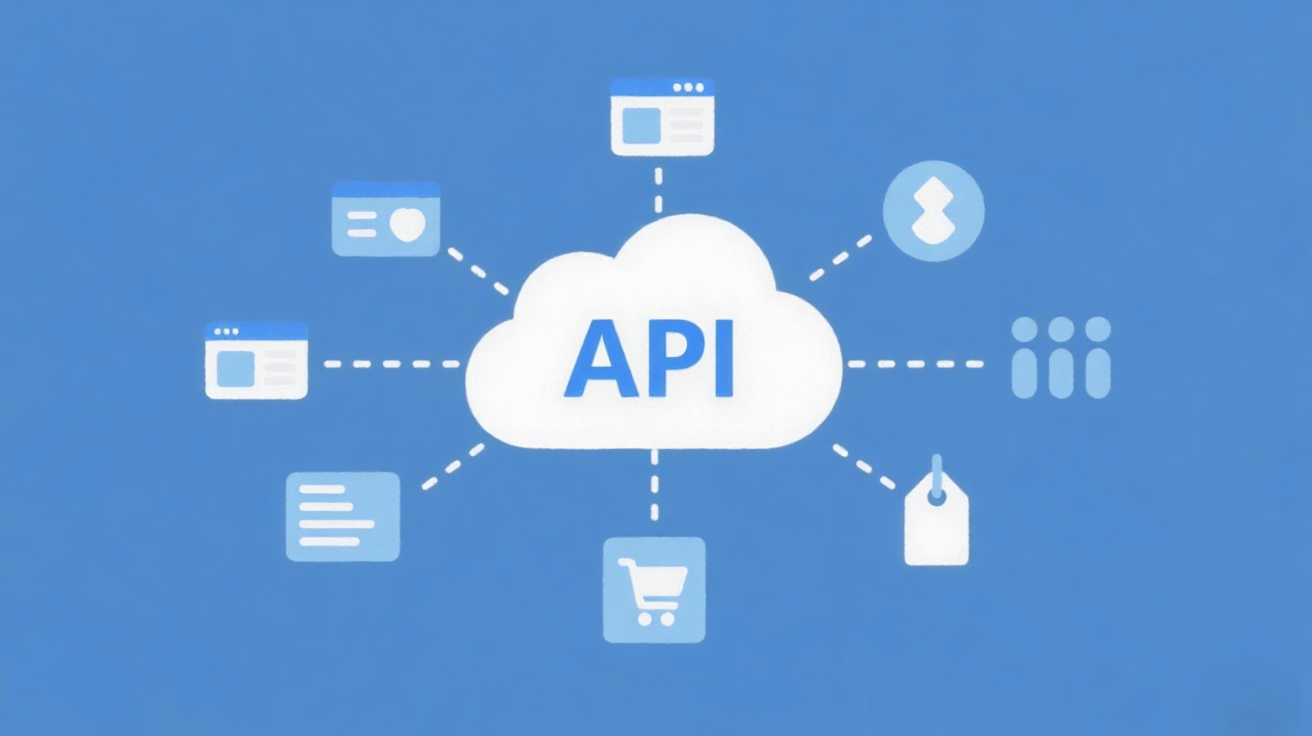
For developers juggling multiple providers, the operational overhead of tracking these costs can become a project in itself. This is where aggregation layers shine. TokenMix.ai offers a pragmatic solution by exposing 171 AI models from 14 providers behind a single OpenAI-compatible endpoint, which means you can swap models with a simple string change in your existing codebase. Its pay-as-you-go pricing without a monthly subscription is refreshing, and the automatic provider failover and routing helps ensure that a spike in usage or an outage on one provider doesn’t force you into an expensive emergency fallback. It is a solid option, though you should also evaluate OpenRouter for its community-driven model list and LiteLLM if you prefer a self-hosted proxy that you control entirely, or Portkey for more granular observability features.
The real cost trap in 2026 is not the model inference itself but the orchestration logic that generates hidden token usage. Consider a typical agentic workflow where an LLM calls a tool, gets a result, and then calls itself again to process that result. If you are not careful, you will be sending the entire conversation history—including the verbose tool output—back to the model on every turn. This is the classic compounding token problem. A single web search can return 10,000 tokens of irrelevant text that you then feed into the next API call, effectively multiplying your cost by the number of agent steps. The fix is aggressive context pruning: summarise tool outputs before injecting them into the conversation, and use a sliding window that drops older messages that are no longer relevant to the current task.
Another area where costs silently balloon is in evaluation and testing. Running a regression suite of 500 prompts against a frontier model ten times a day to validate a prompt tweak is a fast way to generate a five-figure monthly bill. Smart teams now run these evaluations against cheaper, faster models first to catch blatant regressions, reserving the expensive frontier models for a final validation pass on a smaller subset. Similarly, for batch processing jobs that are not latency-sensitive, you should look at asynchronous batch APIs from OpenAI and Anthropic, which offer substantial discounts—often 50% off—in exchange for a delay of a few hours. This simple scheduling decision can halve your processing costs for data enrichment or offline summarization tasks without any impact on the end user.
Pricing dynamics in 2026 are also more volatile than ever, with model releases happening quarterly and price cuts following shortly after. A model that was cost-prohibitive in January might be the budget champion by June. This means your cost optimization is not a one-time setup but a recurring audit. You need to build a dashboard that tracks cost per successful request, cost per token, and cost per task completion, broken down by model and by feature. If you are using a gateway like TokenMix.ai or OpenRouter, you get unified billing and usage logs, which simplifies this analysis considerably. Without this telemetry, you are flying blind, and you will inevitably get a shock when the monthly statement arrives.
Finally, consider the fundamental trade-off between prompt engineering and fine-tuning. While fine-tuning a smaller model like Llama 3.1 8B or Mistral 7B can drastically reduce per-token cost for a specific task, it introduces a maintenance burden and requires high-quality training data. For most applications, a well-engineered few-shot prompt on a mid-tier model will remain more cost-effective than a fine-tuned model that you must host yourself. The key is to measure this empirically. Run a controlled test comparing the quality and latency of a fine-tuned small model against a prompt-tuned large model, and calculate the break-even point based on your request volume. Only if you are processing millions of requests per day does the fixed cost of fine-tuning and hosting begin to look attractive. Your goal is not to minimize token spend in isolation, but to minimize the cost of delivering a specific outcome, and that requires a relentless focus on the entire request lifecycle.