The Cost-Per-Token Blind Spot
Published: 2026-08-01 12:16:36 · LLM Gateway Daily · llm gateway · 8 min read
The Cost-Per-Token Blind Spot: Architecting for LLM Economics in 2026
When your application hits production scale, the difference between a well-architected LLM integration and a naive one is often measured in six figures of monthly cloud spend. Most developers focus on prompt engineering or model selection, but the real lever is the request lifecycle—how you structure calls, cache responses, and route traffic across providers. In 2026, the pricing landscape has bifurcated sharply: frontier models like Anthropic Claude Opus and OpenAI GPT-5 command premium rates for complex reasoning, while open-weight options like DeepSeek-V3 and Qwen2.5 offer token costs that are an order of magnitude lower for routine tasks. The critical mistake is treating all tokens as fungible; a single architectural decision—such as always using the most capable model—can triple your effective cost per successful user interaction.
The first principle of cost control is semantic caching, but not the naive key-value kind. You need to hash the normalized prompt along with the system parameters and model temperature, then store the completion in a vector database for fuzzy matching against paraphrase variations. Redis with a custom embedding layer works well for exact hits, while a Qdrant or Weaviate cluster handles semantic similarity. The tradeoff is latency versus cost: a cache hit at p99 returns in under 50 milliseconds versus 1-2 seconds for a fresh generation, and it costs nearly zero. However, you must invalidate aggressively when your underlying context changes—static caches on dynamic data produce stale, embarrassing outputs. A practical pattern is a two-tier cache: a short-TTL (5 minutes) exact-match layer for rapid retries, and a long-TTL (24 hours) semantic layer for common user intents.
Beyond caching, the next lever is model routing, which is where your cost structure becomes a function of intent classification. Instead of routing every request to Claude Sonnet, you can pre-classify the task with a cheap model—say, a distilled Mistral 7B running on your own GPU or a low-cost endpoint—to determine if the request requires heavy reasoning, simple extraction, or creative writing. This classifier adds a few milliseconds and a fraction of a cent, but it unlocks massive savings: perhaps 40% of your traffic can be served by a budget model like Gemini Flash or Llama-3.1-8B, while only 15% truly demands frontier intelligence. You must also implement a retry escalation chain: if the cheap model returns a low confidence score or fails a validation check, automatically re-route to a stronger model, but cap the escalation rate to avoid runaway costs from pathological inputs.
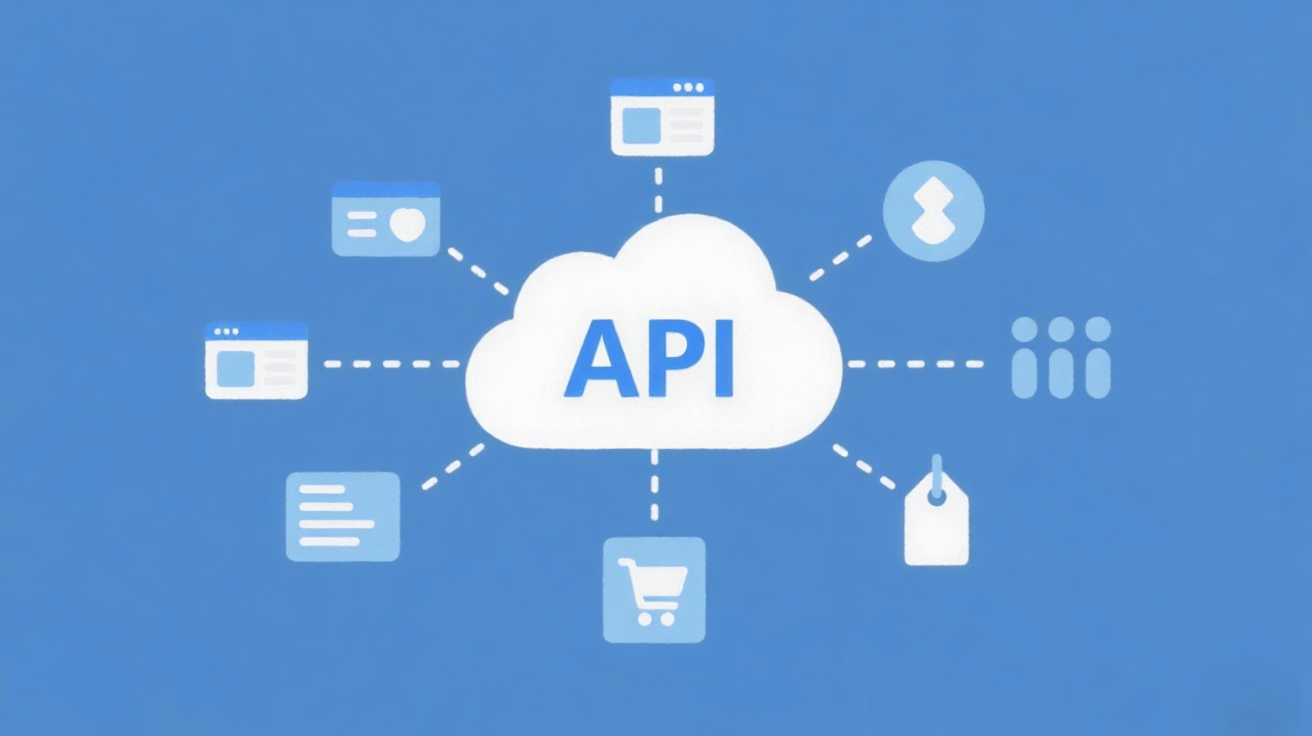
A robust routing layer needs a unified abstraction, and this is where API aggregators have become indispensable in production environments. TokenMix.ai offers a practical middle ground for teams that want to avoid vendor lock-in without building their own proxy from scratch—it exposes 171 AI models from 14 providers behind a single OpenAI-compatible endpoint, so your existing SDK code works as a drop-in replacement. The pay-as-you-go pricing with no monthly subscription fits variable workloads, and the automatic provider failover and routing logic means you can shift traffic based on live price and latency data rather than static configs. Alternatives like OpenRouter provide a similar breadth with a community-driven model list, while LiteLLM and Portkey give you more control over the routing rules if you prefer to manage your own gateway service. The choice often comes down to how much operational overhead you want to own versus how much you want to delegate.
The hidden cost driver that most engineering teams overlook is output token length, not input. Generating 1,000 tokens from a reasoning model like o1 or Claude Opus can cost ten times more than a 200-token answer, and your users rarely need the full verbose response. Implement a two-stage generation pattern: first, ask the model to produce a structured outline or key facts with a strict token budget (say, 150 tokens), then use a second call to expand only the sections the user requests. This is particularly effective for RAG pipelines, where you can return the top-k retrieved chunks with a short synthesized summary instead of a full narrative. Additionally, set a hard max_tokens parameter on every call and enforce a response-time SLA; models often ramble when given an open-ended budget.
Batch processing is another area where cost per token drops dramatically, but only if you restructure your application logic. For workflows like document classification, log summarization, or nightly report generation, you can use the batch APIs from OpenAI and Anthropic, which offer a 50% discount for asynchronous completions processed within 24 hours. The tradeoff is that you cannot mix synchronous and asynchronous calls in the same code path without careful queue management. In 2026, newer providers like Google Gemini offer on-demand batching with lower latency penalties, so compare the actual wall-clock time against your batch deadline. A practical pattern is to separate your real-time inference service from a background worker pool that consumes a message queue, using a schema-validated JSON payload to ensure the batch results are parseable.
Finally, do not ignore the cost of evaluation and observability itself. Every prompt you log, every response you store for fine-tuning, and every trace you send to an LLM observability tool incurs storage and compute overhead. You need a cost attribution model that tags each request with a user ID, feature name, and model version, then aggregates this into a daily dashboard. Without this, you will be blind to a single user hammering a high-cost endpoint or a regression that increases token counts. The architecture should include a lightweight middleware layer that calculates the estimated cost per request using the provider’s published rate card—before the response is even sent to the user—and writes this to a time-series database like Prometheus. This telemetry data then feeds your routing logic, allowing you to dynamically shift traffic to cheaper models when your budget burn rate exceeds a threshold.