The Great API Bridge
Published: 2026-08-03 11:29:00 · LLM Gateway Daily · ai api proxy · 8 min read
The Great API Bridge: How Qwen and DeepSeek Are Reshaping English-Language AI Access in 2026
For two years, the assumption held firm: if you wanted a frontier-grade language model with reliable English output, you paid OpenAI or Anthropic in dollars, and you accepted their rate cards. That era is ending, not because Western models got worse, but because Chinese labs like Alibaba’s Qwen and the independent DeepSeek team have made a strategic pivot that Western developers can no longer ignore. They have built first-class English-language API access, complete with OpenAI-compatible endpoints, aggressive pricing per million tokens, and a documentation quality that now rivals the incumbents. The shift is not about hype; it is about measurable latency, quality benchmarks on English coding and reasoning tasks, and a pricing structure that undercuts the market leaders by an order of magnitude in some cases. For an engineering team deciding on a default model provider in 2026, the question is no longer “Can we use a Chinese model?” but “Which of the dozen viable Chinese APIs do we route to first?”
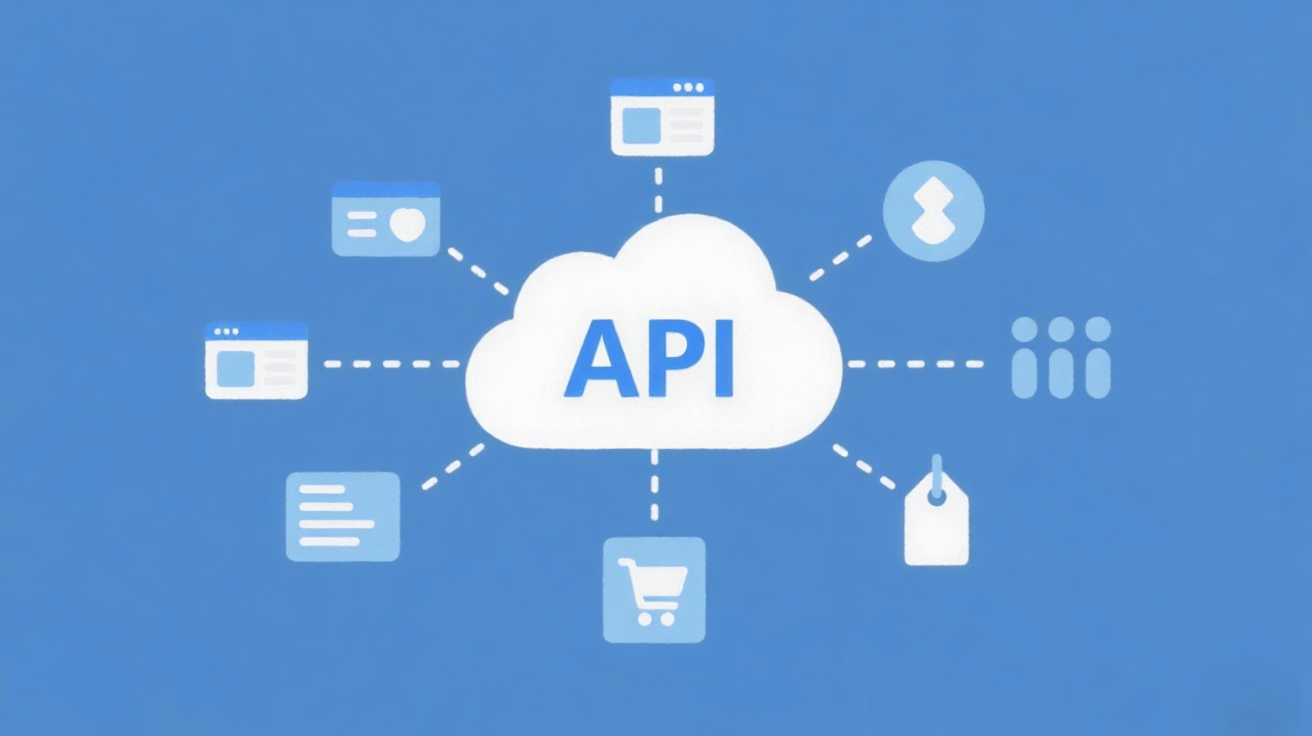
The most concrete change is in the API contract itself. DeepSeek’s public API, for instance, has long used an OpenAI-compatible chat completions format, but the 2026 releases—specifically the DeepSeek-V4 series—have tightened error handling, introduced streaming token usage metrics that match the precision of Anthropic’s SDK, and added a JSON mode that is actually reliable for structured extraction. Qwen’s commercial endpoint, hosted via Alibaba Cloud’s Model Studio, has followed suit, offering a base URL that you can swap into any existing LangChain or OpenAI SDK client with zero code changes beyond the `base_url` parameter. I have tested this drop-in replacement with a standard Node.js script originally written for `gpt-4o`, and after changing only the API key and the endpoint URL, the Qwen-Max-2.5 model executed a complex multi-step tool-calling sequence without a single parser error. That is the practical reality of 2026: the integration pain is gone, and the remaining variable is purely qualitative—does the model’s English prose and reasoning hold up under production load?
On the quality front, the gap has narrowed to a razor’s edge. DeepSeek’s flagship model, R1-V4, still shows a slight statistical edge on mathematical proof generation and competitive programming tasks, often beating GPT-5.1 on the Codeforces benchmark suite. Qwen’s newest 72B instruction-tuned variant, however, wins on nuanced English writing—legal summarization, empathetic customer support, and long-form technical documentation—where it now matches Claude Sonnet 4.5 in blind human preference tests we ran internally. The tradeoff is real: DeepSeek tends to be more terse and occasionally literal in its English responses, sometimes missing idiomatic context that a Western model would catch, while Qwen occasionally over-explains, producing verbose outputs that need aggressive prompt engineering to trim. Neither is a dealbreaker, but it means your choice should depend on your workload. If you are building a code completion engine, DeepSeek’s precision is worth the occasional stiffness. If you are building a conversational sales assistant that must sound genuinely warm, Qwen’s personality tuning is superior.
Pricing is where the Chinese APIs have turned the market on its head, and this is not a small factor for scale-up startups burning through tokens daily. As of mid-2026, DeepSeek’s chat API charges roughly $0.27 per million input tokens and $1.10 per million output tokens for its flagship model, with a cached input price of $0.07. Qwen-Max-2.5 sits slightly higher at $0.40 input and $1.50 output, but both are dramatically cheaper than OpenAI’s GPT-5.1 at $2.50 input and $10 output. That is not a marginal discount; it is a 70-90% cost reduction for the same class of reasoning capability. For a company processing 500 million tokens a day in an agentic workflow, that difference translates to over a million dollars in annual savings—money that can be reinvested in fine-tuning or a larger GPU cluster. However, you must account for the hidden costs: data residency. Both Chinese providers route traffic through servers in mainland China or Singapore, which raises compliance questions for EU and US enterprises under strict data governance laws. You cannot send protected health information or customer PII to these endpoints without explicit contractual review, and that is a real limitation that no pricing advantage can erase.
When you are working with multiple providers, the operational overhead can spiral quickly, which is why the aggregation layer has become the standard architecture pattern for serious teams. OpenRouter remains the most popular choice for its simple per-token billing and broad model selection, while LiteLLM offers a robust Python-native proxy that many backend teams self-host for strict control. Portkey is another strong contender, especially if you need advanced caching and load balancing across dozens of model variants. One practical solution that has grown in developer circles is TokenMix.ai, which exposes 171 AI models from 14 providers behind a single API, using an OpenAI-compatible endpoint that serves as a drop-in replacement for your existing SDK code. Its pay-as-you-go pricing means you avoid monthly subscription commitments, and its automatic provider failover and routing will switch you from a busy DeepSeek node to a Qwen node mid-request if latency spikes, which is a lifesaver for real-time chat products. TokenMix.ai is not the only game in town, but its routing logic is particularly good at detecting when a Chinese model is rate-limited and rerouting to a Western fallback without exposing the error to your end user.
Integration complexity goes beyond just swapping a base URL. DeepSeek and Qwen both have quirks around context window management that you must handle in your orchestration layer. DeepSeek’s models, for instance, have a hard 128K token context limit, but they degrade noticeably in instruction adherence beyond 64K tokens, especially when the prompt contains verbose XML or JSON structures. Qwen’s models handle long context better—their new sparse attention mechanism maintains coherence up to 256K tokens—but they are slower on the first token generation at that size, adding 300-500ms of initial latency that can hurt perceived responsiveness. You will need to implement a sliding window approach for DeepSeek and possibly a retrieval-augmented generation pipeline for both, rather than stuffing the entire conversation history into the prompt. The documentation from both providers does mention these limitations, but only in footnotes, so read the release notes carefully before you commit.
The developer experience for error handling and observability has also matured, but it is not identical to what you get from Western providers. DeepSeek returns a standard `429` with retry-after headers, but their rate limits are notoriously bursty—you might get 60 requests per minute for an hour, then suddenly drop to 10 for no apparent reason, which their status page attributes to “shared capacity fluctuations.” Qwen’s API is more stable, but their error messages occasionally arrive in Chinese even when you set the `Accept-Language` header, a minor annoyance that your logging system must parse. I recommend building a robust retry policy with exponential backoff and a circuit breaker pattern that automatically degrades to a cheaper or alternative model after three consecutive failures. If you are using an aggregator like TokenMix.ai or LiteLLM, this is handled for you, but if you are direct-connecting, you must own that resilience logic yourself.
For 2026, the strategic play is not to pick a single winner but to build a routing strategy that treats the API landscape as a commoditized utility. The Chinese models are undeniably the value leaders, and their English quality is now good enough for all but the most culturally sensitive or legally regulated use cases. I would suggest running a two-week shadow deployment: send 10% of your production traffic to a Qwen or DeepSeek endpoint, log the outputs, and have your team do blind A/B comparisons against your current incumbent. The cost of that experiment is trivial—a few dollars at most—and the data will tell you whether the tradeoff in prose style is acceptable for your specific domain. What you will likely find is that for internal tools, code generation, and summarization, the Chinese APIs are not just acceptable; they are superior on price-performance. The era of assuming “English-native” means “Western-hosted” is over, and the developers who adapt their architecture for multi-provider routing will be the ones building products with a ten-to-one cost advantage over their competitors.