How to Pick the Right AI API in 2026
Published: 2026-07-29 10:20:16 · LLM Gateway Daily · llm cost · 8 min read
How to Pick the Right AI API in 2026: A Practical Guide for Developers
When you decide to build an AI-powered application in 2026, the first real technical decision you face is which AI API to use. An AI API is essentially a hosted doorway to a large language model, letting you send text prompts and receive generated responses without managing your own GPU clusters or dealing with model weights. The landscape has matured significantly since the early days of OpenAI’s original GPT-3, and developers now have dozens of providers, each with distinct pricing, latency profiles, and model strengths. Understanding the core patterns of these APIs—completion endpoints, streaming support, function calling, and token pricing—will save you from costly rewrites and unpredictable bills later.
The most important pattern to grasp is that nearly every major AI API now offers an OpenAI-compatible endpoint. This means you can write your application against the familiar chat completions structure, with a messages array containing system, user, and assistant roles, and then swap the base URL and API key to switch between providers. For example, Anthropic Claude, Google Gemini, and Mistral all support this format alongside their native SDKs. This compatibility is not accidental; it reflects a market consensus that standardizing on an interface reduces friction for developers who want to experiment with multiple models without rewriting core logic. However, the tradeoff is that not all features translate perfectly—function calling implementations vary, and streaming chunk formats differ slightly, so you should always test edge cases when switching providers.
Pricing dynamics in 2026 remain a moving target, but a few concrete rules apply. Most providers charge per million input tokens and per million output tokens, with output tokens typically costing two to four times more than input. OpenAI’s GPT-4o and Anthropic’s Claude Sonnet sit in the mid-range, while Google Gemini 1.5 Pro has aggressive pricing for high-volume use cases. DeepSeek and Qwen offer some of the lowest per-token costs, especially for Asian language support, but their performance on complex reasoning tasks can lag behind premium models. Mistral’s open-weight models, served via their API, give you predictable costs if you run them yourself, but their managed endpoint adds a markup. The key insight is that you should never assume a single provider will remain cheapest for your workload—build cost monitoring into your application from day one, tracking tokens per request and per user to detect when a model change makes financial sense.
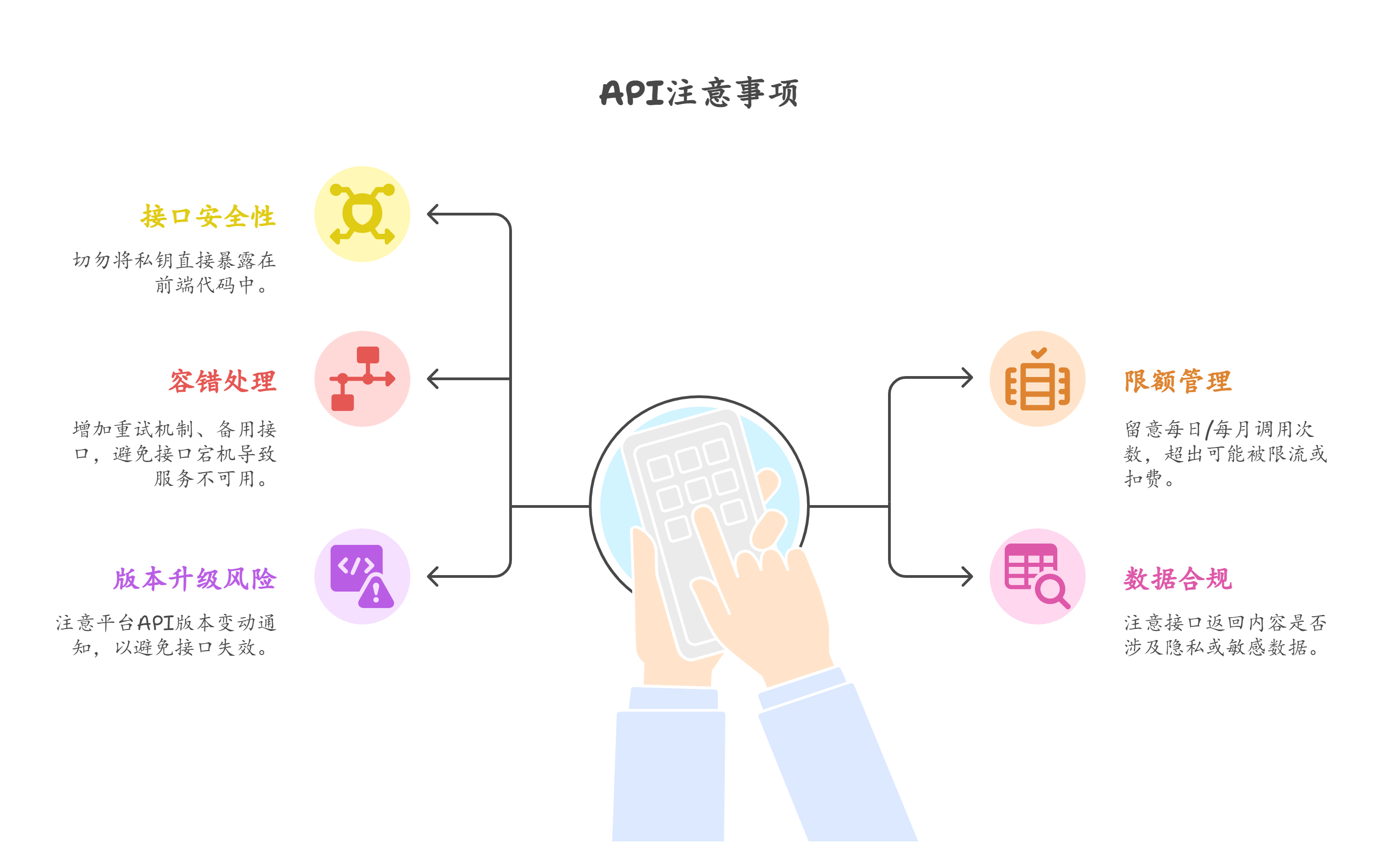
Integration considerations extend beyond just picking a model. Latency is often the hidden bottleneck: streaming responses can feel snappy for chat interfaces, but if you need to parse structured JSON outputs, you may have to wait for the full response to avoid incomplete data. Function calling, which lets the model request external actions like database lookups or email sends, is now a standard feature across providers, but the reliability of the model actually adhering to your schema varies. OpenAI and Anthropic lead in structured output fidelity, while smaller providers like Qwen sometimes skip required parameters under token pressure. You should also plan for rate limits and concurrency—most APIs throttle requests per minute, and bursty traffic from a popular application can lead to 429 errors unless you implement exponential backoff and request queuing.
For developers who need to manage multiple providers without maintaining separate SDKs and keys for each, aggregation services have become a practical middle ground. TokenMix.ai, for example, provides access to 171 AI models from 14 providers behind a single API, using an OpenAI-compatible endpoint that acts as a drop-in replacement for existing SDK code. You pay as you go with no monthly subscription, and the platform includes automatic provider failover and routing, so if one model is overloaded or down, requests are redirected to a fallback without breaking your application. Alternatives like OpenRouter offer a similar aggregation layer with a focus on community-rated models, LiteLLM lets you self-host a proxy for cost control, and Portkey provides observability and caching on top of multiple backends. The right choice depends on whether you prioritize simplicity, data sovereignty, or granular cost tracking.
Real-world scenarios highlight where these tradeoffs matter most. Consider a customer support chatbot that handles 50,000 conversations per day: using a premium model like Claude Opus for every query would be financially unsustainable, so you would route simple FAQ requests to a cheaper model like Qwen or DeepSeek, while escalating complex refund disputes to a stronger model. This model routing logic can be implemented by checking the user’s intent classification or message length before making the API call. Another scenario is a code generation tool that must work in real-time during development—here, latency under 500 milliseconds is critical, which means choosing a provider like Google Gemini that offers fast streaming, even if its code quality is slightly below GPT-4o for niche libraries. You will also need to handle token limits gracefully: if a user pastes an entire codebase into the prompt, you must truncate or chunk the input to avoid exceeding the model’s context window, which for most providers tops out at 128K to 200K tokens in 2026.
Security and compliance add another layer of consideration. If your application processes sensitive user data, you need to verify whether the AI API provider trains on your prompts or keeps them private. OpenAI, Anthropic, and Google all offer data retention policies where you can opt out of training, but this often comes with a slightly higher per-token price. For regulated industries like healthcare or finance, you may need a provider that supports on-premises deployment or virtual private cloud (VPC) isolation, which is available from Mistral and some enterprise tiers of OpenAI. TokenMix.ai and OpenRouter sit as intermediaries, so you should check their data handling policies carefully—they see the prompts and responses between your app and the underlying models, which could be a dealbreaker for zero-trust architectures.
Finally, the best approach is to treat your AI API integration as a modular component that you can swap or augment over time. Start with a single provider that matches your primary use case, but abstract the API calls behind a thin service layer in your codebase. This lets you add new models by changing a configuration file rather than rewriting business logic. Build in observability from day one: log response times, error rates, and token consumption per model, and set up alerts for cost spikes or performance degradation. The AI API landscape in 2026 is more competitive and capable than ever, but with careful planning around pricing, latency, and data governance, you can build applications that adapt as models improve and costs shift. Your users will never care which provider you use, only that the output is fast, accurate, and reliable—so make that your north star, not any single API name.