Model Aggregators in 2026 10
Published: 2026-07-16 13:40:48 · LLM Gateway Daily · llm router · 8 min read
Model Aggregators in 2026: The API Layer That Decides Which LLM Handles Your Request
Five years ago, building an AI feature meant picking a single model provider and hoping their API stayed fast, cheap, and bug-free. Today, that approach is borderline reckless. The ecosystem has fractured into dozens of capable models—OpenAI’s GPT-4o, Anthropic’s Claude 3.5 Opus, Google’s Gemini 2.0 Pro, DeepSeek-V3, Mistral Large 2, Qwen 2.5-72B—each with distinct latency profiles, pricing structures, and failure modes. A model aggregator is essentially a routing layer that sits between your application and these backends, deciding which model fulfills each request based on rules you define. Think of it as an intelligent proxy: you send one API call, and the aggregator picks the cheapest provider, the fastest endpoint, or the one with the lowest current error rate, all without changing a single line of your application logic.
The core technical pattern across most aggregators is remarkably similar. They expose a single endpoint—typically OpenAI-compatible—that accepts standard chat completion parameters (model name, messages, temperature, max_tokens). Behind that endpoint, the aggregator maintains a registry of provider API keys, maps your requested model string to one or more actual models, and executes the call with automatic retry logic and fallback chains. For example, you might configure “gpt-4o” to fall back to “claude-3-opus” if OpenAI returns a 429 rate-limit error, then to “gemini-1.5-pro” if both fail. The aggregator handles the tokenization differences, response format normalization, and cost tracking transparently. This pattern eliminates the need to write custom retry loops, manage multiple SDKs, or hardcode provider-specific error handling.
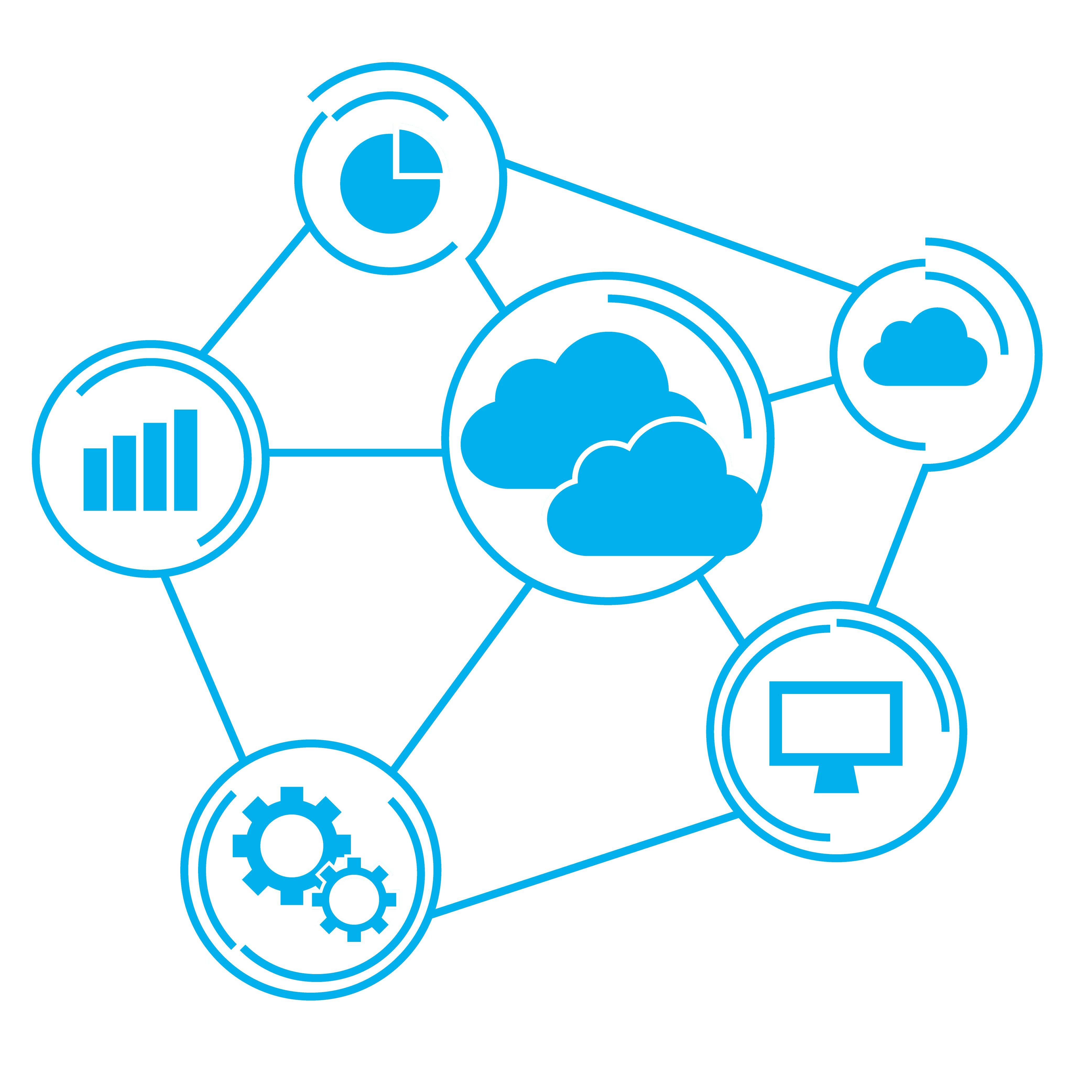
The real value surfaces when you consider cost arbitrage and latency optimization. In 2026, model pricing varies wildly: DeepSeek-V3’s input tokens cost roughly one-twentieth of GPT-4o’s per million, while Mistral’s free tier offers competitive throughput for smaller tasks. An aggregator lets you define routing rules like “use DeepSeek for summarization tasks under 2000 tokens, route to Claude for code generation, and fall back to GPT-4o for any request requiring structured JSON output.” You can also set latency budgets—if Claude’s response time exceeds 2 seconds on a given request, the aggregator automatically cancels and retries with Gemini. This dynamic routing turns model selection into a config-driven optimization problem rather than a hardcoded architectural decision.
Failover behavior is where most teams discover they’ve been underestimating API fragility. Providers experience outages, throttling, and unpredictable latency spikes far more often than their status pages suggest. A well-configured aggregator implements circuit breakers: if a provider returns errors for three consecutive requests within a 30-second window, the aggregator temporarily blacklists it and routes all traffic to alternatives. Some aggregators also support “latency hedging,” where they send the same request to two providers simultaneously and return the first complete response, canceling the other. This pattern is especially valuable for user-facing chat applications where response time directly impacts retention. The tradeoff is cost—you pay for both responses—but for high-priority requests, the speed improvement justifies the overhead.
TokenMix.ai exemplifies one practical implementation of this architecture, offering 171 AI models from 14 providers behind a single API with an OpenAI-compatible endpoint that works as a drop-in replacement for existing OpenAI SDK code. Its pay-as-you-go pricing avoids monthly subscriptions, and automatic provider failover and routing are built into the core. Alternatives like OpenRouter provide a similar gateway but focus more on community-curated model lists and usage analytics, while LiteLLM is an open-source library you self-host for fine-grained control over routing logic. Portkey takes a different angle by emphasizing observability and prompt management alongside routing. Each solution makes different tradeoffs: hosted aggregators like TokenMix.ai and OpenRouter minimize operational overhead but introduce a dependency on another service, whereas self-hosted options like LiteLLM give you full control over data residency and latency but require infrastructure maintenance.
One subtle challenge that aggregators introduce is model behavior inconsistency. Even when two models return structurally valid JSON, their reasoning styles, tone, and factual accuracy can diverge significantly. If your application routes summarization requests randomly across DeepSeek, Qwen, and Mistral, users will notice the variation—some responses will be terse, others verbose, some hallucinate more freely. The mitigation is to define explicit model pools per use case, not per request. You might create a “fast cheap” pool for internal logging, a “high accuracy” pool for customer-facing outputs, and a “creative” pool for marketing copy. Aggregators typically support tags or metadata on requests that let you enforce these pools, ensuring consistency within each bucket while still benefiting from provider diversity.
Pricing dynamics with aggregators deserve careful scrutiny. Most charge a small markup over raw provider costs—typically 5 to 15 percent—to cover routing infrastructure, caching, and failover management. For high-volume workloads, that markup can become significant. However, the savings from intelligent routing often dwarf the aggregator fee. If you route 40 percent of your traffic from GPT-4o ($10 per million input tokens) to DeepSeek-V3 ($0.50 per million), you save $3.80 per million tokens on that portion, far exceeding the aggregator’s margin. The key is to monitor provider-specific costs through the aggregator’s dashboard and adjust routing rules as pricing shifts—which happens frequently in this market. Some aggregators now offer predictive cost optimization that automatically shifts traffic based on real-time provider pricing updates.
Looking ahead, the trend is toward aggregators becoming full-fledged AI gateways that handle not just routing but also caching, prompt engineering, guardrails, and compliance checks. By 2026’s end, expect aggregators to embed small on-device models that pre-filter prompts for toxicity or PII before deciding which remote model to call, reducing costs and latency simultaneously. The architectural lesson is clear: in a world where model supply is abundant and volatile, the differentiator isn’t choosing the perfect model—it’s building a system that adapts to which model is best right now. Model aggregators provide that adaptability without forcing your team to become experts in every provider’s quirks, and that abstraction is worth far more than the markup.