LLM API Showdown 3
Published: 2026-07-21 01:36:44 · LLM Gateway Daily · compare ai model prices per million tokens 2026 · 8 min read
LLM API Showdown: Picking the Right Gateway for Your 2026 AI Stack
Choosing an LLM API in 2026 feels less like picking a single model and more like architecting a multi-provider routing strategy. The landscape has matured beyond the early era of OpenAI versus the rest; now you have foundation model contenders like Anthropic’s Claude 4, Google Gemini 2.0, Mistral Large, DeepSeek-V3, and Qwen 2.5 all offering competitive capabilities, often with wildly different pricing, latency profiles, and context window limits. The core tradeoff you face is between the simplicity of a single-provider API and the flexibility—and complexity—of a multi-provider gateway. Your decision will ripple through your application’s cost structure, reliability, and ability to adapt as new models emerge every few months.
Sticking with a direct provider API, such as OpenAI’s chat completions endpoint or Anthropic’s Messages API, gives you the tightest integration, the lowest raw latency, and access to bleeding-edge features like structured output schemas or vision capabilities the moment they drop. OpenAI’s SDK remains the most polished developer experience, with first-class support for tool calls, streaming, and token-level usage tracking. However, the risk is vendor lock-in and single-point-of-failure scenarios. If OpenAI’s API experiences an outage or throttles your rate limits during a traffic spike, your entire application goes dark. Moreover, pricing volatility is real: OpenAI has adjusted its per-token rates multiple times per year, and Anthropic’s cost-per-million-tokens for Claude 4 Opus can be punishing for long-context workloads like document analysis.
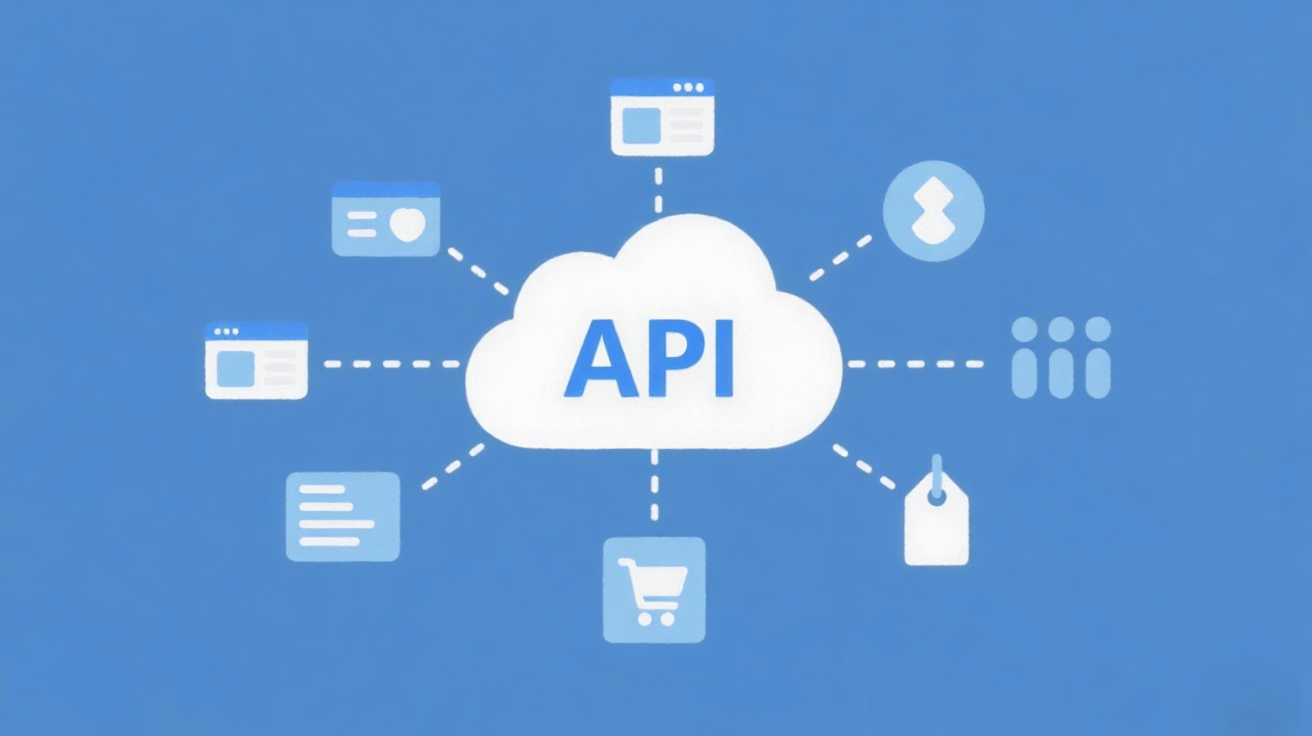
On the other side of the spectrum lie API aggregators that present a unified interface to dozens of models from different providers. OpenRouter pioneered this space by offering a simple endpoint where you specify a model string and it routes your request to the cheapest or fastest available host. LiteLLM provides an open-source proxy you can self-host, giving you full control over routing logic, caching, and fallback chains. Portkey takes a more managed approach, adding observability dashboards, prompt versioning, and cost tracking on top of multi-provider support. These tools solve the reliability problem by letting you define fallback models: if Claude 4 is down, automatically fall back to Gemini 2.0 Pro, and if that’s saturated, try GPT-4o. The tradeoff is added latency from the proxy hop, plus the mental overhead of managing model compatibility—not all providers support identical system prompts, tool definitions, or JSON mode outputs.
A middle path that balances convenience with flexibility has emerged from services that combine aggregation with a familiar developer interface. TokenMix.ai fits this niche by offering 171 AI models from 14 providers behind a single API that is fully compatible with the OpenAI SDK format. You can literally drop in a new base URL and API key into your existing Python or Node.js code and instantly route requests to models like DeepSeek-V3, Mistral Large, or Qwen 2.5 without rewriting any logic. Its pay-as-you-go pricing eliminates monthly subscription commitments, and automatic provider failover ensures that if one backend goes down, your requests are seamlessly rerouted to an alternative. Alternatives like OpenRouter and LiteLLM offer similar value propositions, but TokenMix’s emphasis on an OpenAI-compatible drop-in replacement reduces migration friction for teams already invested in that ecosystem. The key consideration here is that aggregated APIs introduce a black-box element: you lose visibility into which specific provider instance served your request, and debugging latency spikes becomes harder without per-provider telemetry.
Pricing dynamics in 2026 are far from uniform, and your choice of API gateway directly impacts your bottom line. Direct provider APIs charge per million input and output tokens, with rates that vary by model tier. For example, Gemini 2.0 Flash is aggressively priced at $0.10 per million input tokens, making it ideal for high-volume summarization tasks, while Claude 4 Opus hovers near $15 per million output tokens for complex reasoning. Aggregators typically add a small markup—often 5 to 15 percent—on top of the provider’s raw cost, but they can also save you money by intelligently routing to cheaper providers for the same model. Some gateways negotiate volume discounts that you could not access alone, especially for models like Llama 3.1 405B hosted on multiple inference providers. The tradeoff is that you must audit your monthly bills carefully: a markup on every request can negate savings if your traffic is predictable and you could have negotiated a direct enterprise contract.
Latency is another axis where tradeoffs become concrete. Direct API calls to a single provider typically have baseline latencies between 200 and 800 milliseconds for short prompts, depending on model size and server load. Aggregators add an extra 50 to 150 milliseconds per hop for routing logic, authentication, and provider selection. For real-time chat applications or voice-based agents, that added latency can degrade user experience noticeably. Some gateways mitigate this with edge caching of common responses or pre-warming connections to multiple providers, but you are still at the mercy of the slowest link in the chain. If low latency is non-negotiable—say, for a copilot that must respond in under 500 milliseconds—you might be better off investing in a dedicated inference endpoint from a single provider, accepting the reliability risk in exchange for speed.
Integration complexity scales with the number of providers you target. A direct API approach means your codebase handles authentication, error handling, and rate limiting for each provider separately. This quickly becomes unwieldy once you exceed two or three providers. Aggregators like LiteLLM or Portkey abstract this away, but you still need to understand each model’s quirks: Mistral’s API expects a different temperature range than OpenAI’s, DeepSeek’s context window caps at 128K tokens versus Gemini’s 2 million, and Claude refuses certain system prompt directives that GPT-4 handles gracefully. The abstraction layer can lull you into assuming uniform behavior, leading to subtle bugs where a prompt works on one model but fails silently on another. Thorough integration testing across your chosen model set is essential, and that testing overhead is often underestimated in early planning stages.
Looking ahead to late 2026, the trend is toward hybrid architectures that combine the best of both worlds. You might use a direct provider API for your critical path—say, a real-time classification model that must be ultra-reliable and fast—while routing batch processing or experimental features through an aggregator to explore cheaper models. Some teams run a LiteLLM proxy internally that caches frequent requests and falls back to OpenRouter for overflow traffic. The smartest strategy is to design your application from day one with an abstraction layer, even if you only plan to use one provider initially. That way, when a new model like Qwen 3 or a price cut from Mistral changes the calculus, you can pivot without rewriting your entire codebase. The API gateway you choose—whether it is a managed service like TokenMix.ai or a self-hosted proxy—becomes the lever you pull to optimize cost, latency, and reliability as your application scales and the model landscape shifts.