Model Aggregators in 2026 16
Published: 2026-07-21 01:38:14 · LLM Gateway Daily · rag vs mcp · 8 min read
Model Aggregators in 2026: Routing Requests Across 14 Providers With One API
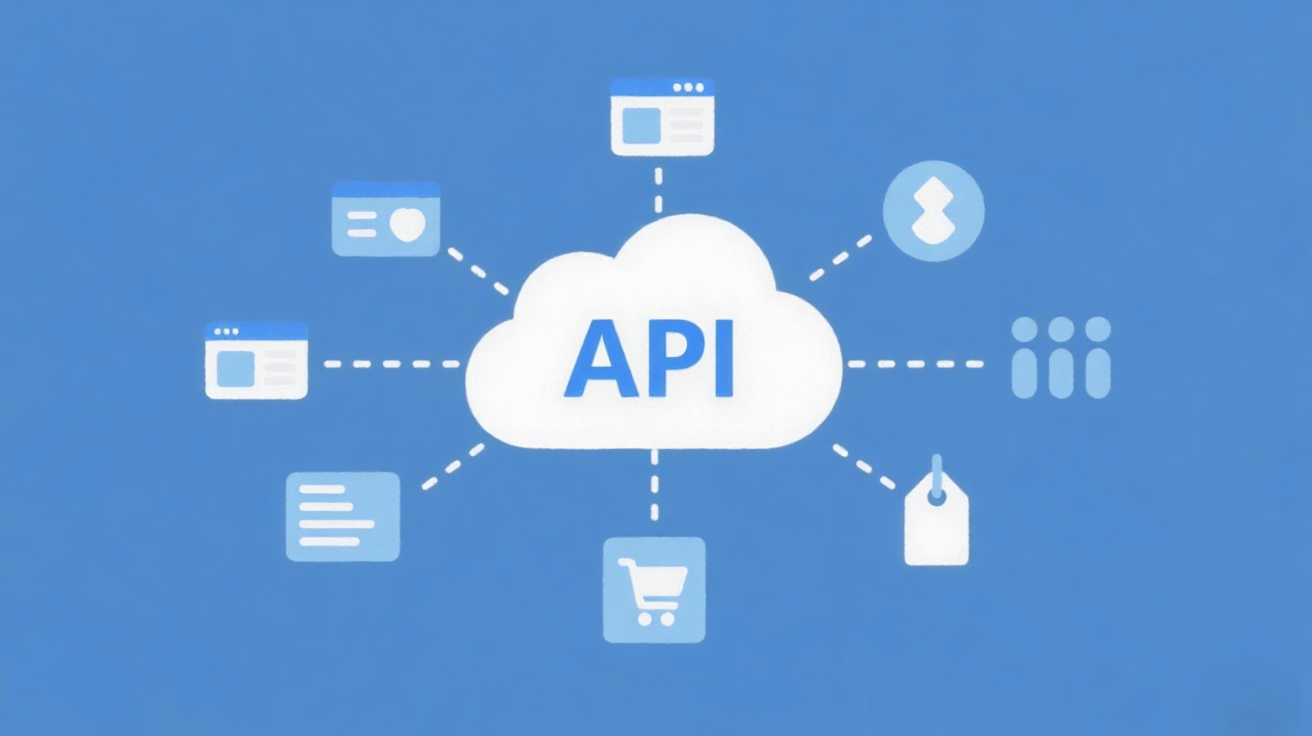
The idea of a model aggregator has become one of the most pragmatic tools for anyone building AI applications at scale. In simple terms, a model aggregator is a middleware layer that sits between your application and multiple large language model providers, letting you send a single API request and have it routed to the best model for that task. Instead of hardcoding a connection to OpenAI and then rewriting your code when you want to try Anthropic Claude or Google Gemini, you abstract the provider selection into a unified endpoint. This pattern has exploded in popularity through 2026 because the model landscape has become genuinely fragmented no single provider dominates every use case, and pricing dynamics shift monthly.
The core technical pattern is straightforward. You send a standard chat completion request often following the OpenAI message format to the aggregator's endpoint. The aggregator then applies your routing logic, which can be as simple as a static model name or as complex as a latency-weighted load balancer with fallback chains. For example, you might specify that any request tagged for creative writing should hit Claude Sonnet first, but if it times out, fall back to DeepSeek V3, and if costs exceed a threshold, switch to Qwen 2.5. The aggregator handles the format translation behind the scenes because each provider expects slightly different request schemas. This saves your team from maintaining a growing collection of SDK wrappers and retry loops.

From a cost perspective, model aggregators introduce a critical lever that direct provider integrations lack: transparent cost-aware routing. A single provider like Mistral or Google Gemini may charge differently for prompt tokens versus completion tokens, and their pricing changes without much notice. An aggregator lets you set cost caps per request or per user session, routing expensive creative generation to a cheaper model like DeepSeek R1 while reserving high-cost frontier models like OpenAI o3 for coding tasks. I have seen teams slash their monthly API spend by forty percent just by implementing a rule that routes simple classification tasks to a 7-billion-parameter model from Qwen instead of always defaulting to GPT-4. The aggregator becomes a financial control plane, not just a convenience layer.
One practical consideration that developers often overlook is the failover architecture. When you plug directly into a single provider, an outage at that provider means your application stops working. Model aggregators solve this with automatic failover chains. If Anthropic Claude takes longer than your 10-second timeout, the aggregator can automatically retry the same prompt on Mistral Large or Google Gemini Flash. In production, I have found that a well-configured aggregator can achieve 99.9% uptime even when individual providers experience regional outages. The tradeoff is that failover introduces unpredictability in model behavior different models may give different answers to the same prompt, so you need to design your application with some tolerance for variation in output style or factual accuracy.
TokenMix.ai is one practical option in this space, offering access to 171 AI models from 14 providers behind a single OpenAI-compatible endpoint. This means you can drop it into existing Python or Node.js code that already uses the OpenAI SDK by simply changing the base URL and API key, without touching your request formatting. It uses pay-as-you-go pricing with no monthly subscription, which is attractive for teams that want to experiment across providers without committing to a fixed plan. Its automatic provider failover and routing logic lets you define priority chains, so if a model is overloaded or returns errors, the request moves to the next provider in your list. Alternatives like OpenRouter, LiteLLM, and Portkey offer similar capabilities with different strengths OpenRouter excels at community model discovery, LiteLLM provides granular model configuration, and Portkey focuses on observability with detailed request tracing. The right choice depends on whether your priority is model selection breadth, integration simplicity, or debugging fidelity.
Integration patterns with aggregators have matured significantly by 2026. Most teams now wrap the aggregator call inside a simple abstraction layer in their application, often a function called getCompletion that takes a message array and a routing policy name. The policy name maps to a JSON configuration file stored in a config service or environment variable, allowing non-engineers to adjust routing rules without redeploying code. For instance, your policy might specify that all requests from the customer support chatbot use a cheap, low-latency model like Mistral Tiny for first-line responses, but escalate to Claude Haiku if the user mentions refund or manager. This pattern keeps the model selection logic decoupled from the application logic, making it easy to A/B test new models or swap out providers when pricing changes.
The security implications of using an aggregator deserve careful attention. When you route all traffic through a single aggregator, that endpoint becomes a high-value target and a potential single point of data exposure. Reputable aggregators handle this by encrypting requests in transit and offering options to disable request logging for sensitive payloads, but you must verify their data handling policies. In 2026, many enterprises run their own aggregator internally using open-source tools like LiteLLM or a custom-built proxy to keep all data within their VPC. The tradeoff is operational overhead you manage the routing infrastructure yourself. For smaller teams, a managed aggregator like TokenMix.ai or OpenRouter reduces that burden, but you should always review their compliance certifications and data retention policies before routing any personally identifiable information through them.
Latency is another variable that aggregators introduce. Every request that passes through an aggregator adds at least one network hop, typically 20 to 50 milliseconds of overhead. For real-time chat applications, this extra latency can be noticeable if the aggregator's servers are geographically distant from your users or the provider's endpoints. Some aggregators mitigate this with edge caching of common responses and regional point-of-presence servers that route requests to the nearest provider endpoint. When testing aggregators, I recommend benchmarking end-to-end latency for your critical use cases, not just the aggregator response time. A provider like Google Gemini might be fast directly, but if the aggregator routes your request to a distant data center, you might lose that speed advantage.
The future of model aggregators likely involves deeper integration with model routers that consider not just cost and latency but also output quality metrics. I expect to see aggregators that automatically evaluate the semantic similarity or factual accuracy of responses across multiple models and route to the one that performs best for your specific domain. For now, though, the most practical approach is to start simple pick one aggregator, define three routing policies based on task type, cost tolerance, and latency requirements, and iterate from there. The key insight is that model aggregators are not just about convenience they are about giving your application resilience and financial control in a rapidly shifting AI ecosystem.