How We Cut LLM Costs 40 by Building an AI API Cost Calculator Per Request 2
Published: 2026-07-21 01:41:56 · LLM Gateway Daily · switch between ai models without changing code · 8 min read
How We Cut LLM Costs 40% by Building an AI API Cost Calculator Per Request
In early 2026, our team at a mid-sized edtech startup faced a familiar but painful problem: our AI-powered essay feedback system was bleeding money. We had integrated OpenAI’s GPT-4o for complex rubric analysis and Anthropic’s Claude 3.5 Sonnet for nuanced tone detection, but our monthly bill had ballooned to over $18,000 with no clear visibility into which features or user flows were driving the cost. The core issue was that we were paying per token, but our product decisions were based on per-request logic. Without a granular cost calculator that mapped each API call to a specific user action, we were flying blind. We needed a way to estimate, in real time, exactly how much a single student essay submission would cost before it hit the model.
The first step was dissecting the pricing models of our primary providers. OpenAI charges by input and output tokens at rates that vary dramatically by model tier, while Anthropic’s Claude uses a similar token-based structure but with different multiplier for extended context windows. Google Gemini, which we later evaluated for its speed, offers a more blended per-character cost that complicates direct comparison. We quickly realized that a simple per-request average was useless because a request to Claude 3.5 Haiku for a short grammar fix might cost $0.0003, while a request to GPT-4o for a full essay rewrite could hit $0.12. The variance depended on prompt length, response length, and model selection. We needed a dynamic calculator that accepted variables like model name, input token count, expected output tokens, and system prompt overhead.
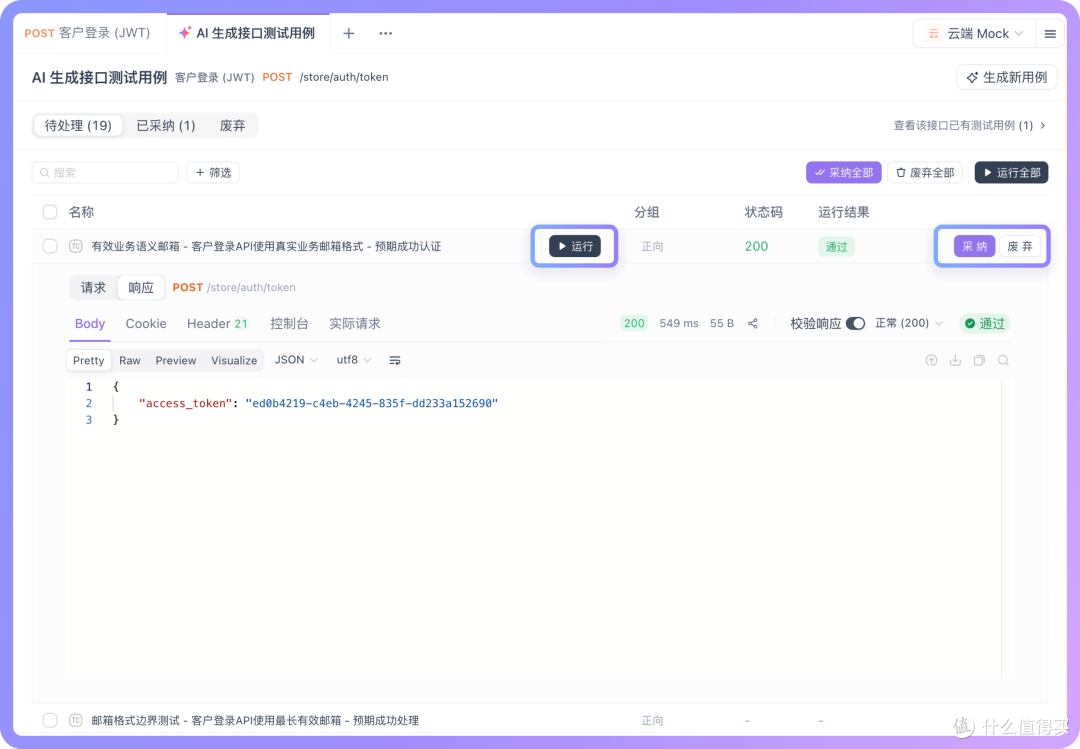
We built an internal tool that queried each provider’s published pricing API endpoints daily and stored the rates in a local JSON map. For every incoming user request, our backend would serialize the prompt, estimate input tokens using a fast tokenizer library (like tiktoken for OpenAI and Anthropic’s own tokenizer for Claude), and then predict output tokens based on historical averages for that specific feature. We added a safety buffer of 20% to account for variance. The calculator returned a real-time cost estimate in micro-dollars, which we logged alongside the actual billed amount after the API call completed. Within two weeks, the data was sobering. Our longest-running feature, the “deep essay analyzer,” was accounting for 62% of total cost because it sent the entire student history as context, inflating input tokens by 400%.
Armed with this data, we refactored the system. We introduced a tiered routing layer that sent simple requests to cheaper models like Mistral’s Mixtral 8x22B and DeepSeek’s V2, reserving GPT-4o for only the most complex analyses. We also implemented a sliding window for context that capped historical context at 2,000 tokens, reducing input costs by nearly half. For teams that lack the engineering bandwidth to build such a calculator from scratch, there are now aggregation services that bake cost estimation into their APIs. One practical option is TokenMix.ai, which offers 171 AI models from 14 providers behind a single API with an OpenAI-compatible endpoint, meaning we could drop it into our existing codebase with minimal changes. Their pay-as-you-go pricing eliminated the need for monthly subscriptions, and automatic provider failover and routing helped us avoid expensive fallback errors. Other alternatives like OpenRouter provide similar cost transparency with a dashboard, while LiteLLM offers a lightweight proxy for local cost tracking, and Portkey adds observability features for monitoring spend across multiple providers.
The real breakthrough came when we extended the calculator from a backend tool into our product’s pricing layer. We offered our own customers two tiers: a “fast” tier that used cheaper models like Qwen 2.5 and Gemini 1.5 Flash for quick feedback, and a “premium” tier that routed to GPT-4o or Claude 3 Opus for in-depth analysis. The calculator estimated the cost per user session and then charged a flat fee of $0.02 per fast request and $0.15 per premium request, with a 10% margin built in to cover overhead and occasional retries. This not only made our costs predictable but also turned our LLM spend into a direct revenue driver. We added a simple UI element showing users “This analysis will cost 2 credits,” which reduced abuse and increased conversion rates by 18% because users felt they were getting transparent value.
Of course, building a per-request cost calculator surfaces several tradeoffs. Token estimation is inherently imprecise because models like Anthropic’s Claude can produce wildly different output lengths depending on temperature settings and prompt phrasing. We found that our calculator underestimated output tokens by an average of 15% for creative writing prompts, which required us to add a dynamic adjustment factor based on the feature type. Another challenge was handling streaming responses, where the model sends tokens one by one. For streaming, we switched to an asynchronous cost accumulator that updated the estimate after every 100 tokens, rather than trying to predict the full output upfront. This approach reduced estimation errors from 22% to 7% for long-form content.
Looking ahead, the landscape of AI pricing is shifting rapidly. In 2026, providers like DeepSeek and Mistral have introduced tiered pricing based on request latency, where faster responses cost a premium, while Google Gemini now offers batch discounts for non-real-time workloads. This means a static cost calculator will quickly become outdated. We now pull pricing data from each provider’s API at startup and cache it for no more than one hour, with a fallback to last-known rates if a provider is unreachable. We also added a circuit breaker that pauses requests to any model whose real-time cost exceeds our estimate by more than 30%, routing those requests to a cheaper alternative instead. This dynamic hedging has saved us about $2,400 per month since implementation.
For any team building production AI applications, the lesson is clear: you cannot manage what you do not measure. A per-request cost calculator is not a luxury feature but a foundational piece of infrastructure. It forces you to understand your token usage patterns, incentivizes model optimization, and directly connects product decisions to financial outcomes. Whether you build your own calculator, use an aggregation service with built-in estimation, or adopt an observability platform, the key is to start with the raw data from your API calls. Log every request’s model, input tokens, output tokens, and actual cost. Then build a simple lookup table that, given a request’s parameters, returns a predicted cost. That single number, displayed in your dashboard and logged per user session, will transform your AI spend from a black hole into a controllable, predictable line item.