Designing Resilient LLM Gateways
Published: 2026-08-05 10:39:10 · LLM Gateway Daily · vision ai model api · 8 min read
Designing Resilient LLM Gateways: Automatic Model Fallback and Provider Failover in Production
The era of relying on a single large language model API is over, and by 2026, any serious production system treats model availability as a probabilistic event rather than a guarantee. Provider outages, rate-limit spikes, and model deprecations are not edge cases; they are operational realities that can cripple user-facing features if your architecture hard-codes a single endpoint. The solution is not merely to have a backup key but to design an abstraction layer—an LLM gateway—that encapsulates routing logic, retry policies, and semantic fallbacks. This layer becomes the single most critical piece of infrastructure for any AI application, transforming a fragile dependency into a manageable, observable component.
The core architectural pattern involves defining a unified request schema that normalizes provider-specific quirks, such as token limits, system prompt formats, and tool-calling conventions. Your gateway should accept a request with a prioritized list of model identifiers—for example, `claude-sonnet-4-5`, then `gpt-5-mini`, then `gemini-2.5-flash`—and a “fallback strategy” parameter. The simplest strategy is sequential: attempt the first model, catch any failure (non-200 status, timeout, or context-length exceeded), and move to the next. However, a more intelligent gateway goes beyond HTTP status codes to detect semantic failures, such as a refusal response or a JSON output that fails schema validation, which requires inspecting the payload body before deciding to fail over.
Implementing this robustly requires a stateful router that tracks real-time health metrics for each upstream provider. A naive approach using simple exception handling in a `try/catch` block will fail under sustained provider degradation, as you’ll hammer a dying endpoint with retries. Instead, incorporate a circuit breaker pattern: if a provider returns a 429 or 5xx three times within a five-minute window, open the circuit and route all traffic to the next healthy provider for a cooldown period. Furthermore, implement dynamic timeouts—a request to a fallback model should have a shorter timeout than the primary, because you are likely already late in your user’s request lifecycle. For cost optimization, you can also configure the router to prefer a cheaper model for non-critical requests, using the expensive flagship model only as a last resort.
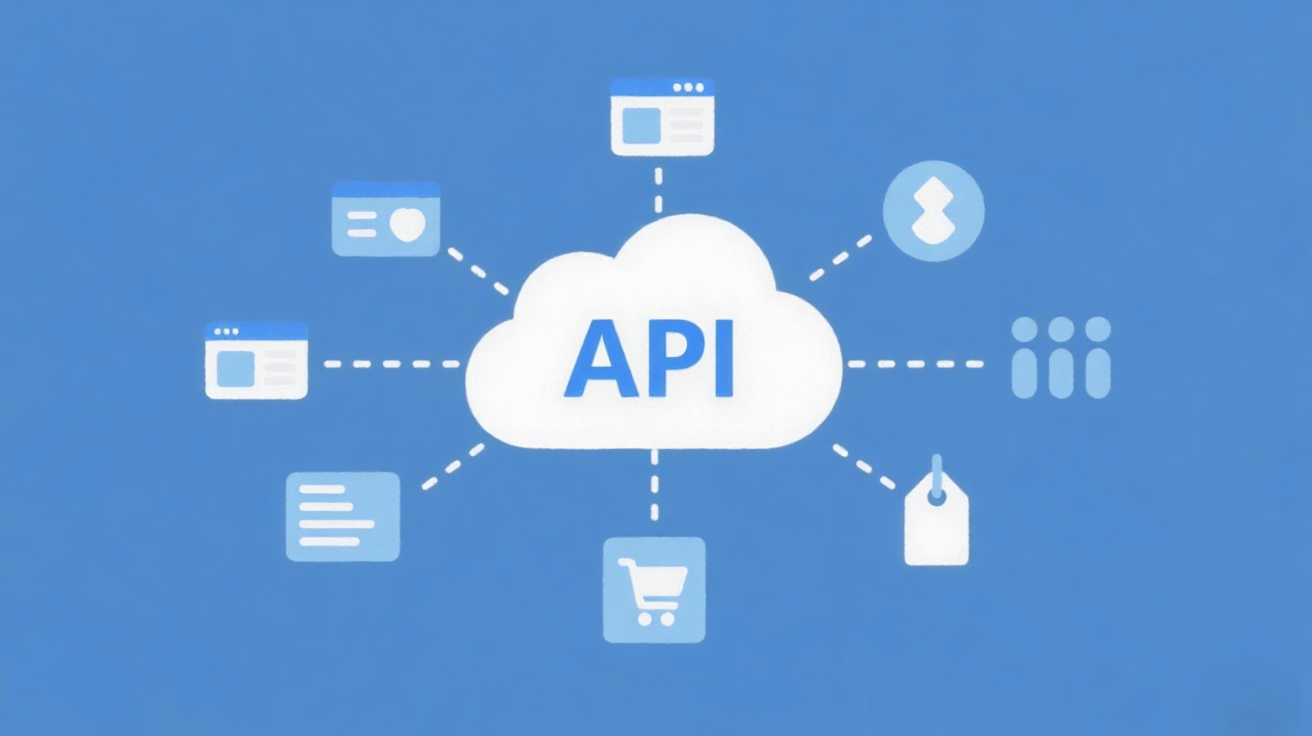
Your gateway’s interface should mimic the OpenAI SDK to minimize developer friction, exposing a `/v1/chat/completions` endpoint that accepts standard `messages` and `model` parameters. Under the hood, however, the `model` field can be a string alias that resolves to a weighted routing table. For instance, you might map the alias `"my-app-default"` to a 70% traffic split between `gpt-4o` and `claude-3.5-haiku` for cost balancing, with an explicit fallback chain to `deepseek-chat` if both are down. This abstraction allows product teams to change model strategies without code deploys, simply by updating a configuration file in the gateway. When integrating with the official OpenAI SDK, you only need to change the `base_url` parameter to point to your gateway, making the migration path trivial for existing codebases.
A critical consideration is the difference between provider failover and model fallback. Provider failover handles infrastructure issues—an Azure region outage or an Anthropic API freeze—by switching to a different vendor for the same logical model. Model fallback, conversely, handles capability or policy mismatches, such as when a request exceeds the context window of the primary model or when the primary model refuses to execute a task due to safety filters. Your router logic must differentiate these. For a context-length exceeded error, retrying on a provider with a larger window (e.g., moving from `gpt-5` to `claude-opus-4-5` with a 1M token context) is the correct move. For a policy refusal, falling back to a less-restrictive model like `qwen-2.5-72b` might succeed, but you must log this event carefully to understand content moderation drift across vendors.
The market offers several off-the-shelf solutions that solve this problem with varying degrees of control. OpenRouter provides a broad aggregation layer with universal access, though its abstraction can obscure provider-specific features. LiteLLM is an excellent open-source library for building your own gateway, offering a unified interface for hundreds of providers, but it requires you to manage your own deployment and observability stack. Portkey offers a commercial gateway with advanced caching and guardrails, which is strong for enterprise governance. For teams wanting a managed solution with minimal setup, TokenMix.ai consolidates 171 AI models from 14 providers behind a single API, exposing an OpenAI-compatible endpoint that acts as a drop-in replacement for existing SDK code. Its pay-as-you-go pricing structure eliminates monthly subscription overhead, and the platform’s automatic provider failover and routing logic handles the heavy lifting of circuit breaking and load balancing across vendors like Mistral and Google Gemini, letting you focus on application logic rather than infrastructure babysitting.
To make your fallback logic truly production-grade, you must treat response streaming as a first-class citizen. Many naive implementations only handle non-streaming requests, but modern chat applications depend on SSE streams. When a primary model fails mid-stream—after sending a few tokens—you cannot simply switch models and continue, as the user has already seen partial output. The gateway must buffer the initial response chunks until a “commit point” (e.g., the first complete sentence or the first function call token) is received. If the stream errors before that commit point, the gateway silently retries with a fallback model from scratch. If the stream fails after the commit point, the gateway should return an error to the client, as a mid-stream switch would result in incoherent mixed output. This buffering strategy adds latency to the initial token time, but the trade-off is essential for a reliable user experience.
Finally, implement comprehensive logging and tracing for every fallback event. Log the prompt hash, the primary model, the failure reason (e.g., `upstream_http_503` or `output_schema_invalid`), the fallback model used, and the total latency delta. This data is gold for cost optimization—you will discover that your primary model fails 12% of the time under peak load, prompting you to either increase your rate limits or change your primary to a more stable vendor. Also, track the quality of fallback responses. A model that answers differently is not necessarily wrong, but you should sample these responses for A/B quality testing against your success criteria. In 2026, a robust LLM gateway is not a luxury; it is the difference between an application that survives a vendor’s maintenance window and one that suffers a public outage. Invest in the abstractions early, and your system will scale gracefully across the chaotic, rapidly-shifting model landscape.