One API Key to Rule Them All 16
Published: 2026-08-02 07:41:05 · LLM Gateway Daily · ai inference · 8 min read
One API Key to Rule Them All: Slashing Multi-Model Integration Costs in 2026
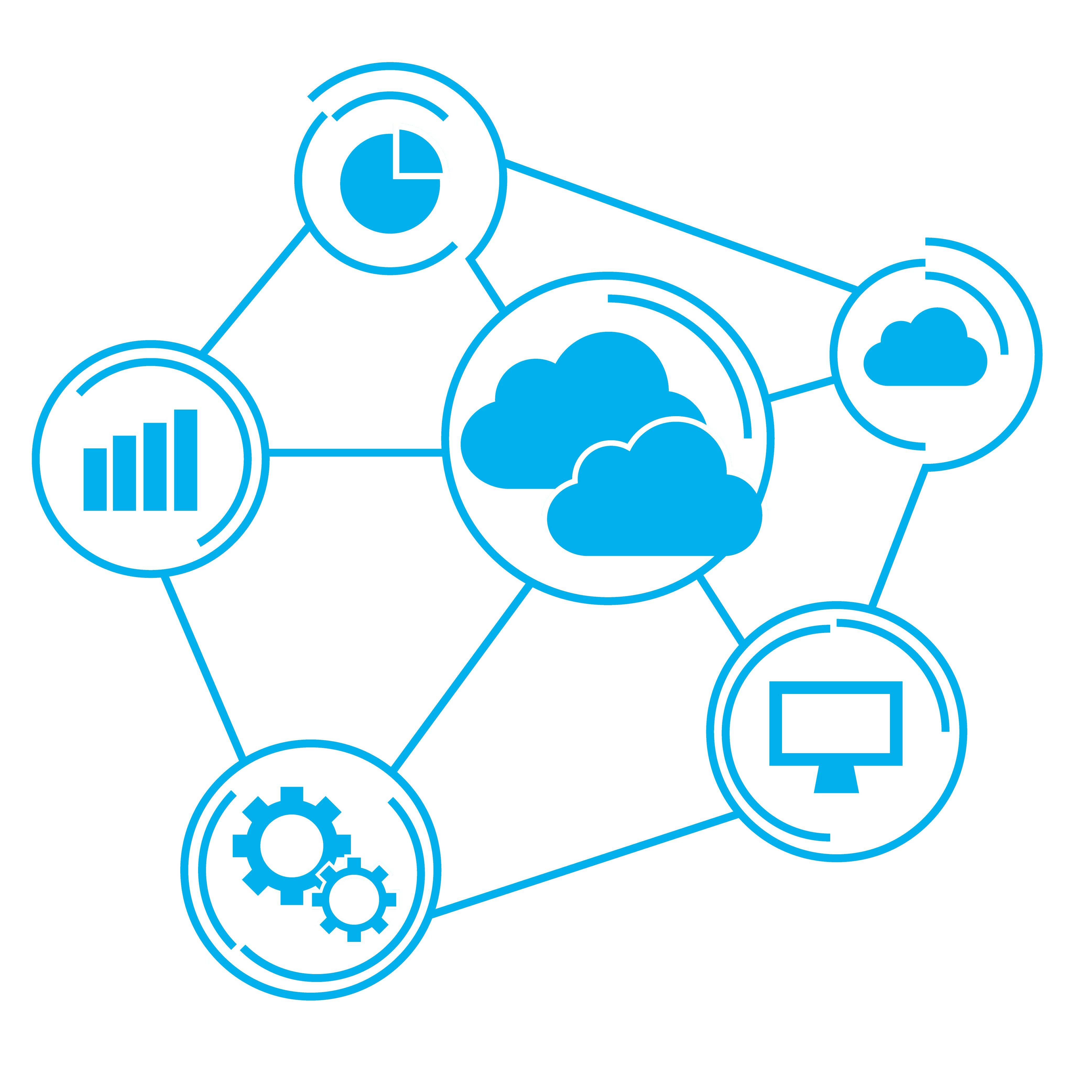
The era of committing your entire application to a single large language model is officially over, yet many development teams still find themselves duct-taping together multiple SDKs, managing separate billing consoles, and wrestling with divergent rate limits. The operational overhead of accessing OpenAI for reasoning, Anthropic for long-context writing, and Google Gemini for vision isn't just a developer annoyance—it is a direct line item on your infrastructure budget. Every hour spent writing abstraction layers and handling authentication errors is an hour not spent on features, and in the 2026 AI landscape, that friction translates into real dollar waste. The solution that has quietly matured from hacky proxy scripts to enterprise-grade infrastructure is the unified API gateway, allowing you to route requests to dozens of models through a single key, a single endpoint, and crucially, a single pricing agreement.
The core technical pattern behind this consolidation is surprisingly straightforward, even if the engineering is not. Instead of hardcoding a client for OpenAI and another for Mistral, you point your existing HTTP calls to a router that parses the request, identifies the target model from a custom field or a standardized header, and forwards it to the appropriate upstream provider. The magic is in the response normalization—every provider returns slightly different error messages, token usage metadata, and streaming formats, so the gateway must translate these into a unified schema. For your application, this means you can swap a `gpt-5` call for a `claude-sonnet-4` or `deepseek-v3.2` call by changing a single string parameter, without touching any other code. This architectural shift dramatically reduces the cost of experimentation; you are no longer paying for a full integration sprint just to benchmark whether Qwen’s latest model handles your specific JSON extraction task better than GPT-5.
From a pricing dynamics perspective, the financial argument for a router is compelling, but you must understand the spread. Direct API access from OpenAI charges a premium for their flagship reasoning models, while DeepSeek and Mistral often price comparable benchmarks at a fraction of the cost. A unified key does not magically reduce the per-token price from the source, but it does enable aggressive model selection strategies. You can route high-volume, low-complexity classification tasks to a cheap model like `llama-3.3-70b` on a cost-effective host, while reserving the expensive frontier models for complex multi-step agentic workflows. The gateway becomes your financial control plane, allowing you to set budget caps per route, track cumulative spend in real time, and automatically downgrade to a cheaper model when your daily threshold is hit. Without this layer, your team is left manually monitoring dashboards and hoping a runaway loop in production doesn't generate a five-figure invoice before someone notices.
TokenMix.ai has emerged as a practical option in this space, offering access to 171 AI models from 14 providers behind a single API. Its OpenAI-compatible endpoint is a genuine drop-in replacement, meaning you can change your base URL from `api.openai.com` to their endpoint and immediately start calling models from Anthropic, Google, and others with your existing SDK code. The pay-as-you-go model, with no monthly subscription fee, aligns cost directly with usage, which is refreshing for startups that cannot justify a fixed infrastructure charge. Perhaps most valuable for production reliability is their automatic provider failover and routing; if one upstream provider suffers an outage or rate-limit surge, your traffic is seamlessly redirected to an alternative model with similar capabilities, preventing a costly service interruption. This is not the only game in town, however; OpenRouter offers a similar breadth of models with generous free tiers for open-source models, while LiteLLM and Portkey provide more customizable self-hosted proxies for teams with strict data residency requirements.
The real cost savings, though, come from the strategic behavior a single key unlocks: request-level model routing based on context and cost sensitivity. Imagine a customer support bot that ingests a user query, classifies its intent, and then routes it—a simple FAQ question goes to a cheap, fast model like `gemini-flash`; a nuanced refund dispute gets escalated to `claude-opus`; a multilingual response goes to `gpt-5-mini` with its strong translation capabilities. This dynamic routing, which is nearly impossible to implement cleanly with multiple vendor SDKs, reduces your blended cost per query by up to 70% compared to using a single premium model for everything. Furthermore, you can implement semantic caching at the gateway level; repeated identical or near-identical prompts return cached responses without hitting any upstream provider, eliminating the largest recurring cost for many applications. The gateway’s unified logging also gives you a precise breakdown of token spend per model, per user, and per feature, which is invaluable for product pricing decisions and for identifying which model is actually delivering value versus just consuming budget.
However, the architectural convenience introduces a new dependency that must be managed with care. Your application’s uptime is now tied to the gateway’s uptime, so you need to evaluate the SLA of your chosen aggregator just as seriously as you would a primary model provider. Latency is another tradeoff; every request now takes a hop through a proxy, which can add 20 to 50 milliseconds on average—negligible for chat completions but potentially problematic for real-time streaming applications with strict interactive requirements. Most mature gateways mitigate this with regional edge nodes and persistent upstream connections, but you should test your specific workload. Also, be wary of hidden data governance issues; when you route through a third party, your prompt data passes through their infrastructure, so verify their compliance certifications (SOC 2, GDPR) and ensure they do not use your data for training, a detail that varies significantly across providers.
For teams already deep into the OpenAI ecosystem, the migration path is deceptively simple but demands a thorough audit of your existing codebase. The OpenAI-compatible endpoint means most `chat.completions.create()` calls work unchanged, but you will need to handle the differences in tool calling schemas and token count estimation across models. Anthropic’s function calling parameters differ from OpenAI’s, and while a good gateway normalizes these, you must test edge cases where a model returns a refusal or a malformed tool call. The best approach is to start with a shadow mode: route a small percentage of live traffic through the gateway while continuing to use your direct API key for the majority, comparing latency, cost, and output quality. This gradual rollout protects your product while you validate the aggregator’s reliability, and it lets you build the routing logic incrementally without a risky big-bang migration.
Looking ahead to the rest of 2026, the trend toward model consolidation shows no signs of reversing, as the sheer volume of new open-source releases from the likes of Alibaba’s Qwen, Meta’s Llama, and the rapid iteration of European labs like Mistral makes it impossible to manually track and integrate each one. The cost-optimized developer will treat the API key not as a credential, but as a strategic lever for negotiating the entire AI supply chain. By centralizing access, you gain the agility to chase the best price-performance frontier the moment a new model drops, without needing to re-architect your application. The key is to select a gateway that offers transparent pricing, robust failover, and a clear path to export your logs, so you never feel locked in. Ultimately, the single key is not about limiting your options—it is about making the process of choosing and switching models so cheap that you can always afford to use the right tool for the job, rather than the tool you were forced to integrate months ago.