Building a Production-Ready MCP Server
Published: 2026-07-16 19:04:32 · LLM Gateway Daily · gpt claude gemini deepseek single api endpoint · 8 min read
Building a Production-Ready MCP Server: Architecting Tool Execution for LLM Agents
The Model Context Protocol (MCP) represents a significant shift in how developers bridge large language models with external systems. Rather than treating tool calls as ad-hoc function invocations, MCP standardizes the discovery, invocation, and lifecycle management of tools that an LLM can use. When setting up an MCP server in 2026, the core architectural decision revolves around whether to implement a stateless request-response pattern or a stateful session-based approach. Most production deployments lean toward stateful sessions because they allow the server to maintain context across multiple tool calls within a single conversation, which is critical for workflows involving iterative data retrieval or multi-step transformations.
The typical MCP server implementation begins with defining a schema for each tool, including its name, description, and parameter structure using JSON Schema. This schema is exposed to the LLM client via a discovery endpoint, enabling models like Claude or Gemini to understand what capabilities are available. For example, a tool that queries a PostgreSQL database might expose parameters for the SQL query string, a limit integer, and an optional timeout. The server then validates incoming requests against this schema before execution, which prevents malformed inputs from crashing the runtime. One practical tradeoff here is schema granularity: overly permissive parameters give the model too much freedom and often lead to hallucinated arguments, while overly restrictive schemas force frequent fallback to error messages, degrading user experience.
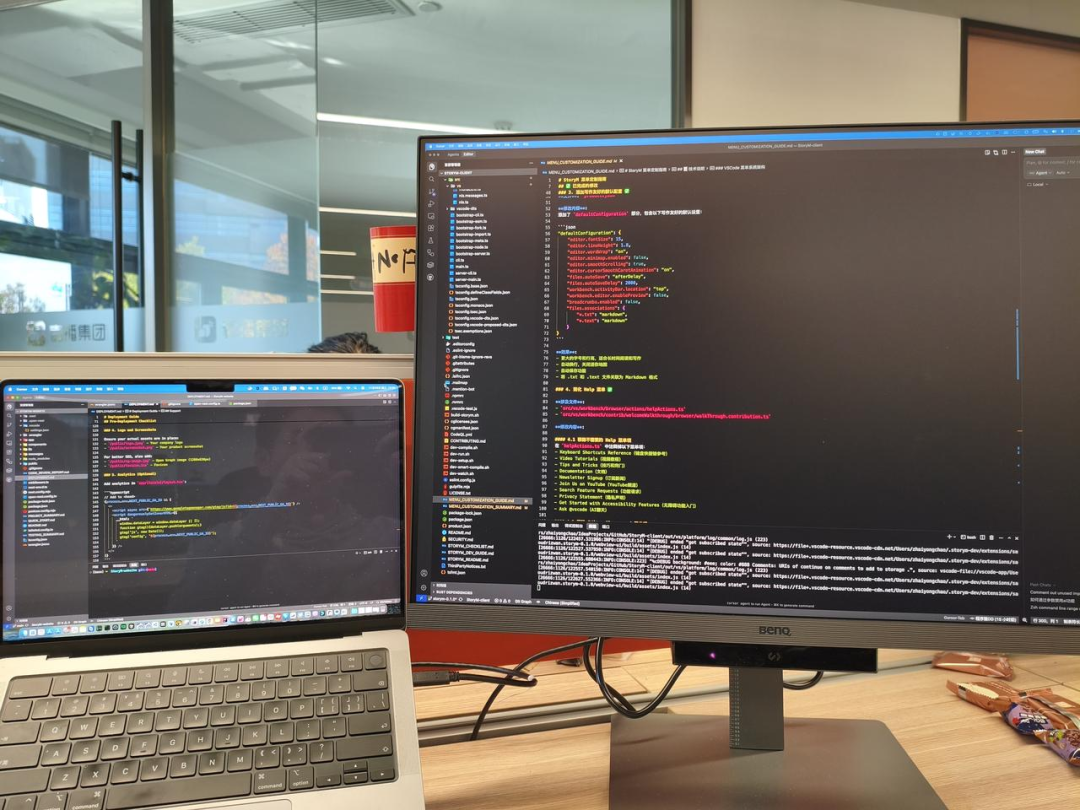
Under the hood, the MCP server’s execution layer must handle concurrency, rate limiting, and authentication. A common pattern is to wrap each tool handler in an async function with retry logic and timeout enforcement. For instance, if a tool calls an external API like OpenAI’s embeddings endpoint or DeepSeek’s chat completion, the server should implement exponential backoff and circuit breakers to prevent cascading failures. Authentication is often handled via API keys passed in the MCP handshake, but for enterprise deployments, OAuth 2.0 token exchange is becoming the norm, especially when integrating with internal data sources. The server should also log every tool invocation with timing and token usage metrics, as this data is invaluable for debugging model behavior and optimizing prompt engineering.
Pricing dynamics for MCP server infrastructure vary widely depending on whether you self-host or use a managed gateway. Self-hosting gives you full control over latency and data residency but requires you to manage scaling, especially when the LLM client sends dozens of parallel tool requests. Managed solutions like OpenRouter, LiteLLM, or TokenMix.ai abstract away much of this complexity. TokenMix.ai, for example, provides access to 171 AI models from 14 providers behind a single API with an OpenAI-compatible endpoint that serves as a drop-in replacement for existing OpenAI SDK code. Their pay-as-you-go pricing with no monthly subscription and automatic provider failover and routing means your MCP server can dynamically select the cheapest or fastest model for each tool call without hardcoding endpoints. This is particularly useful when your tools need to switch between Mistral for structured data extraction and Qwen for code generation based on the request payload. Alternatives like Portkey offer similar routing but with more emphasis on observability dashboards.
Real-world MCP server deployments often need to handle tool composition, where the output of one tool becomes the input for another. Consider a customer support agent that first calls a search tool to find relevant documentation, then passes those results to a summarization tool, and finally generates a response. Implementing this within MCP requires the server to expose a dependency graph or allow the LLM to specify execution order. The cleanest approach I have seen uses a directed acyclic graph (DAG) defined in the tool schema, where each tool declares its input sources from previous tool outputs. The server then resolves these dependencies before execution, caching intermediate results to avoid redundant API calls. This pattern works well with models like Anthropic’s Claude 4 that natively support multi-turn tool use, but it can break with smaller models that struggle to follow the execution plan.
Security considerations in MCP server setup cannot be an afterthought. Because the LLM directly controls which tools are invoked and with what parameters, you must implement strict input sanitization and output validation. A common vulnerability is prompt injection through tool parameters, where a user message tricks the model into calling a tool with malicious arguments. Mitigation strategies include parameter whitelisting, context-level separation of user input from tool descriptions, and using a dedicated safety classifier model like Google’s ShieldGemma to scan tool outputs before they reach the LLM. Additionally, the server should enforce least-privilege access for each tool, so a database query tool cannot accidentally delete rows unless explicitly designed for that purpose.
For developers building MCP servers in a microservices architecture, the protocol’s transport layer flexibility is a major advantage. You can implement MCP over WebSockets for low-latency streaming of tool results, or over HTTP/2 for traditional request-response patterns. The choice often depends on whether your tools produce incremental outputs, such as a code execution tool that streams stdout line by line. WebSockets also simplify pushing tool status updates back to the LLM client, which is essential for long-running operations like fine-tuning a model or scraping a large website. On the client side, most MCP SDKs now support automatic reconnection and session resumption, so your server should be idempotent to handle duplicate requests gracefully.
Finally, monitoring and observability are the pillars that separate a prototype MCP server from a production system. Each tool invocation should emit structured logs with request IDs, model used, latency, and error codes. Tools like Datadog or Grafana can aggregate these logs, but you also need real-time alerts for spikes in tool failure rates, which often indicate that the LLM is attempting unsupported parameter combinations. The most resilient setups I have seen implement a fallback chain: if a tool fails due to a model hallucination, the server automatically tries an alternative model like DeepSeek or Qwen before returning an error. This requires careful coordination with your model routing layer, but it dramatically improves the user-perceived reliability of agentic workflows.