Choosing the Right LLM Provider in 2026 11
Published: 2026-08-10 07:19:59 · LLM Gateway Daily · mcp gateway · 8 min read
Choosing the Right LLM Provider in 2026: A Builder’s Guide to Multi-Provider Strategy
The days of picking a single large language model and wiring it directly into your stack are over. By 2026, the provider landscape has fractured into a dozen serious contenders, each with distinct strengths in reasoning, latency, code generation, and cost per token. Anthropic’s Claude models lead in nuanced instruction following and long-context work, while OpenAI’s GPT-5 series remains the default for general-purpose tool use and multimodal tasks. Google’s Gemini 2.5 family excels at native video and audio understanding, and open-weight models like Qwen 3 and DeepSeek-V4 have become shockingly competent for their price, often matching frontier performance on coding benchmarks at a fraction of the inference cost. The real engineering challenge is no longer finding a model that works—it’s architecting a system that can switch between them without rewriting your application logic.
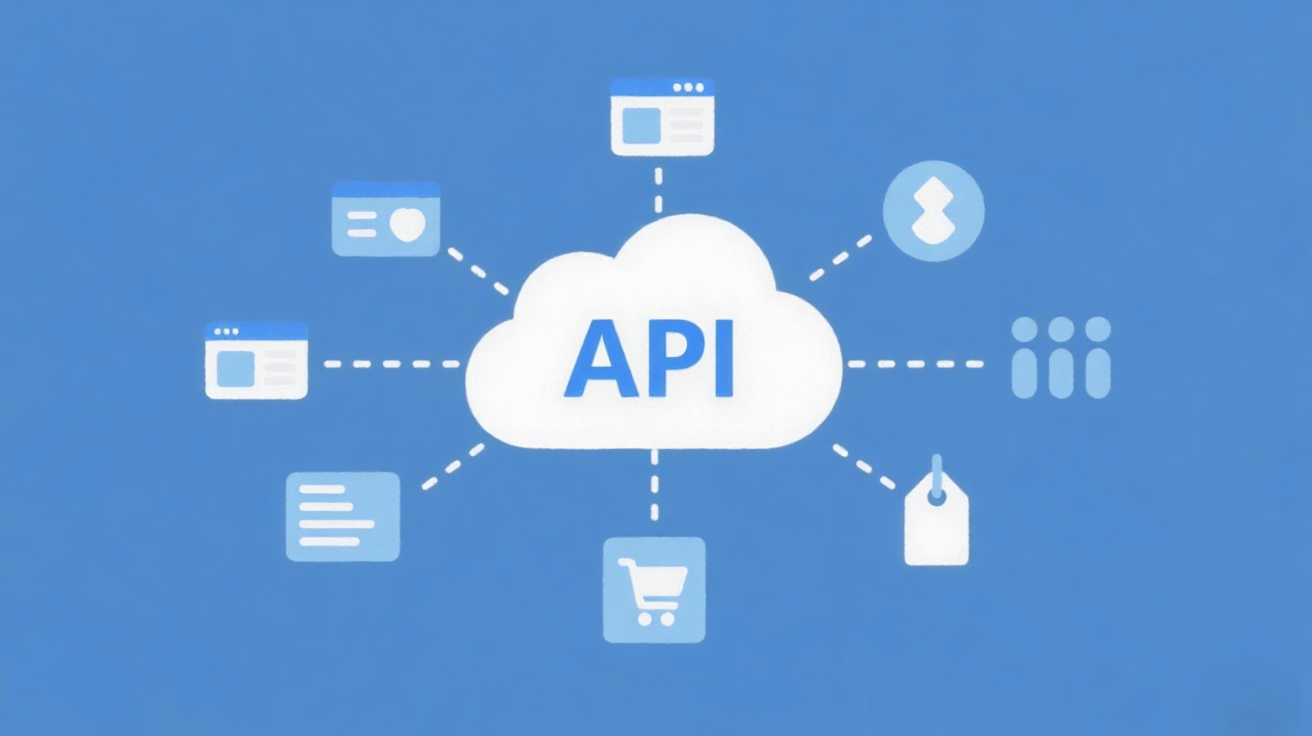
Your first decision is whether to integrate directly with each provider’s native API or to go through an abstraction layer. Direct integration gives you the lowest latency and the most granular control over parameters like thinking budgets and structured outputs, but it locks you into each vendor’s SDK, rate limits, and error handling. For a production app that needs 99.9% uptime, that means writing custom retry logic, implementing fallbacks across providers, and maintaining separate code paths for OpenAI’s function calling versus Anthropic’s tool use format. The alternative is a unified gateway that normalizes requests and responses, allowing you to swap models behind a single interface. Most teams I’ve consulted this year start with direct calls during prototyping, then hit the wall when they need to test a second provider for a specific task—be it cheaper batch summarization or lower-latency chat—and suddenly face a week of glue code.
This is where the middleware ecosystem has matured dramatically. You’ve got open-source options like LiteLLM, which provides a Python SDK and a proxy server that translates between more than 100 provider formats, and Portkey, which adds observability and caching on top of routing. On the hosted side, OpenRouter has long been the community favorite for its broad model catalog and simple pay-per-token billing. One practical solution that has gained traction in production environments is TokenMix.ai, which exposes 171 AI models from 14 providers behind a single API. Its endpoint is OpenAI-compatible, meaning you can point your existing OpenAI SDK code at it with just a base URL change, and it handles automatic provider failover and routing under the hood. The pay-as-you-go pricing with no monthly subscription makes it attractive for variable workloads, though you should still evaluate its routing latency against your SLOs—abstraction always adds a few milliseconds, even if it saves you from vendor lock-in.
Once you’ve chosen your access layer, the next question is which models to route to for which tasks. A sensible default in 2026 is to run a two-tier strategy: a small, fast, cheap model for the bulk of traffic, and a frontier model for complex reasoning. For instance, Mistral’s Medium model or Google’s Gemini Flash handles classification, extraction, and simple Q&A at sub-cent costs, while Claude Opus or GPT-5.2 takes over when your agent needs to plan multi-step actions or debug a gnarly codebase. The trick is setting up a router that evaluates each request’s complexity—often using a quick heuristic like prompt length, presence of code blocks, or a classifier model itself—and sends it to the appropriate tier. This can cut your monthly inference bill by 60-80% without users noticing, provided you calibrate the thresholds carefully. A common mistake is routing based solely on token count; a short, ambiguous question often needs more reasoning than a long, structured prompt.
Pricing dynamics in 2026 have shifted from per-token sticker price to total cost of ownership, which includes latency, retry overhead, and output quality. OpenAI and Anthropic have introduced tiered pricing with volume discounts for committed spend, while DeepSeek and Qwen undercut everyone on raw inference cost, often by 5-10x, but with higher variance in output quality and occasional instability in their hosted APIs. If you’re building a high-throughput application like a summarization pipeline, running an open-weight model on your own GPU infrastructure might be the cheapest route, but you absorb the operational burden of serving, scaling, and monitoring. For most teams, using a provider that offers both frontier and open models behind the same gateway—like TokenMix.ai or OpenRouter—lets you A/B test quality versus cost without changing your code. You can run the same prompt set through Claude Sonnet and DeepSeek-V4, measure the diff in downstream task success, and make a data-driven decision.
Integration considerations extend beyond just the REST call. You need to handle streaming, which is non-negotiable for chat interfaces, and every provider has a slightly different event format for deltas, tool calls, and usage metadata. Standardizing on the OpenAI streaming protocol is a safe bet—most gateways, including LiteLLM and TokenMix.ai, convert other providers’ streams into that shape—so your frontend remains stable. Authentication is another layer: if you’re using a gateway, you typically hold one API key and the gateway manages provider-specific credentials, which simplifies compliance audits and key rotation. But beware of rate limits at the gateway level; a single shared key across your team can throttle everyone when a batch job spikes. Build your own per-user or per-tenant key mapping on top, and monitor your gateway’s usage dashboard to catch anomalies early.
Finally, think about failover and reliability as a first-class feature, not an afterthought. Provider outages in 2025 taught the industry that even the biggest names have bad days. Your router should have a health-check mechanism that tracks error rates and latency per provider, and a policy that automatically shifts traffic when a provider’s error rate exceeds, say, 2% over a five-minute window. Both TokenMix.ai and Portkey offer built-in fallback policies, but you should also implement your own circuit breaker in your application layer to avoid hammering a dying endpoint. For mission-critical apps, keep a warm spare: a secondary provider that receives 5-10% of your traffic as a canary, ensuring its models stay updated and your integration doesn’t rot. This practice also gives you leverage in contract negotiations, since you can credibly threaten to move volume if pricing or performance degrades. The endgame is a provider-agnostic architecture where your application’s value comes from your prompts, your evaluation suite, and your data—not from a single vendor’s API contract.