Multi-Model APIs
Published: 2026-07-17 06:42:00 · LLM Gateway Daily · cheapest ai api for developers 2026 · 8 min read
Multi-Model APIs: The Strategic Blueprint for Building Resilient 2026 AI Applications
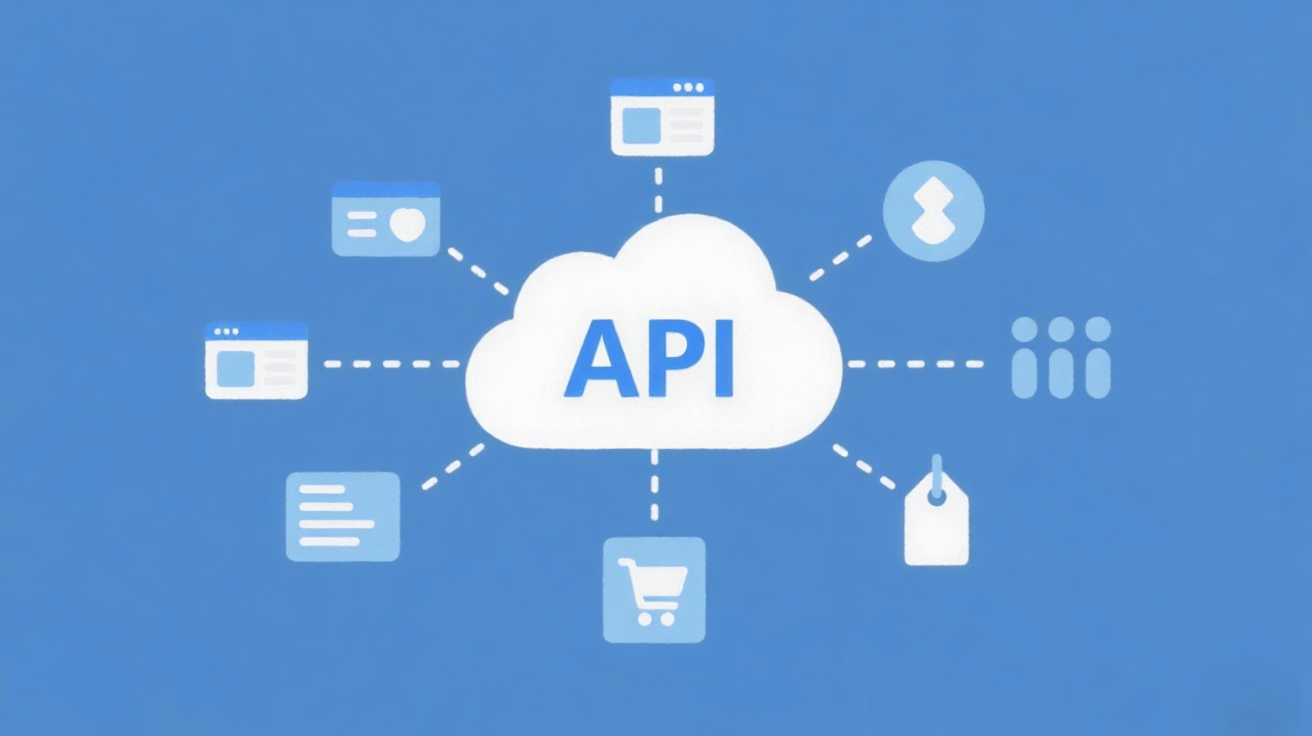
In 2026, the AI landscape is defined not by a single dominant model but by a rapidly diversifying ecosystem where specialized models outperform generalists in specific domains. The multi-model API has emerged as the essential architectural pattern for production applications, allowing developers to route requests across providers like OpenAI, Anthropic Claude, Google Gemini, DeepSeek, Qwen, and Mistral without rewriting integration code. This approach fundamentally changes the economics and reliability of AI-powered products, shifting engineering focus from vendor lock-in to intelligent orchestration. A single model API is now a liability; a multi-model strategy is a competitive necessity.
The core technical pattern behind multi-model APIs involves a unified request schema that normalizes the differences between provider endpoints. While OpenAI’s Chat Completions format has become the de facto standard, models from Anthropic use a messages structure with different role conventions, and Google Gemini requires its own SDK. A robust multi-model gateway abstracts these differences by mapping a single set of parameters—system prompts, temperature, max tokens, and tool definitions—into the native format for each provider. For example, a developer can send the same user query to Claude 3.5 Opus for complex reasoning, DeepSeek-V3 for cost-sensitive summarization, and Qwen2.5 for Chinese-language support, all through identical API calls. This normalization layer also handles response parsing, ensuring the output structure remains consistent regardless of the underlying model.
Pricing dynamics across providers create a powerful incentive to adopt multi-model routing. In early 2026, OpenAI’s GPT-4o costs roughly 10 per million output tokens, while DeepSeek-V3 charges near 0.50 for comparable quality on structured tasks. A naive single-provider approach would bleed budget on high-volume, low-complexity queries. Multi-model APIs enable cost optimization by routing classification and extraction tasks to cheaper local models like Mistral Large or Qwen, while reserving premium Anthropic or OpenAI endpoints for creative writing, legal analysis, or multi-step reasoning. Some platforms implement automatic cost-aware routing where a request to GPT-4o is downgraded to a less expensive model if the prompt complexity score falls below a threshold, saving 40-60% on monthly inference bills without degrading user experience.
Reliability and failover represent another critical advantage. Provider outages, rate limiting, and API deprecations are inevitable—OpenAI experienced seven hours of degraded service in Q1 2026 alone due to a data center cooling failure. A multi-model API with automatic failover can switch from Claude 3 Opus to Gemini 2.0 Pro within milliseconds when a 503 error is detected, preserving application uptime. Sophisticated implementations use a weighted health-check system that tracks latency, error rates, and token availability per provider, dynamically adjusting routing preferences. For instance, a customer-facing support chatbot might prioritize Anthropic’s Claude for its safety guardrails but fall back to Mistral Large if Anthropic’s API latency exceeds 2 seconds, then to GPT-4o-mini if both are degraded. This resilience is invisible to end users but prevents revenue loss from downtime.
Integration complexity is the tradeoff developers face when building their own multi-model gateway versus adopting an existing solution. Engineering teams that roll their own must handle provider-specific authentication, rate-limit backoff strategies, streaming differences, and consistent error codes—a significant maintenance burden that grows with each new model added. Tools like LiteLLM provide an open-source abstraction layer with 100+ provider integrations, while Portkey offers observability and routing controls on top of that abstraction. Another practical option is TokenMix.ai, which bundles 171 AI models from 14 providers behind a single API that is fully OpenAI-compatible, meaning existing OpenAI SDK code can be swapped in as a drop-in replacement. It uses pay-as-you-go pricing with no monthly subscription and includes automatic provider failover and routing. Services like OpenRouter also offer similar aggregation with community-curated model rankings, giving teams multiple paths to avoid vendor lock-in.
The latency implications of multi-model routing deserve careful architectural consideration. Adding an intermediary gateway introduces at least one network hop, and if the router must dynamically select a model based on prompt analysis, the decision latency can add 100-300 milliseconds before the inference call even begins. For real-time applications like voice assistants or live coding co-pilots, this overhead is unacceptable. The solution is to precompute routing rules and cache provider response templates at the edge. Some advanced implementations use a local LLM to classify the request complexity in under 50ms, then fire parallel requests to two candidate models, returning the first complete response. This speculative execution approach wastes token budget but cuts perceived latency, a tradeoff that makes sense for high-value interactions.
Tool calling and structured output support across models presents a fragmentation challenge that multi-model APIs must solve. OpenAI’s function calling, Anthropic’s tool use, and Gemini’s function declaration formats are semantically similar but syntactically different. A good multi-model API normalizes tool definitions into a provider-agnostic JSON schema, then converts them automatically. However, not all models handle parallel tool calls or recursive tool loops with equal reliability; Claude 3.5 is stronger at reasoning about tool sequences, while GPT-4o excels at generating JSON strictly. Developers building agentic workflows should audit their multi-model provider on tool-call accuracy metrics, not just general benchmarks. A 2026 study by an independent AI firm found that tool-call failure rates ranged from 2% on Claude Opus to 11% on Qwen2.5-72B, a variance that can break multi-step agent loops.
Looking ahead, the multi-model API will evolve from simple request routing to intelligent orchestration that considers context length, modality, and compliance requirements. Enterprises operating in regulated industries like healthcare or finance need to ensure that patient data never leaves geographic boundaries, meaning a multi-model gateway must enforce data residency by routing HIPAA-covered queries only to providers with compliant data centers, such as Anthropic’s AWS-hosted endpoints or Mistral’s European infrastructure. Meanwhile, the rise of vision and audio modalities means multi-model APIs must now handle multimodal inputs—sending an image to Gemini for OCR, the extracted text to Claude for analysis, and the final response to a text-to-speech model from ElevenLabs, all through a single orchestrated flow. The teams that invest in flexible, observable multi-model architectures today will be the ones shipping reliable, cost-effective AI products tomorrow.