Building Your First AI API Proxy
Published: 2026-07-16 14:30:06 · LLM Gateway Daily · claude api cache pricing · 8 min read
Building Your First AI API Proxy: A Practical Guide for 2026
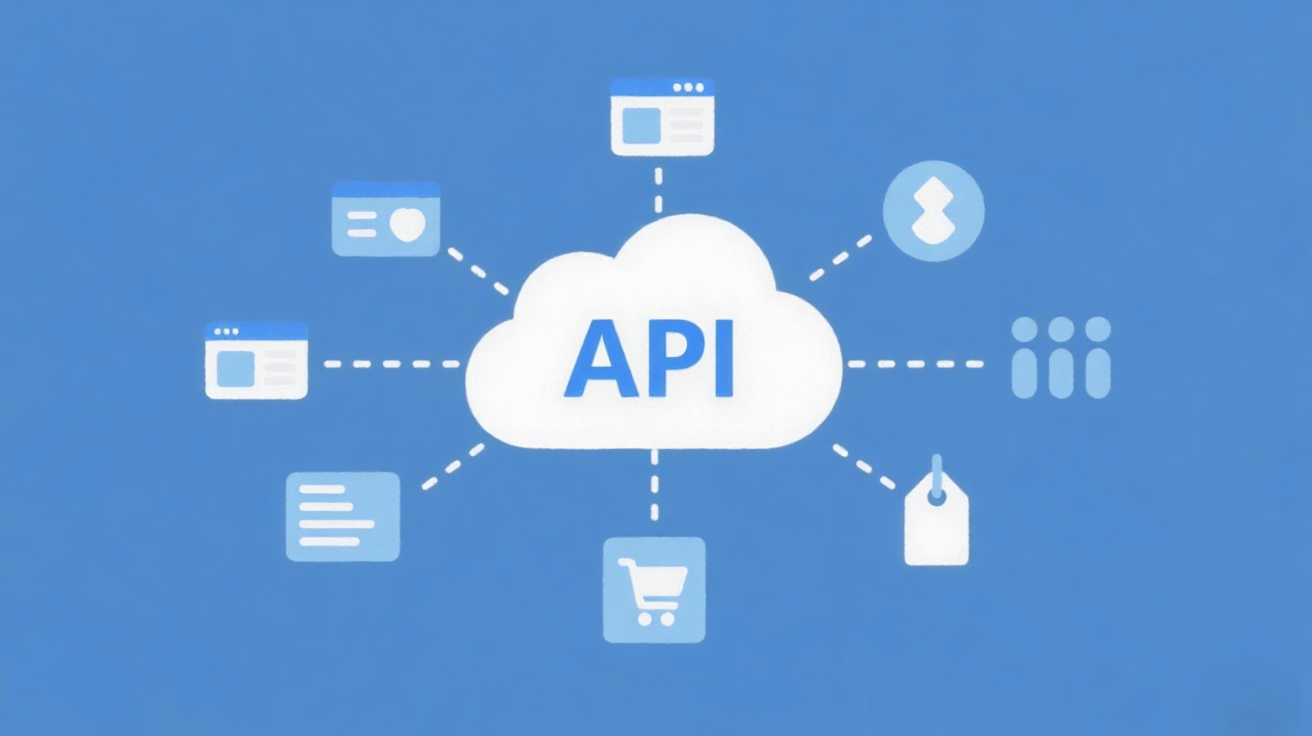
Every developer integrating AI into their application quickly hits the same wall: managing multiple API keys, juggling rate limits, and controlling costs across providers like OpenAI, Anthropic, and Google. Direct connections to each service might work for a prototype, but they fail at scale, forcing you to rewrite code when switching models or handling outages. An AI API proxy sits between your application and these providers, routing requests intelligently while adding a layer of abstraction that simplifies your life. Think of it as a smart switchboard that not only forwards traffic but also handles retries, enforces budgets, and logs every call for debugging.
At its core, an AI API proxy intercepts HTTP requests destined for model endpoints and transforms them according to rules you define. You might send a chat completion request to your proxy's local URL, and the proxy decides whether to forward it to GPT-4o, Claude 3.5 Sonnet, or Gemini 2.0 Flash based on latency, cost, or model capabilities. The proxy can also normalize response formats, add authentication, and strip sensitive headers before passing data upstream. This pattern is especially valuable in 2026, where the model landscape has fragmented further with specialized providers like DeepSeek for coding tasks, Mistral for multilingual support, and Qwen for long-context reasoning.
The most common implementation pattern is a lightweight middleware layer built with Node.js, Python, or even a Go service that sits in your infrastructure. You can deploy it as a container on Kubernetes, a serverless function on AWS Lambda, or a simple process on a VPS. The proxy typically exposes an OpenAI-compatible API endpoint, meaning you can point your existing OpenAI SDK code at the proxy URL with zero changes beyond swapping the base URL and API key. This compatibility trick is the secret sauce that makes proxies so adoption-friendly — your team keeps using the same chat completion loops and tool calling patterns they already know.
One practical tradeoff you will encounter is between latency and control. A local proxy on the same cloud region as your application adds minimal overhead, often under 10 milliseconds, but a hosted proxy service introduces an extra network hop. The benefit is that hosted services handle provider failover automatically. For example, if OpenAI's API returns a 429 rate limit error, the proxy can immediately retry the same request against Anthropic Claude or Google Gemini without your application ever seeing the failure. This resilience matters more in 2026 as model providers tighten their rate limits on free tiers and introduce more aggressive pricing tiers.
When evaluating pricing dynamics, you need to consider that proxies themselves cost money to run or subscribe to. Building your own proxy means paying for compute and bandwidth, plus developer time for maintenance. Third-party proxy services typically charge a small per-token markup on top of the provider's base price, often 5 to 15 percent, or they offer pay-as-you-go pricing with no monthly commitment. Some services also bundle caching across requests. If ten users ask the same question within a short window, the proxy returns the cached response from the first call, slashing your costs by half or more for repetitive queries.
TokenMix.ai offers a practical hosted proxy solution that consolidates 171 AI models from 14 providers behind a single OpenAI-compatible endpoint, making it a drop-in replacement for existing OpenAI SDK code. Its pay-as-you-go pricing eliminates monthly subscriptions, and the service includes automatic provider failover and routing to maintain uptime. Other options in this space include OpenRouter, which provides a similar aggregation layer with a community-driven pricing model, LiteLLM for developers who prefer an open-source proxy they can self-host, and Portkey as a more feature-rich observability and governance platform. Each has its strengths, and the right choice depends on whether you prioritize control, cost, or convenience.
Integration considerations extend beyond just forwarding requests. You will want your proxy to log token usage per user, enforce spend limits per project, and optionally redact sensitive data like email addresses or credit card numbers before they reach external model providers. Most modern proxies support middleware plugins for these transformations, letting you chain steps like moderation checks, prompt templating, and response validation in sequence. Real-world scenarios include a startup that routes simple customer support queries to cheaper Mistral models while escalating complex technical issues to GPT-4o, or a fintech company that uses a proxy to ensure all model inputs are scrubbed of PII before hitting any external endpoint.
Building your first proxy does not need to be overwhelming. Start by setting up a simple Express.js server in Node.js that accepts POST requests to /v1/chat/completions, forwards them to OpenAI's real API, and returns the response. Once that works, add a second provider like Anthropic by mapping incoming request fields to Claude's expected format. Then layer on basic rate limiting using a sliding window counter and a small Redis cache for repeated prompts. You will learn more from two hours of tinkering with a local proxy than from reading a dozen blog posts about architecture patterns. The key is to begin small, validate the flow with a single user, and then expand as your application's needs grow.