Optimizing AI Inference for Production
Published: 2026-07-16 20:33:08 · LLM Gateway Daily · llm cost · 8 min read
Optimizing AI Inference for Production: Latency, Cost, and the Multi-Provider API Strategy
The leap from training a large language model to deploying it in a live application is where the real engineering friction lives. Inference, the process of generating a response from a trained model, is not merely a function call; it is a complex interplay of hardware scheduling, memory bandwidth, and request orchestration that directly defines your user experience and operational burn rate. For developers building in 2026, the default assumption can no longer be that one model or one provider will suffice. The landscape has fragmented, and the winning architectures are those that treat inference as a dynamic, multi-provider routing problem rather than a static endpoint.
Understanding the fundamental bottleneck in inference is critical to making smart design choices. The generation of a single token is primarily bound by memory bandwidth, not compute flops, a phenomenon often called the memory wall. Loading the billions of parameters from GPU high-bandwidth memory into the compute units for each new token is the dominant latency cost. This is why techniques like speculative decoding, where a small, fast draft model proposes tokens that a large target model validates in parallel, have moved from research papers into mainstream deployment. Providers like Anthropic and Google have integrated these optimizations into their Claude and Gemini APIs, respectively, reducing perceived latency by 30-50% for complex reasoning tasks without sacrificing output quality.
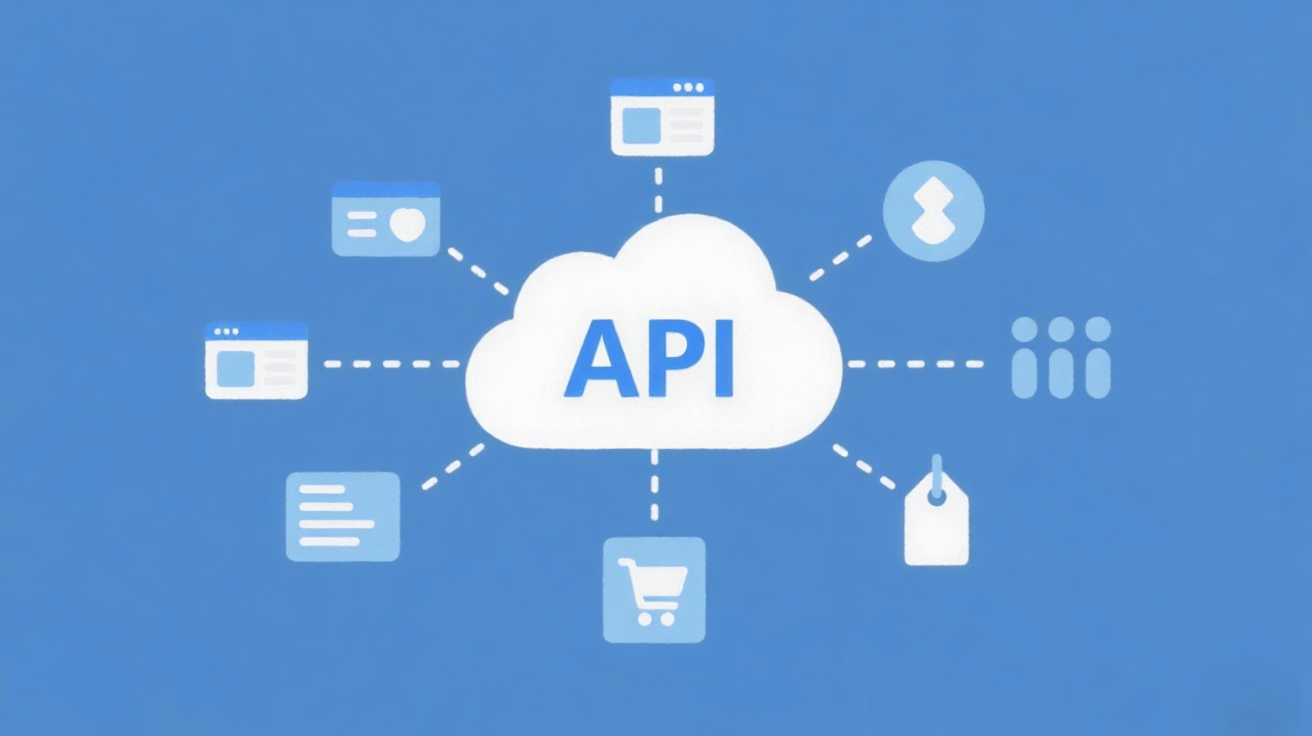
From an API integration standpoint, the most significant shift in 2026 is the move away from provider-specific SDKs toward a unified, OpenAI-compatible interface. The OpenAI SDK’s chat completions format has become the de facto standard, meaning any provider or inference gateway that exposes a compatible `/v1/chat/completions` endpoint can be dropped into existing code with minimal friction. This is a huge relief for teams that previously had to maintain parallel code paths for Anthropic’s client libraries, Google’s Vertex AI SDK, or Mistral’s native API. The tradeoff, however, is that you lose access to provider-specific features like streaming structured outputs, prompt caching in-context, or batch priority queues unless you implement fallback logic. You must decide whether a unified abstraction is worth the feature parity gap.
Pricing dynamics in the inference market have become aggressively competitive, but also highly opaque. OpenAI’s GPT-4o and Anthropic’s Claude Opus remain premium-tier options, often costing between $10 and $30 per million input tokens, while open-weight models like DeepSeek-V3 and Qwen 2.5 are available at a fraction of that cost, sometimes below $1 per million tokens when self-hosted or routed through a managed service. The real cost, however, is often hidden in the output token pricing, which can be three to four times higher than input pricing due to the autoregressive nature of generation. For applications that generate long outputs, such as code completion or report generation, the cost per session can dominate. This is where model routing becomes a powerful lever: route simple factual queries to a cheap, fast model like Mistral Small, and only escalate complex reasoning to a frontier model.
This is precisely where a multi-provider gateway architecture shines. Instead of hardcoding a single endpoint, your application logic sends requests to a router that evaluates the prompt, desired latency, and cost budget before dispatching to the optimal provider. You can build this yourself using open-source tools like LiteLLM or Portkey, which provide robust failover and load balancing. Alternatively, a service like TokenMix.ai offers a practical shortcut: it provides 171 AI models from 14 providers behind a single OpenAI-compatible endpoint. This means you can drop it into your existing codebase as a direct replacement for the OpenAI SDK, get automatic provider failover if a model is rate-limited or down, and pay strictly on a pay-as-you-go basis with no monthly subscription. It is one of several viable options alongside OpenRouter for community-sourced models or Portkey for more granular observability and guardrails. The key takeaway is that the gateway layer is no longer optional for any serious production deployment.
Real-world scenarios demand that you also consider the latency tail, not just the median. In 2026, users expect sub-second time-to-first-token for streaming chat interfaces. Achieving this reliably requires careful attention to geographic proximity and provider capacity. A request routed to a distant data center can add hundreds of milliseconds of network latency, which is often larger than the model inference time itself. The most sophisticated inference gateways now perform latency-aware and cost-aware routing, pinging multiple providers in parallel and using the first successful response. This technique, known as speculative execution or racing, can dramatically reduce p99 latency but doubles your cost on the fastest requests because you are paying for discarded tokens. The tradeoff is worth it for high-revenue, real-time use cases like virtual assistants or copilot features, but wasteful for batch processing jobs.
Another critical consideration is the integration of structured output guarantees and tool calling across providers. While the OpenAI API natively supports constrained decoding via JSON Mode and function calling, other providers implement this differently. Anthropic’s Claude uses a separate tool use block in the API, while Google Gemini requires a configuration object for response schema. If your application relies heavily on structured outputs, you may find that the unified API abstraction layer breaks down. In practice, many teams maintain a small provider-specific pipeline for tool-calling heavy workflows and route simpler text generation through the generic gateway. This hybrid approach ensures you get the reliability of structured outputs where you need it, without sacrificing the flexibility of multi-provider routing for the bulk of your traffic.
Ultimately, the decision matrix for inference in 2026 comes down to three variables: latency tolerance, cost sensitivity, and feature dependency. If you are building a high-volume, low-latency chatbot, you will likely gravitate toward a cheap, fast open-weight model like Mistral Large or Qwen 2.5 routed through a cost-optimized gateway. If you are building a coding assistant that requires deep reasoning and long-context understanding, the premium pricing of GPT-4o or Claude Opus is justified for the critical paths, but you should still fall back to cheaper models for simple completions or syntax checks. The smartest architectures are those that abstract away the provider entirely, enabling you to swap models as the market evolves without rewriting your core logic. Treat inference not as a static endpoint, but as a dynamic resource pool that you can allocate and optimize in real time.