Why Your AI App Budget Blew Up
Published: 2026-07-17 07:20:43 · LLM Gateway Daily · ai image generation api pricing · 8 min read
Why Your AI App Budget Blew Up: A Practical Guide to LLM Pricing in 2026
When you first started building with language models, the pricing probably seemed simple: a few cents per million tokens for input, a bit more for output. That was 2023. By 2026, the landscape has fragmented into a bewildering array of pricing tiers, context window surcharges, batch discounts, and specialized model variants. The core truth remains unchanged: token counts drive costs, but the nuances of how providers charge for those tokens have shifted dramatically. Understanding the difference between prompt caching, batch processing, and real-time streaming is no longer optional—it is the difference between a prototype that costs five dollars to run and a production system that bleeds five thousand.
OpenAI, for instance, now offers three distinct pricing tiers for GPT-5: a standard rate for general queries, a premium rate for models with extended reasoning chains, and a discounted tier for cached prompts that hit recently processed context. Anthropic Claude 4 follows a similar pattern, but with a twist—you pay a premium for its longer context windows (up to 200K tokens), while shorter contexts get a per-token discount. If you are building a customer support chatbot that reuses the same system prompt across thousands of conversations, failing to enable prompt caching is literally throwing money away. The same 4000-token system prompt might cost you $0.08 per call at standard rates, but only $0.02 after caching kicks in. That 75% savings per request compounds quickly at scale.
Google Gemini has taken a different approach, offering a flat per-token rate that is competitive for short queries but becomes expensive when your inputs exceed 32K tokens. They also introduced a "context distillation" feature where you pre-process long documents into a compressed representation, paying a one-time fee rather than per-query token costs. This makes Gemini attractive for internal knowledge retrieval applications where you load a fixed corpus once and query it repeatedly. Meanwhile, DeepSeek and Qwen have emerged as cost leaders for Asian-language markets and simpler classification tasks, often charging one-third of the GPT-5 rate. But you pay for that savings in reliability—their uptime and latency consistency remain below the top-tier providers, making them a poor fit for real-time customer-facing applications without a robust fallback strategy.
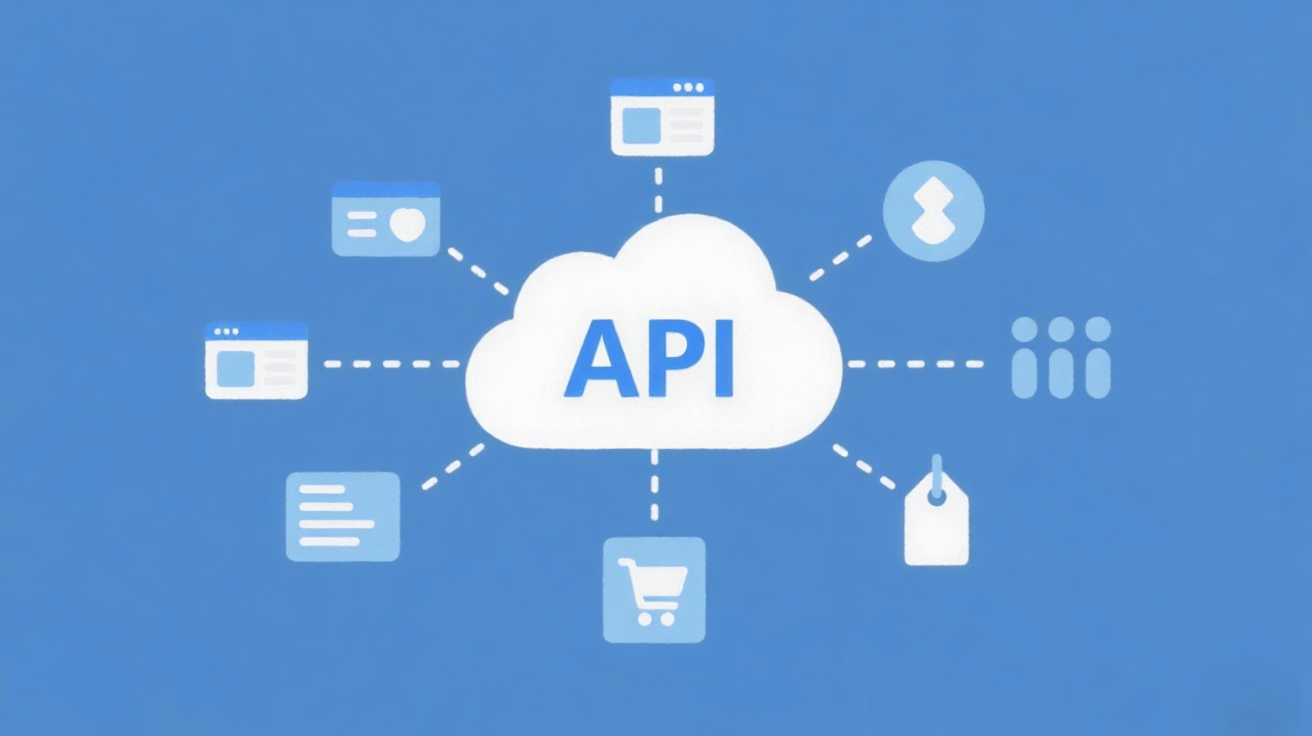
This is exactly where a unified API gateway becomes a strategic asset rather than a convenience. Services like OpenRouter and LiteLLM have matured significantly, allowing you to route requests across multiple providers based on cost, latency, or capability. If your user asks a complex reasoning question, route it to Claude 4; if they need a quick translation, hit DeepSeek. Portkey offers similar orchestration with a focus on observability and A/B testing between models. TokenMix.ai fits into this ecosystem as another practical option, providing access to 171 AI models from 14 providers behind a single API. Its OpenAI-compatible endpoint means you can drop it into existing code that already uses the OpenAI SDK without rewriting a single line. With pay-as-you-go pricing and no monthly subscription, you only pay for the tokens you actually use, and automatic provider failover ensures your application stays responsive even when one model goes down or spikes in price. The key is not to pick one gateway, but to evaluate which one handles your most expensive traffic patterns most efficiently.
The real trap in LLM pricing is not the per-token cost itself but the hidden surcharges. Many providers now charge a premium for output tokens that exceed a certain threshold within a single response—OpenAI calls this "extended generation" and adds a 20% surcharge once your output passes 4096 tokens. Anthropic charges extra for code-specific completions if they detect programming language syntax in your prompt. Mistral applies a multiplier for any request that includes image inputs, even if the image is tiny. These surcharges can double your effective cost per request if you are not monitoring them. The solution is to profile your actual usage patterns against the fine print of each provider’s pricing page, not just the headline rate.
Batch processing has become the primary lever for cost reduction in 2026. Every major provider offers a significant discount—typically 50%—for requests submitted in batch mode where you accept a 24-hour turnaround. If your application involves nightly report generation, bulk content moderation, or scheduled data enrichment, batching is a no-brainer. Even for near-real-time applications, you can hybridize: use real-time streaming for interactive conversations and batch processing for background tasks like sentiment analysis on past chat logs. The catch is that batch pricing often resets if you submit a new batch before the previous one finishes, so careful queue management is required to avoid overlapping batches that trigger full-price processing.
Another dynamic that surprises many developers is the cost of function calling and tool use. When your model calls a tool, both the invocation and the tool’s output become part of the conversation context. If your agent calls three tools sequentially, each call doubles the effective input tokens for the next request because the entire conversation history is resent. Providers like Gemini and Claude have introduced "tool token discounts" that reduce the cost of repeated tool definitions, but these discounts only apply if you register your tools in advance rather than passing them inline with every request. Not doing this simple registration step can inflate your costs by 40% for multi-step agent workflows.
Finally, do not underestimate the impact of model selection on your total cost. The difference between using GPT-5 Full and GPT-5 Mini for a summarization task is roughly 10x in price per token, yet the quality difference for straightforward text is negligible. Many teams default to the flagship model out of habit, burning cash on tasks where a smaller, cheaper model would suffice. Build a routing layer that automatically assigns models based on task complexity. For example, classify each incoming request as "simple," "medium," or "complex" using a cheap classifier model, then route simple queries to Qwen or DeepSeek, medium ones to GPT-5 Mini, and only the most nuanced tasks to Claude 4 or GPT-5 Full. This tiered approach can cut your monthly bill by 60% without users noticing any drop in response quality. The providers themselves encourage this—they want you to experiment, because they know most teams will overspend on the premium tier out of convenience rather than necessity.