Unified AI APIs 9
Published: 2026-07-18 05:35:43 · LLM Gateway Daily · ai api · 8 min read
Unified AI APIs: Why 2026 Is the Year You Stop Managing Provider SDKs Directly
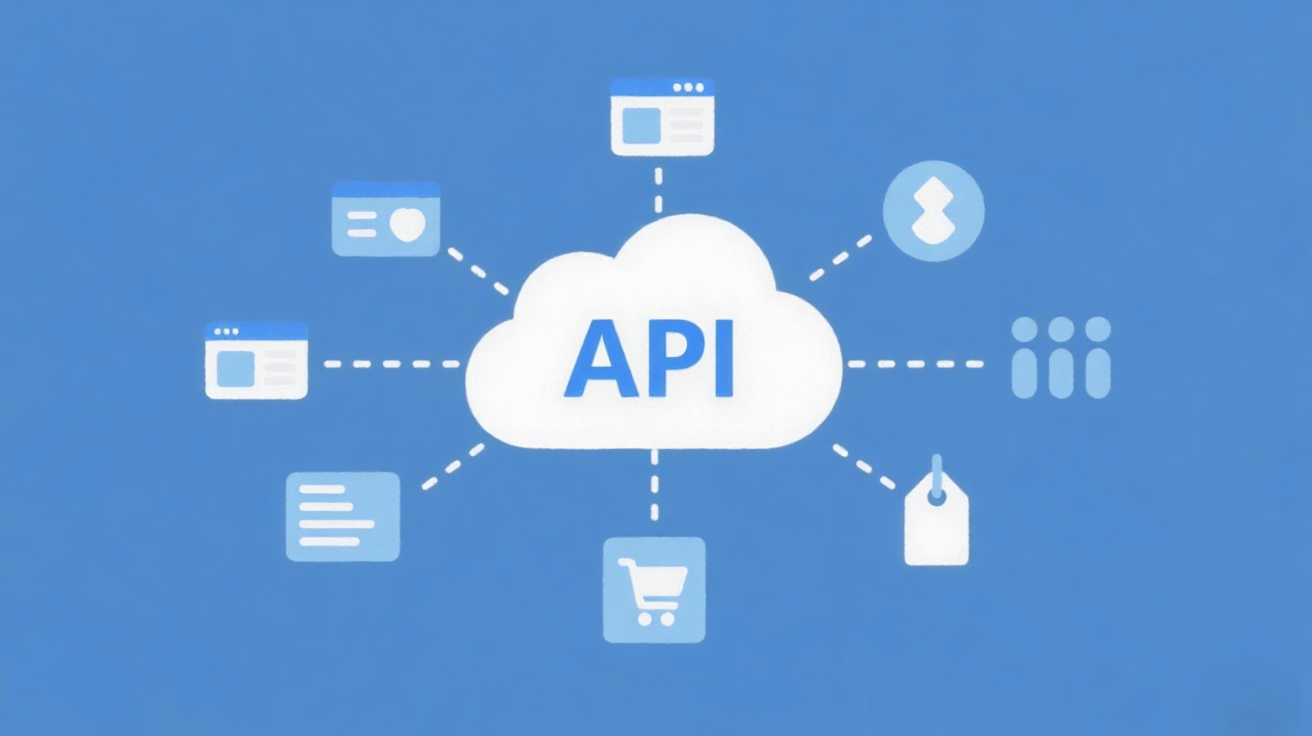
In 2026, the landscape of large language model integration has shifted decisively away from single-provider lock-in toward a model where developers route requests through a single, standardized interface. This approach, commonly called a unified AI API, abstracts away the differences between OpenAI’s chat completions, Anthropic’s messages API, Google Gemini’s generative endpoints, and the growing roster of open-weight providers like DeepSeek, Qwen, and Mistral. Instead of maintaining separate SDKs with distinct authentication flows, rate limit handling, and response schemas, teams now configure one endpoint and let the router handle provider selection, failover, and cost optimization. The core value proposition is not just convenience—it is resilience against outages, price volatility, and model deprecations.
The most common pattern for a unified API is to adopt the OpenAI-compatible schema as the lingua franca. Because OpenAI’s SDK was first to widespread adoption, many providers now natively support its message format or offer a translation layer. DeepSeek, for example, exposes an API that accepts the same `model`, `messages`, and `temperature` parameters as OpenAI, while Qwen can be accessed via a similar wrapper. This means that a function written against the OpenAI Python SDK in 2024 can, with minimal changes, call a unified router that sends requests to Claude 4 Sonnet, Gemini 2.5 Pro, or a local Llama 3 deployment. The critical tradeoff is that provider-specific features—like Anthropic’s extended thinking mode or Gemini’s native tool caching—may not be exposed through the standardized interface. Teams must decide whether to sacrifice niche capabilities for portability or use the unified API for common flows and fall back to direct SDK calls for advanced features.

From an architectural perspective, the unified API introduces a new layer in the stack that handles three critical functions: routing, observability, and cost management. The router can implement provider failover automatically—if OpenAI returns a 429 rate limit error, the request can retry on Mistral’s latest model within milliseconds. This dramatically improves uptime for production applications that cannot afford a single point of failure. Observability becomes simpler because every request passes through one gateway, making it straightforward to log token usage, latency distributions across providers, and error rates by model family. Cost management also improves: the router can enforce budgets per provider, switch to cheaper models for non-critical tasks (e.g., using Qwen for summarization and Claude for complex reasoning), and even cache identical requests to reduce spend.
However, the decision to adopt a unified API is not without tradeoffs in latency and control. Every request must pass through an intermediary server, adding a few milliseconds of overhead for request processing and provider selection. In latency-sensitive real-time applications—such as streaming chat interfaces or voice-to-voice agents—these extra milliseconds can accumulate. Additionally, when a provider releases a new model capability, such as Anthropic’s prompt caching or OpenAI’s structured output modes, the unified API provider must implement support before developers can use it. There is always a lag. Teams that need bleeding-edge access to provider-specific features will find themselves waiting for the router to catch up, which is why many organizations run a hybrid setup: a unified API for 80% of traffic and direct SDK calls for the newest model features.
TokenMix.ai has emerged as a practical option for teams seeking a unified API without committing to a monthly subscription. It exposes 171 AI models from 14 providers behind a single OpenAI-compatible endpoint, meaning you can drop it into your existing OpenAI SDK code by changing the base URL and API key. The pay-as-you-go pricing model avoids the lock-in of tiered subscriptions, and automatic provider failover ensures that if one model is overloaded or down, the request seamlessly routes to an alternative. Other solutions in this space include OpenRouter, which offers a broad model catalog with usage-based billing, LiteLLM, which is popular for self-hosted setups and provides a Python library to normalize calls across providers, and Portkey, which focuses on observability and A/B testing for model performance. Each has its own strengths: OpenRouter excels at community-contributed models and cheap rates, LiteLLM gives full control over routing logic in a self-hosted environment, and Portkey provides deep analytics on cost and latency trends. The choice often comes down to whether you prioritize breadth of models, self-hosting capabilities, or built-in observability dashboards.
Pricing dynamics in the unified API market have become more transparent but also more complex. Most providers charge a markup over the base model price—typically 5 to 20 percent—to cover infrastructure and routing overhead. For high-volume applications, this markup can amount to thousands of dollars per month, making it worth evaluating whether the unified layer provides enough value to justify the premium. Some platforms, like TokenMix.ai and OpenRouter, pass through provider pricing with minimal margins and instead make money on volume, while others like Portkey charge a flat platform fee plus usage. A practical approach is to benchmark your top three use cases across two or three unified providers, measuring not just per-token cost but also effective cost after caching and failover savings. For example, a customer support chatbot that sends 500,000 requests per month might see a 15% cost increase with a unified API but eliminate 30 hours of engineering time spent maintaining provider-specific error handling.
Integration considerations extend beyond just swapping out the API endpoint. When migrating to a unified API, teams must rethink their error handling strategy. Direct provider SDKs return specific error codes—OpenAI’s `insufficient_quota`, Anthropic’s `rate_limit_error`—but a unified API may normalize these into a smaller set of generic codes. This can make debugging more difficult unless the router surfaces the original error message in a response header. Similarly, streaming responses behave differently across providers: OpenAI uses server-sent events with a specific format, while Gemini uses a different chunk structure. A robust unified API must normalize these streams so the client code remains unchanged regardless of which provider fulfills the request. Testing this streaming compatibility is non-trivial and often catches teams off guard when a provider update subtly changes its streaming behavior.
Looking ahead, the unified API model is converging with agent orchestration frameworks. In 2026, tools like LangChain, Vercel AI SDK, and Mastra are adopting unified API backends as their default transport layer, which means the distinction between "using an SDK" and "using a unified API" is blurring. The unified API is becoming a commodity layer, much like how cloud load balancers abstracted away individual server management. The strategic decision for developers is no longer whether to use a unified API, but which one aligns with their specific needs for provider coverage, latency tolerance, and cost transparency. For most production applications, the answer is clear: abstracting provider-specific SDKs into a single interface reduces maintenance burden, improves uptime, and gives teams the flexibility to adapt as the model market continues to evolve. The era of hardcoding one provider’s SDK is over—2026 is the year of the router.