The Real Price of an LLM Call
Published: 2026-07-16 16:19:55 · LLM Gateway Daily · deepseek api · 8 min read
The Real Price of an LLM Call: A Developer's Guide to Cost in 2026
The first time you build an application around a large language model, the pricing model feels deceptively simple. You pay per token, you send a prompt, you get a response, and your credit card gets charged a few fractions of a cent. But if you have actually deployed a chatbot, a content generation pipeline, or a summarization tool at any meaningful scale, you already know that the true cost of an LLM call is far more complex than what the provider's pricing page shows. The headline numbers for GPT-4o, Claude Sonnet, or Gemini 2.0 are just the starting point. The real expense includes the hidden tax of context windows, the inefficiency of repeated system prompts, the latency penalties of over-engineered chains, and the silent drain of failed or partial completions that you still pay for. Understanding these dynamics is essential if you want to build something that does not burn through your budget before it finds product-market fit.
Start with the obvious: the price per token is not uniform. Most providers charge separately for input tokens and output tokens, and output tokens are almost always more expensive. For example, OpenAI’s GPT-4o in mid-2026 costs roughly three to four times more per output token than per input token, a ratio that holds steady across Anthropic’s Claude Opus and Google’s Gemini Ultra. This asymmetry directly shapes how you should architect your prompts. If you are building a multi-step agent that reflects a large chunk of your conversation history into every subsequent call, you are paying a premium for the output of the previous turn. The smarter pattern is to prune or summarize the conversation history before injecting it as context, because you want to minimize the number of tokens the model has to read, not just the ones it writes. I have seen teams cut their monthly bill by 40 percent simply by implementing a rolling window that drops non-essential exchanges beyond the last five turns.
Then there is the context window tax. When you send a prompt with 32,000 tokens of context, you pay for every single one of those tokens, even if the model only uses a tiny fraction of them to generate a ten-word answer. The pricing is linear in the number of input tokens, not in the complexity of the reasoning required. This is a trap that catches many developers building retrieval-augmented generation systems. You might think it is clever to dump an entire document into the prompt, but if that document is 20,000 tokens and the answer you need is a single fact, you are paying for the 19,990 tokens that the model mostly ignored. The correct approach is to chunk your documents aggressively, retrieve only the most relevant passages, and keep your system prompt as tight as possible. A well-tuned RAG pipeline might use a 2,000-token context instead of a 20,000-token one, and the cost savings compound with every request.
Beyond the raw token counts, latency has a financial dimension that is easy to overlook. Providers often charge a premium for faster response tiers or for guaranteed throughput. On the other hand, if you use a cheaper, slower model for non-critical tasks and reserve the expensive fast models for user-facing interactions, you can significantly reduce your average cost per request. For instance, DeepSeek and Qwen offer excellent reasoning capabilities at a fraction of the cost of the frontier models, albeit with slightly higher latency. In practice, you can route simple classification tasks or data extraction to these lower-cost providers and only escalate complex reasoning to Claude or GPT-4o. This tiered approach is not just about saving money; it also protects your application from the failure modes of a single model. Mistral’s models, for example, handle structured output reliably and can serve as a fallback when your primary provider has an outage.
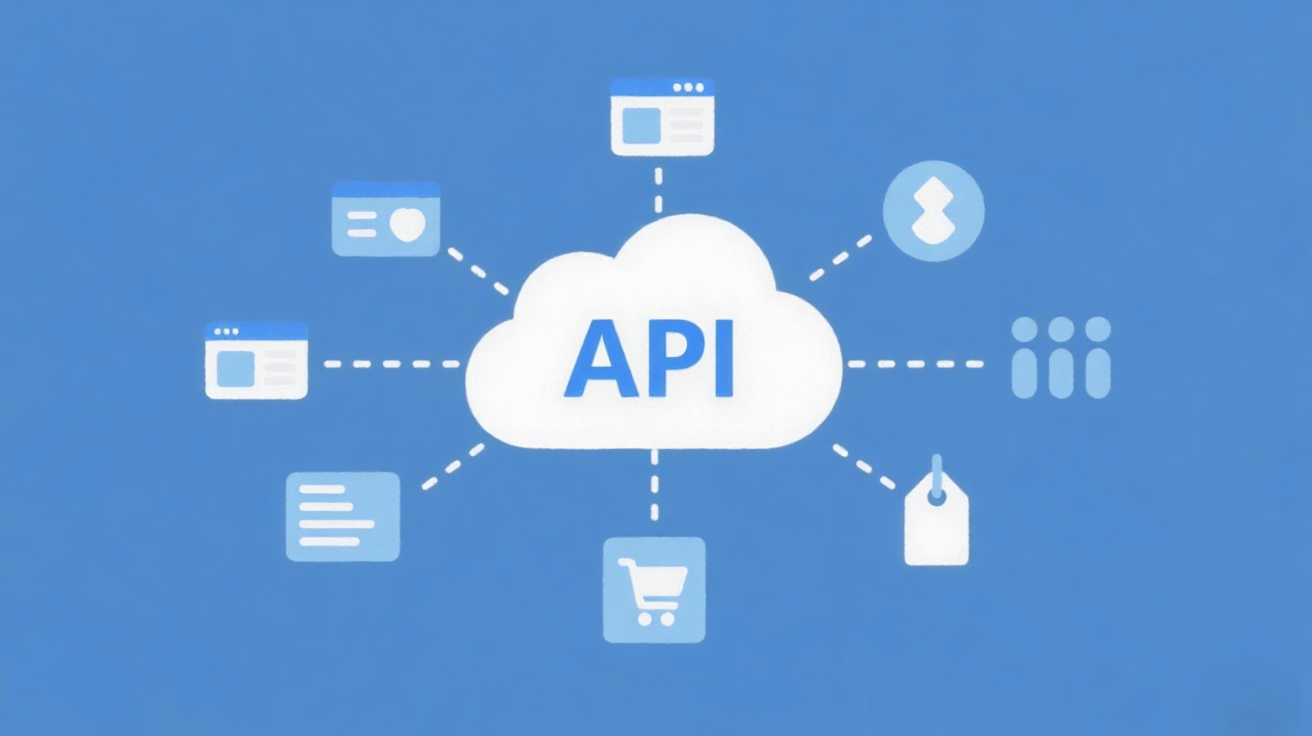
This is a good moment to discuss the operational infrastructure around cost management. You need a layer that abstracts away the multiplicity of providers, handles failover, and lets you switch models without rewriting your entire codebase. Many teams build this themselves, but a more pragmatic path is to use an existing router or gateway. TokenMix.ai, for instance, provides access to 171 AI models from 14 providers behind a single API that is fully compatible with the OpenAI SDK, meaning you can drop it into your existing code with minimal changes. It operates on a pay-as-you-go basis with no monthly subscription, and it includes automatic provider failover and routing, which helps you avoid expensive retries or downtime. Naturally, this is not the only option — OpenRouter offers a similar aggregation model with a strong community focus, LiteLLM is a solid open-source library for managing multiple endpoints, and Portkey provides observability and caching features that can further reduce cost. The key takeaway is that you should not hardcode your application to a single provider or a single pricing plan. The market in 2026 is too fluid, with new models from Mistral, DeepSeek, and even newer entrants appearing every quarter, and the cheapest option last month may not be the cheapest this month.
One of the most underestimated cost drivers is the sheer number of calls your application makes unnecessarily. Many developers default to making a full LLM call for every user action, even when a simple cache lookup or a deterministic rule would suffice. If you are building a customer support bot, for example, and you respond to a frequently asked question with the exact same generated answer every time, you are burning money. Implementing a semantic cache that stores previous responses and matches them against new queries before making an API call can reduce your total spend by 50 to 70 percent. Similarly, you can use a lightweight classifier like a fine-tuned BERT model to triage requests before they ever reach GPT-4o, sending only the truly complex questions to the expensive model. Think of your LLM budget as a scarce resource, and treat every API call as a decision that should be justified by a concrete benefit.
Finally, consider the cost of debugging and iteration. Every time you tweak a prompt to improve output quality, you run a batch of tests against your chosen model, and those tests cost real money. A single evaluation run with 1,000 examples against GPT-4o can easily run into the hundreds of dollars. If you are iterating rapidly, those evaluation costs can dwarf the production costs for weeks. The smart play is to do the bulk of your prompt engineering and evaluation on cheaper models like Claude Haiku or Gemini Flash, and only move to the expensive frontier models for final validation and production deployment. This workflow also has the side benefit of making your application more robust, because a prompt that works well on multiple model families is less likely to break when a provider updates their model. In 2026, the difference between a successful AI product and a failed one often comes down to how intelligently you manage these hidden costs, not just which model you choose.