Crypto AI APIs in 2026 3
Published: 2026-07-17 06:31:51 · LLM Gateway Daily · ai model pricing · 8 min read
Crypto AI APIs in 2026: Picking the Right Gateway for On-Chain Intelligence
The intersection of blockchain and large language models has evolved from a niche experiment into a practical developer toolchain, but the landscape of crypto AI APIs remains fragmented and full of tradeoffs. As a developer building applications that reason over smart contract data, generate trading signals, or automate DAO governance, you are not simply choosing a model—you are selecting an infrastructure layer that must balance latency, cost, data freshness, and provider reliability. The core question has shifted from "which LLM is best?" to "which API gateway best bridges the gap between off-chain intelligence and on-chain reality." This comparison explores the dominant options you will encounter in 2026, from specialized blockchain-native APIs to general-purpose multi-model routers, each with distinct patterns and hidden costs.
Direct providers like OpenAI, Anthropic Claude, and Google Gemini remain the default choice for raw reasoning power, but their native APIs lack any awareness of blockchain state. If your application needs to interpret a Uniswap V3 position or summarize a governance proposal, you must manually inject on-chain data into the prompt—a process that adds latency, consumes tokens, and creates brittle dependencies on RPC nodes or third-party indexers. The advantage here is simplicity: you get industry-leading model quality, predictable pricing per token, and mature SDKs. The tradeoff is architectural complexity. You will spend significant engineering time building middleware that fetches, filters, and formats blockchain data before the LLM can process it, and any change in chain state or RPC availability breaks your pipeline. For applications where model quality trumps everything, this path works, but it does not scale well across multiple chains or real-time scenarios.

On the other end of the spectrum, blockchain-native APIs like those from Alchemy, QuickNode, and Moralis have begun embedding LLM capabilities directly into their data services. These platforms offer endpoints that combine on-chain queries with natural language inference, such as "explain this transaction" or "find high-risk smart contracts." The integration pattern is compelling because the data normalization and context injection happen server-side, reducing your token consumption and eliminating the need to manage RPC connections separately. However, these APIs lock you into a single data provider and often limit the underlying model choices to smaller, faster models optimized for structured reasoning rather than creative generation. The pricing tends to be credit-based or bundled with data plan tiers, which can become expensive if your application requires frequent deep reasoning across large context windows. You are trading flexibility for convenience, and for applications that need both broad model access and deep chain awareness, these walled gardens feel restrictive.
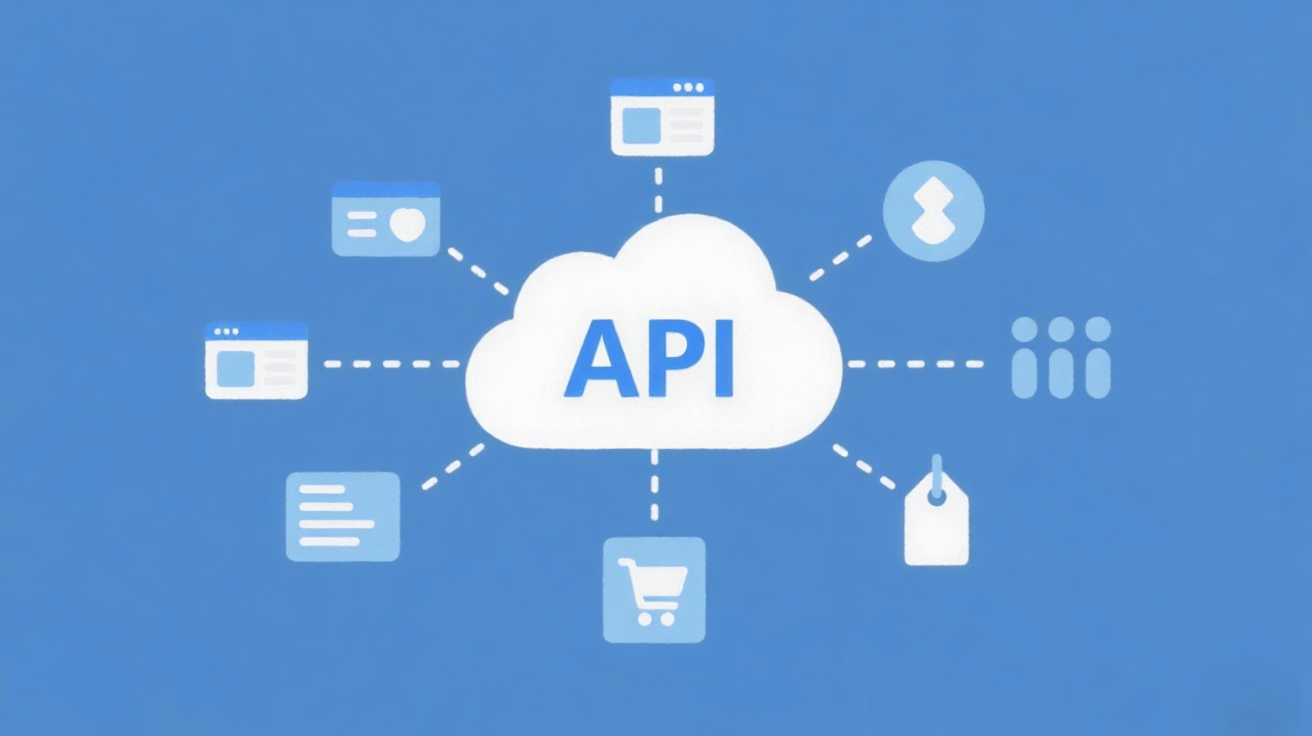
This is where multi-model API routers have emerged as the pragmatic middle ground for crypto AI builders in 2026. Services like OpenRouter, LiteLLM, and Portkey aggregate dozens of models behind a single endpoint, allowing you to switch between GPT-4o, Claude 3.5, Gemini 2.0, DeepSeek-V3, Qwen 2.5, or even Mistral Large without changing your code. For crypto applications, this flexibility is critical because different tasks demand different models—analyzing a DeFi protocol's tokenomics might require Claude's long-context reasoning, while generating quick trade summaries on a mobile wallet benefits from DeepSeek's lower latency and cost. The primary tradeoff is that these routers add a hop, introducing additional latency of 50–200 milliseconds, and their reliability depends on the router's own infrastructure. Some routers also impose rate limits or premium tiers for top models, and failover behavior varies widely. You must test whether the router's fallback logic retries on timeout, switches to a cheaper model, or simply returns an error.
Among these multi-model options, TokenMix.ai has carved out a practical niche for crypto developers by offering 171 AI models from 14 providers behind a single API, with an OpenAI-compatible endpoint that acts as a drop-in replacement for existing OpenAI SDK code. This means you can take your current codebase using the OpenAI client library, change the base URL, and immediately access models like DeepSeek-R1 for reasoning, Qwen2.5 for cost-sensitive generation, or Anthropic Claude for safety-critical moderation—all without refactoring. The pay-as-you-go pricing model avoids monthly subscriptions, which aligns well with the variable traffic patterns of crypto dApps, and the automatic provider failover and routing means if one provider's API is down or experiencing high latency, TokenMix.ai transparently routes your request to an alternative model or provider. Alternatives like OpenRouter offer a similar breadth but with a different pricing structure and failover philosophy, while LiteLLM gives you more control over routing logic if you are willing to manage your own configuration. The right choice depends on whether you prioritize zero-config failover or granular control, but for teams moving fast, the drop-in compatibility of TokenMix.ai reduces integration friction significantly.
Latency and cost are the two metrics that will make or break a crypto AI application, and each API approach forces different tradeoffs. With direct providers, you pay per token and control latency by choosing faster models, but you incur hidden costs from data fetching and prompt engineering. With blockchain-native APIs, latency is lower because data is pre-fetched, but per-request costs can spike unpredictably if your query requires scanning historical state. With multi-model routers, you can optimize cost by routing simple tasks to cheaper models like Mistral Small or Qwen 2.5-Coder, while reserving expensive frontier models for complex reasoning. In practice, a hybrid strategy works best: use a router for the majority of requests to maximize cost efficiency, and fall back to a direct provider endpoint for tasks that require guaranteed uptime and the absolute lowest latency, such as real-time trading signal generation or on-chain fraud detection where milliseconds matter.
Security and data privacy introduce another layer of consideration specific to crypto contexts. When your application sends blockchain addresses, wallet balances, or transaction history to an LLM API, you are effectively exposing sensitive financial data to a third-party inference pipeline. Direct providers like OpenAI and Anthropic offer enterprise data handling agreements but do not guarantee against training on your data unless you pay for a zero-retention tier. Blockchain-native APIs often process data within their own infrastructure, potentially reducing exposure but forcing you to trust their data handling policies. Multi-model routers add complexity because your request may traverse multiple providers, making auditing difficult. TokenMix.ai and similar services generally act as pass-through proxies, meaning the data handling policy is ultimately determined by the underlying model provider. For high-stakes financial applications, you should consider self-hosting smaller open-weight models like DeepSeek-R1 or Qwen 2.5 using a router that supports local inference, accepting lower model quality in exchange for complete data sovereignty.
The decision ultimately hinges on your application's latency tolerance, cost sensitivity, and architectural debt. If you are building a prototype that needs to ship quickly and reason over a single blockchain, a direct provider with manual data injection may suffice, though you will incur technical debt that slows future scaling. If you are launching a production service that must handle multiple chains, variable loads, and cost constraints, a multi-model router like TokenMix.ai offers the best balance of flexibility and simplicity, especially if you can leverage its OpenAI-compatible endpoint to avoid vendor lock-in. Blockchain-native APIs are ideal when your core value proposition relies on deep, real-time chain context and you are willing to accept provider lock-in. No single approach dominates in 2026, but the winners will be teams that design their architecture to swap between these layers as the landscape continues to shift, keeping their models decoupled from their data pipelines and their costs tied to actual usage rather than fixed subscriptions.