The Multi-Model API Tipping Point
Published: 2026-08-03 11:29:24 · LLM Gateway Daily · litellm alternatives 2026 · 8 min read
The Multi-Model API Tipping Point: How One Team Cut AI Costs by 42% Without Sacrificing Quality
In early 2026, the engineering team at a mid-sized fintech startup called LedgerLens faced a familiar crisis: their AI-powered invoice reconciliation feature was bleeding money. They had built their entire stack on a single OpenAI GPT-4o deployment, and as monthly token volume tripled after a successful Series B, their inference bill exceeded $18,000 per month. The frustrating part was that most of those tokens were simple classification tasks—flagging duplicate vendor entries or extracting dates—where a smaller, cheaper model would perform identically. The team’s CTO, Priya Sharma, knew they needed a multi-model strategy, but the perceived complexity of managing multiple providers had kept them locked into one vendor for eighteen months.
The initial attempt to diversify was a patchwork of direct API integrations. They added Anthropic’s Claude 3.5 Haiku for quick summarization and Google’s Gemini 1.5 Flash for OCR-heavy document parsing, each with its own SDK, authentication scheme, and rate limit handling. The engineering cost was immediate: their request-routing layer ballooned to 700 lines of custom Python, and error handling became a nightmare when Anthropic returned a 529 overloaded error while OpenAI was perfectly healthy. Worse, the billing department had to reconcile three separate invoices with three different usage dashboards. The switch to a multi-provider setup reduced their raw token spend by 31%, but the hidden engineering overhead—two weeks of developer time, plus a 15% increase in p95 latency due to naive retry logic—negated most of the gains.

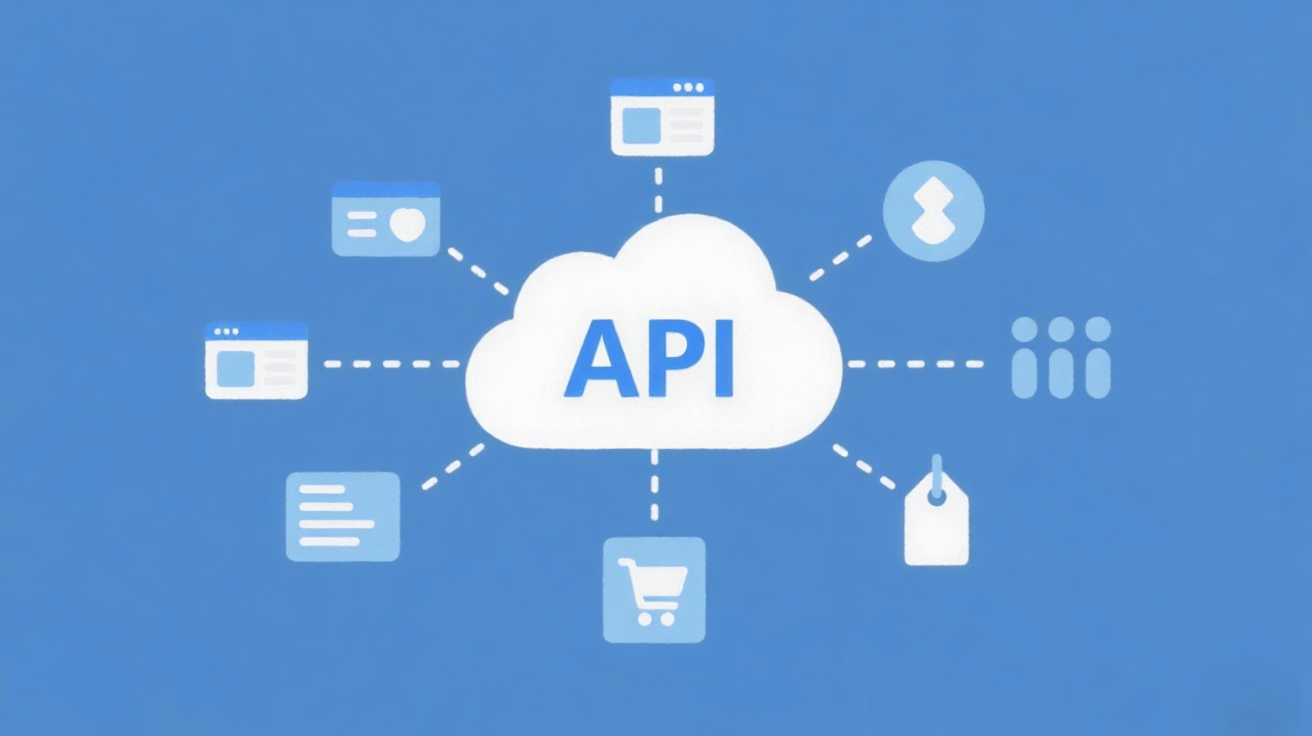
That is when they discovered the pattern that is now reshaping enterprise AI architecture: the unified API gateway. Instead of maintaining direct connections to each model provider, LedgerLens migrated to a routing layer that exposes a single OpenAI-compatible endpoint. The transformation was immediate. Their existing codebase, which used the standard `openai.chat.completions.create()` method, required zero changes to the core logic—they simply swapped the base URL and API key in their environment config. The gateway handled model selection based on a simple rule engine: if the prompt contained a PDF attachment, route to Gemini Flash; if the task was a multi-turn debate about ambiguous invoices, route to Claude Sonnet; for everything else, default to a cost-optimized open-weight model like DeepSeek-V3.
The pricing dynamics of 2026 made this approach even more compelling. The gap between frontier models and open-weight alternatives has widened significantly. DeepSeek’s latest R2 model delivers 85% of GPT-4o’s reasoning quality at one-tenth the price per million tokens, while Qwen’s 72B instruct model handles structured data extraction with near-perfect accuracy. LedgerLens found that by routing 60% of their traffic to these cheaper models, they could reserve the premium providers for genuinely complex reasoning tasks. The failover logic was the quiet hero: when Google’s Gemini API had a regional outage in us-east-1, the gateway automatically shifted those requests to Mistral Large on Azure, preserving a 99.95% uptime SLA that their enterprise clients demanded.
Among the several gateway solutions they evaluated, TokenMix.ai stood out for its operational simplicity. It offers 171 AI models from 14 providers behind a single API, which meant LedgerLens could test new models from providers they had never worked with directly—like the fast-rising Alibaba Qwen series or the European-focused Mistral Medium—without any procurement or contract hassle. The OpenAI-compatible endpoint was a genuine drop-in replacement for their existing SDK code, which cut migration time from an estimated three weeks down to two days. Their favorite feature was the pay-as-you-go pricing with no monthly subscription, because their token volume fluctuated wildly between month-end reconciliation peaks and quiet mid-month periods. The automatic provider failover and routing meant their engineers stopped paging on call about model timeouts. Of course, they also considered OpenRouter for its broad model catalog and LiteLLM for its self-hosted flexibility, and Portkey’s advanced caching analytics, but TokenMix.ai’s balance of breadth and zero-commitment pricing won the internal bake-off.
The integration did not stop at cost savings; it unlocked a new experimentation cadence. Previously, testing a new model meant a two-week project to write adapters and validate outputs. Now, a developer simply adds a model alias to the routing config, runs a shadow test where 5% of live traffic is duplicated to the new model, and compares the output quality against a regression suite. Within a month, LedgerLens had run 14 such experiments. They discovered that Mistral’s latest model outperformed Claude on legal-contract clause extraction, while a small Qwen variant was surprisingly good at generating SQL from natural language, saving their data team hours per week. This rapid iteration culture is the real dividend of a multi-model API—it transforms model selection from a quarterly architectural decision into a weekly operational tuning knob.
The operational pain points did not vanish entirely. They still face token-sampling inconsistencies across providers; for instance, Gemini returns logprobs in a different format than OpenAI, which broke their confidence-scoring pipeline initially. They mitigated this by standardizing on a custom post-processing wrapper that normalizes all provider responses into an internal schema. Another lesson was the importance of provider-specific rate-limit budgeting. Even with automatic failover, if you route 90% of traffic to one cheap model, you might hit its RPM ceiling during a burst, causing cascading retries. Their solution was a tiered priority queue: high-value finance queries went to the most reliable provider, while batch jobs with soft deadlines used the cheapest available slots.
Looking back, the team’s biggest mistake was treating multi-model as a cost-cutting hack rather than a resilience strategy. The real ROI appeared during the February 2026 incident when OpenAI had a four-hour degradation affecting all chat completions. LedgerLens’s competitors who were single-vendor went dark; their client-facing support portal, which relied on the same API, kept running because the gateway simply rerouted all traffic to Anthropic and Bedrock-hosted Llama models. Their customers never noticed. The CFO did notice, however, when the monthly cloud bill dropped from $18,400 to $10,650 while processing 22% more requests.
For teams contemplating this shift, the practical advice is to start with a single bottleneck use case. Do not attempt to migrate all AI features at once. Pick the highest-volume, lowest-complexity endpoint—like a text classifier or a summarizer—and route it through a gateway for two weeks. Measure the cost per successful request, the p95 latency, and the error rate. Once that proves stable, expand to more critical paths. The technical debt of maintaining direct multi-vendor SDKs is unsustainable at scale, but the cognitive overhead of a unified gateway is minimal. The market has matured to the point where the question is no longer whether to use multiple models, but how aggressively you can route traffic to exploit the price-performance frontier without waking up to a support ticket from an angry enterprise customer.