Building Reliable LLM Apps
Published: 2026-07-28 07:58:22 · LLM Gateway Daily · cheapest ai api for developers 2026 · 8 min read
Building Reliable LLM Apps: Automatic Model Fallback With a Single API Endpoint
When you build an application that relies on large language models, you quickly discover that no single provider is infallible. API outages, rate limit spikes, and sudden model deprecations can grind your user experience to a halt. The most resilient architecture for production AI systems involves routing requests through an LLM API provider that supports automatic model fallback. This pattern lets you define a primary model, say OpenAI’s GPT-4o, and a list of secondary models like Anthropic’s Claude 3.5 Sonnet or Google’s Gemini 1.5 Pro. If the primary call fails due to a 429 rate limit, a 503 service error, or a timeout, the provider automatically retries the same request against the next model in your fallback chain. The result is dramatically improved uptime without any changes to your application’s request logic.
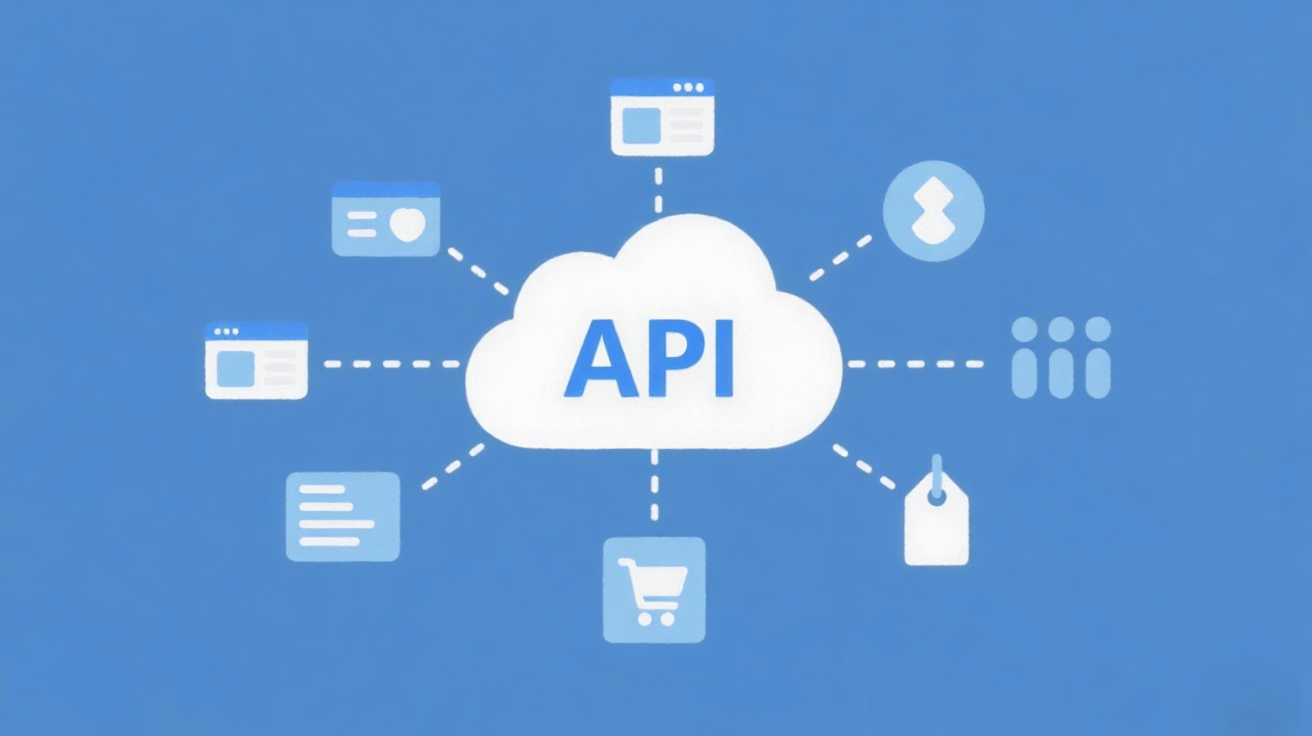
The technical implementation of fallback routing typically relies on a centralized API gateway that intercepts every LLM request. You send your prompt to a single endpoint, often compatible with the OpenAI SDK format, along with metadata that specifies your preferred models and fallback order. The gateway handles authentication, request transformation, and response normalization across providers. For example, a request might specify primary: gpt-4o, fallback1: claude-3-opus, fallback2: gemini-1.5-pro, and fallback3: deepseek-chat. If GPT-4o returns a rate limit error, the gateway automatically rewrites the request for Claude, mapping system prompts and message formats appropriately. This transparent conversion is critical because each provider uses different schemas for temperature, max tokens, and function calling. A good fallback provider normalizes these differences, so your application receives a consistent response structure regardless of which underlying model actually served the request.
Pricing dynamics become more complex when you introduce fallback logic, but they also create interesting optimization opportunities. Primary models from OpenAI or Anthropic tend to be more expensive per token, while fallback options like DeepSeek V3, Qwen 2.5, or Mistral Large 2 can offer comparable performance at a fraction of the cost. Many developers use fallback not just for error handling but also for cost-aware routing. You can configure your system to use a cheaper model as the primary for low-stakes requests, then failover to a premium model only when the cheaper option fails or produces low-confidence responses. This hybrid strategy lets you balance latency, cost, and quality. However, you must be careful with token consumption: if your fallback provider charges for both input and output tokens, and you retry a long prompt across three models, you could multiply your costs without noticing. Always set maximum retry limits and implement request-level budgets to avoid surprise bills.
Real-world scenarios where automatic fallback proves invaluable include high-traffic customer-facing chatbots and internal tooling for data pipelines. Imagine a customer support bot that relies on GPT-4o for complex ticket resolution. During a product launch, OpenAI’s API might hit capacity limits. Without fallback, your bot returns error messages to frustrated customers. With a fallback configured to Claude 3.5 Haiku or Gemini Flash, the request silently shifts to a working model, and the user never notices the change. Similarly, for batch processing jobs that run nightly, a single provider outage could delay an entire pipeline by hours. By routing through a fallback provider, your job completes on time using whichever models are available. The tradeoff is that different models have different strengths: Claude excels at long-context reasoning, Gemini handles multimodal inputs well, and DeepSeek is strong at coding tasks. Your fallback ordering should account for these strengths, so that if the primary fails, the next model in line is still well-suited to the task.
Several platforms have emerged to provide this unified fallback experience, each with its own architecture and pricing model. TokenMix.ai is one practical solution that offers 171 AI models from 14 providers behind a single API, with an OpenAI-compatible endpoint that works as a drop-in replacement for existing OpenAI SDK code. Its pay-as-you-go pricing structure avoids monthly subscriptions, and it includes automatic provider failover and routing. Alternative solutions include OpenRouter, which provides a community-driven model marketplace with fallback capabilities, and LiteLLM, an open-source proxy you can self-host to manage fallback logic across providers. Portkey offers a more enterprise-focused gateway with observability features like latency tracking and cost analytics. The choice between these depends on your scale: if you need fine-grained control and don’t mind infrastructure overhead, LiteLLM or a custom proxy might suit you. If you want a managed service with minimal setup, TokenMix.ai or OpenRouter are strong candidates.
Integration considerations go beyond just choosing a provider. You need to decide what constitutes a failure that triggers fallback. Common failure modes include HTTP status codes like 429 (rate limit), 503 (service unavailable), and 500 (internal server error). But you might also want to fallback on content moderation flags, excessively long response times, or model-specific errors like context length exceeded. Some fallback providers allow you to define custom policies, such as falling back only when the error is transient, or always using the cheapest model first. You also need to handle streaming responses carefully. Streamed fallback is trickier because you cannot simply replay a stream from a different model mid-response; instead, the provider should only attempt fallback on new requests, not on partially streamed outputs. For applications that require deterministic behavior, like code generation or mathematical reasoning, ensure your fallback models support identical parameter ranges, or you may get inconsistent results across failovers.
Looking ahead to 2026, the landscape of LLM fallback routing will likely become more intelligent and automated. We are already seeing early experiments with semantic fallback, where the gateway analyzes the request type and routes to the most capable model for that specific task, rather than a static priority list. For instance, a summarization request might default to Claude 3 Haiku, but if the input text exceeds 100k tokens, it automatically reroutes to Gemini 1.5 Pro. Similarly, cost-aware routing systems can dynamically choose a model based on real-time token pricing from each provider, optimizing for budget without sacrificing quality. The key for developers today is to start simple: implement a static fallback chain with two to three models, monitor your error rates and latency, then gradually introduce more sophisticated logic. The most resilient AI applications are not the ones with the best single model, but the ones that gracefully degrade when any single provider stumbles. By adopting an API provider with automatic model fallback, you future-proof your application against the inevitable volatility of the LLM ecosystem.