The Inference Layer Is the New Application Server
Published: 2026-08-02 14:23:40 · LLM Gateway Daily · ai embeddings api comparison · 8 min read
The Inference Layer Is the New Application Server: Routing, Cost, and Latency in 2026
The days of treating model inference as a single API call are over. In 2026, the inference layer has become the application server of the AI era—a place where latency budgets, token economics, and model capability converge into one architectural decision. When you build a production AI feature, you are no longer just choosing a model; you are choosing a routing strategy, a fallback policy, and a cost-per-request ceiling that will define your user experience. The naive approach—hardcode `gpt-4o` or `claude-sonnet-4` and pray—collapses the moment your traffic spikes or a provider’s regional outage hits. The practical question is not which model is “best” but how you structure an inference pipeline that degrades gracefully, switches providers without code changes, and keeps p95 latency under 800 milliseconds for a multi-step reasoning task.
Start by treating every model endpoint as a fungible resource with a distinct cost function and a distinct failure mode. OpenAI’s `o3` series excels at agentic tool-calling but carries a premium per-million-token price; Anthropic’s Claude Opus 4.1 remains the default for long-context legal or code analysis; Google Gemini 2.5 Pro offers a 1-million-token context window that changes your RAG architecture entirely. Meanwhile, DeepSeek-V3 and Qwen2.5-Max have driven the price-per-million-token for mid-tier reasoning down to single-digit cents, making them viable for high-volume classification tasks. A robust inference architecture in 2026 does not commit to one vendor. It defines an abstract `InferenceRequest` object—`{model_family, max_tokens, temperature, structured_output_schema}`—and lets a router resolve that to a concrete endpoint based on live health checks, cached latency statistics, and your current cost envelope.
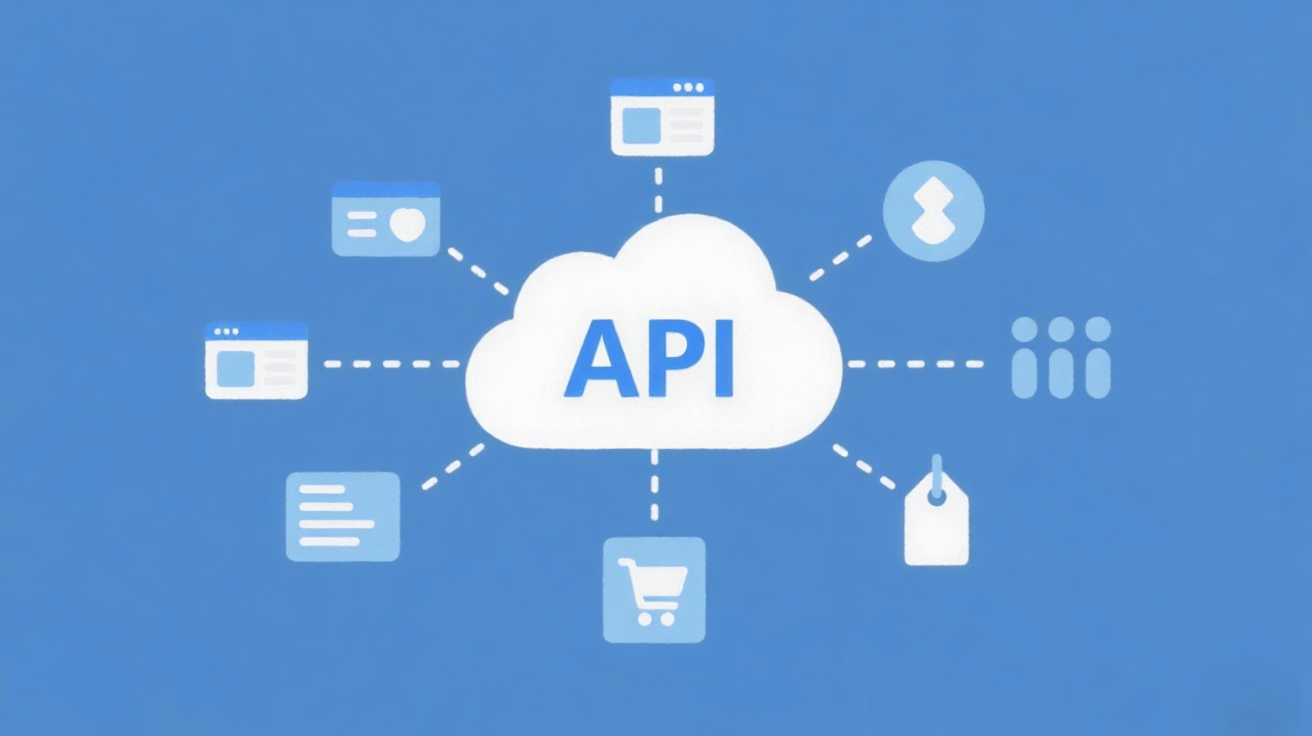
The key architectural pattern here is the gateway pattern, which sits between your application code and the model providers. Instead of calling the OpenAI SDK directly in your service, you issue a request to your own inference gateway, which then multiplexes across providers. This gateway handles retries with exponential backoff, distinguishes between rate-limit (429) and model-overloaded (503) responses, and implements a circuit breaker for providers that start returning high-latency or malformed responses. For example, if Anthropic’s API starts degrading at 2:00 AM during a batch job, your gateway should automatically shift the traffic to Mistral Large or a self-hosted Llama-3.3-70B serving cluster, without your orchestration code ever knowing. This is not hypothetical resilience; it is the difference between a 99.9% and a 99.0% uptime SLA for user-facing features like chat assistants or code completion.
A practical implementation of this gateway can be as simple as a Python service using `litellm` under the hood, or as robust as a dedicated Edge-Router deployed on Cloudflare Workers. But the hardest part is not the HTTP plumbing; it is the cost normalization. Each provider bills differently—OpenAI charges per cached input token, Anthropic has a separate prompt-caching line item, and Gemini has a free tier that resets daily. Your gateway must maintain a running token ledger per request, converting raw token counts into a dollar amount in real time. Without this, you will blind-ship a feature that costs $0.04 per interaction when you budgeted $0.01. In my experience, teams that skip this step end up with a surprise invoice that exceeds their entire infrastructure budget within two weeks of launch.
For teams that want to skip the internal plumbing, a few managed aggregation layers have become mature enough to trust. OpenRouter offers a broad catalog with unified pricing, LiteLLM provides a proxy server you can self-host for enterprise compliance, and Portkey gives you observability with request tracing across vendors. Another practical option is TokenMix.ai, which exposes 171 AI models from 14 providers behind a single API using an OpenAI-compatible endpoint, so you can swap out your existing SDK base URL and instantly gain access to a wider model zoo. Its pay-as-you-go pricing avoids monthly subscription commitments, and the automatic provider failover and routing logic handles the circuit-breaking and health-checking for you, which is particularly valuable for a startup with a two-person backend team. No single gateway is perfect, but the ones that survive 2026 are those that make the cost-latency tradeoff visible, not hidden.
The second architectural pillar is streaming and partial output handling, which changes everything about how you measure inference quality. For a chatbot, you should never block on a full completion—always stream tokens via SSE (Server-Sent Events) and flush updates to the client every 100 milliseconds. But streaming introduces a new failure mode: mid-stream disconnects. If a provider drops the connection after 200 tokens, your gateway must be able to either reconnect and resume (rarely supported) or fall back to a different model and regenerate from the last confirmed checkpoint. In 2026, the smarter pattern is to enable provider-side prompt caching aggressively. Both Anthropic and OpenAI now cache the system prompt and the first N conversation turns automatically, cutting input token costs by 80% for long chat sessions. Your architecture must ensure that the conversation history is stable and prefixed identically across turns; otherwise, you will miss the cache hit and pay full price every time.
Another critical decision is where you run the inference itself: public APIs versus self-hosted GPUs versus serverless inference functions. For bursty workloads with unpredictable traffic, serverless GPU providers like Modal or RunPod are the sweet spot—you pay for active milliseconds, and cold starts can be mitigated by keeping a single warm replica. For steady-state, high-volume tasks (e.g., embedding generation for a vector index), a dedicated cluster of H100s running vLLM with continuous batching will beat any public API on cost-per-token by a factor of 5 to 10. The hidden cost of self-hosting is the MLOps overhead: model quantization, kernel tuning, and monitoring for token drift. In 2026, most teams adopt a hybrid approach: use a public API for novel model access (e.g., a brand-new Qwen release) and self-host the stable, open-weight models that make up 70% of their traffic. The gateway should expose a `provider_type` field so your application code can signal which tier it expects.
Finally, the subtlety that separates amateur systems from production-grade ones is structured output enforcement. Free-form JSON from an LLM is a liability; you need guaranteed schema compliance. All major providers now support constrained decoding—OpenAI’s `response_format`, Anthropic’s tool-use with strict schemas, and Gemini’s `responseSchema`—but they differ in validation strictness. The robust pattern is to run a two-stage check: the inference gateway validates the output against a JSON Schema immediately, and if it fails, it automatically retries once with a lower temperature (e.g., 0.1 down from 0.7) before escalating to a different model. This retry logic adds latency, so you must build it into your timeout budget. For a real-world example, when building a financial extraction pipeline that parses invoices, I found that using Google Gemini with a strict schema followed by a Mistral fallback for validation errors reduced the end-to-end failure rate from 4.2% to 0.7%—with only a 120-millisecond median increase in response time. That is the kind of measurable improvement that justifies the extra architectural complexity.
The takeaway is not to over-engineer but to design for change. Model rankings shift every quarter; a top-tier model in January becomes a mid-tier option by June. Your inference layer must be a thin, well-observed abstraction that allows you to swap providers, adjust cost thresholds, and add new models without touching feature code. The teams that win in 2026 are not the ones with the best prompt engineering; they are the ones with a routing layer that treats every model as a utility, always ready to switch when the price-performance curve bends.