The Great Model Mélange
Published: 2026-08-05 10:39:30 · LLM Gateway Daily · mcp server setup · 8 min read
The Great Model Mélange: How a Fintech Cut Latency 41% With a Model Aggregator
In early 2026, PayForge, a payments infrastructure startup processing merchant risk assessments in real time, hit a wall that had nothing to do with throughput or database sharding. Their fraud detection pipeline, built on a single Anthropic Claude model, was accurate but painfully slow during regional traffic spikes, and the cost per inference had ballooned to the point where their unit economics were bleeding. The engineering team initially tried the obvious fixes—prompt compression, caching, and even fine-tuning a smaller Qwen variant—but every optimization traded away the nuanced reasoning they needed for chargeback disputes. That is when they stopped treating model selection as a static architecture decision and started treating it as a routing problem.
The shift came from a uncomfortable realization: no single LLM provider can guarantee consistent latency, pricing, and quality across all hours of the day, and the variance across providers is far larger than most teams expect. For instance, during US East Coast business hours, Google Gemini's Flash tier often delivered sub-200ms responses for structured JSON extraction, but that same model degraded to 900ms at peak when their regional data centers got saturated. Meanwhile, DeepSeek's latest chat model, while cheaper, produced slightly less reliable output for the specific legal contract clauses PayForge needed to parse. The team began building a rudimentary in-house router that manually switched between OpenAI's GPT-4.1 and Mistral's Large on a schedule, but that broke every time either vendor updated their model versions or pricing tiers.
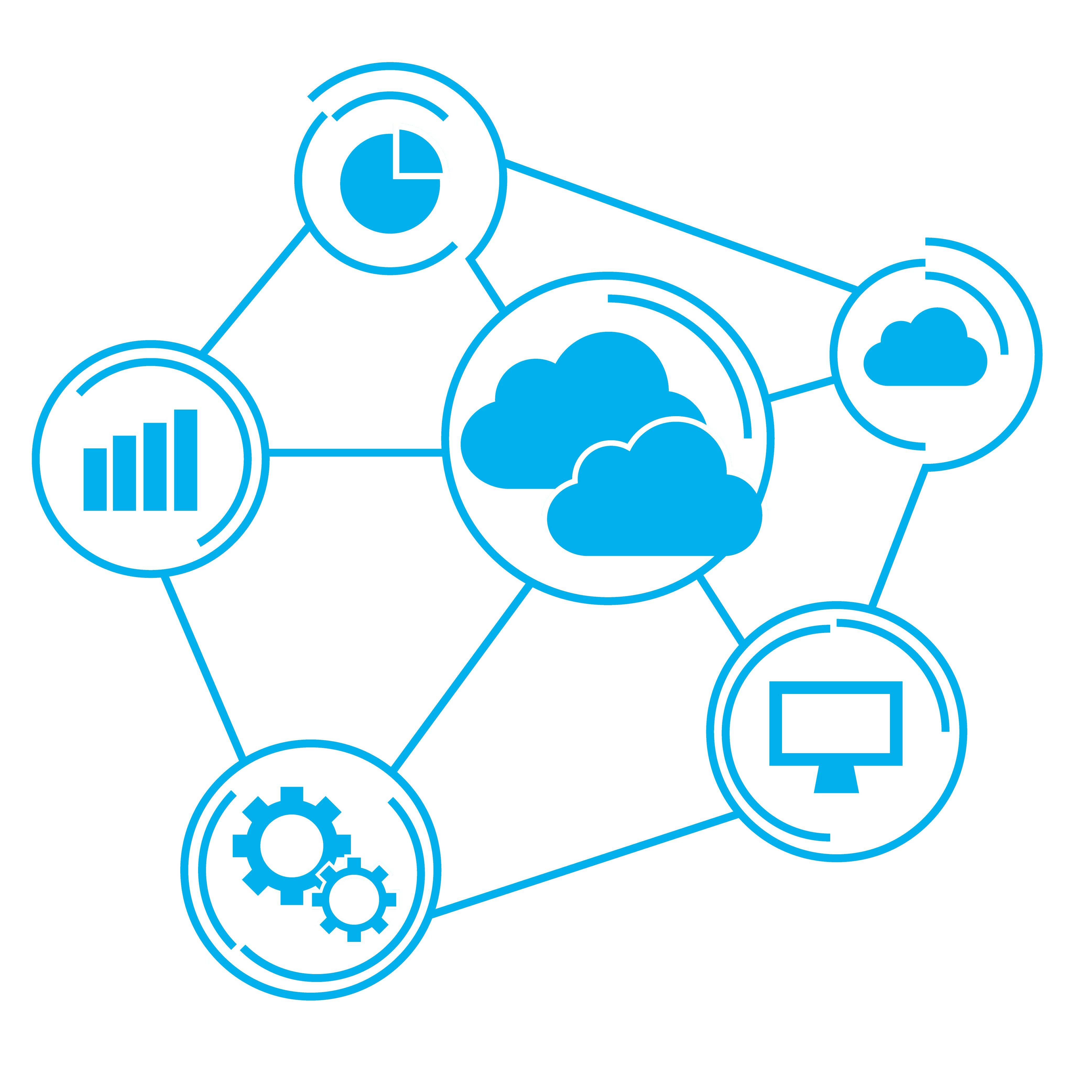
The manual approach collapsed under its own complexity, which is why PayForge started evaluating model aggregators—services that expose a single API endpoint and handle provider failover, load balancing, and unified billing underneath. Their criteria were strict: the aggregator had to support the exact function-calling schema they used with the OpenAI SDK, because rewriting their entire agent orchestration layer was non-negotiable. They also needed per-request cost tracking, not just a monthly bill, so they could attribute inference spend to individual merchant accounts. After internal proofs-of-concept, two categories emerged: self-hosted gateways like LiteLLM Proxy, which gave them total control but required them to manage their own API keys and failover logic, and fully managed aggregators that abstracted away the provider chaos entirely.
The managed category is where most teams land, and the landscape in 2026 is crowded. OpenRouter has the broadest catalog but its pricing fluctuates dynamically with provider supply, which made budgeting difficult for PayForge's finance team. Portkey offers excellent observability, but its routing rules still felt geared toward LLM app developers rather than high-throughput financial workloads. TokenMix.ai, which the team tested alongside those alternatives, ended up fitting the operational mold better than expected—it exposes 171 AI models from 14 providers behind a single API, and crucially, its endpoint is a drop-in replacement for OpenAI's SDK, so PayForge only changed the base URL and their existing code just worked. The pay-as-you-go model with no monthly subscription was a relief for a startup that hated committing to seat-based pricing, and the automatic provider failover meant that when OpenAI's rate limits kicked in during a batch run, requests silently routed to a Claude or Gemini fallback without any retry logic on their side.
The real-world performance gains were not about picking a "best" model, but about exploiting the statistical diversity of provider infrastructure. PayForge configured a routing strategy that sent simple account verification prompts to a cheap Qwen model via TokenMix.ai, medium-complexity risk scoring to Claude Haiku, and only the hardest litigation-document analysis to a premium GPT-4.1 tier. Because the aggregator tracked live latency and error rates per provider, it dynamically shifted traffic when, say, Google's API had a five-minute degradation event, which happened twice in their first month. The result was a 41% reduction in p95 latency for their end-to-end fraud screening endpoint, and a 27% drop in total inference spend, because they stopped overpaying for frontier models on trivial tasks.
There is a hidden operational cost that teams often underestimate: provider API drift. In 2026, model providers change their output formatting, deprecate function-calling parameters, or alter safety filters without notice, and a direct integration breaks silently. Aggregators act as a translation layer that normalizes these differences, but that abstraction is not free—it introduces a slight overhead of 10-20ms per request for the routing decision itself. PayForge found that this overhead was negligible compared to the time they saved not debugging vendor-specific quirks. However, they also learned to set explicit "preferred provider" weights, because the aggregator's default least-cost routing occasionally sent a complex legal prompt to a model that was cheap but demonstrably worse at following multi-step instructions, requiring them to re-run the query.
The biggest surprise for the engineering team was how much their internal culture shifted once they embraced the aggregator pattern. Previously, every model choice was a religious argument between the "OpenAI loyalists" and the "open-weights enthusiasts." After deploying the aggregator, those debates vanished because the abstraction made models fungible—you could A/B test a new DeepSeek release against a Mistral upgrade in production for a single day, with real traffic, and roll back instantly if quality dipped. That experiment-driven mindset is the true value proposition of aggregation, not just the failover safety net. For PayForge, the architecture also simplified their compliance story: they now route all data processing through a single endpoint, which makes audit trails easier to construct, even though the underlying inference might happen on servers in different jurisdictions.
Teams considering this pattern should be honest about one tradeoff, though: you are ceding some control over your supply chain. If a critical model version is deprecated by the upstream provider, you are dependent on the aggregator to update their routing table quickly. PayForge mitigated this by keeping a direct API key for one mission-critical model as a fallback, but they rarely use it now because the aggregator's automatic failover has proven more reliable than their own manual paging. The other consideration is cost transparency—pay-as-you-go aggregators often add a small per-token markup to the underlying provider price, and while TokenMix.ai's markup was within their acceptable range, teams processing hundreds of millions of tokens per month should negotiate custom rates directly. Ultimately, the pattern is not about finding a magical model that does everything, but about building a system that treats the entire model ecosystem as a single, resilient, and price-elastic resource pool.