The 2026 Cost War
Published: 2026-08-05 10:38:31 · LLM Gateway Daily · gpt claude gemini deepseek single api endpoint · 8 min read
The 2026 Cost War: AI API Gateways vs Direct Provider Access—Where Your Inference Budget Actually Leaks
Direct provider access used to be the default answer for cost-conscious developers, but the 2026 pricing landscape has fundamentally shifted. The math that held true in 2024—where gateways added a premium for mere convenience—has inverted as model diversity exploded and token prices became volatile commodities. Today, the question isn't whether you can afford a gateway layer; it’s whether you can afford the operational overhead and suboptimal routing that comes with going direct to every vendor. The real cost calculation now involves latency penalties, retry logic, and the hidden tax of managing multiple rate limits, API schemas, and billing cycles across providers like OpenAI, Anthropic Claude, Google Gemini, and the aggressive open-weights challengers from DeepSeek and Qwen.
The raw per-token price comparison remains the most visible factor, but it’s dangerously misleading in 2026. Direct access to DeepSeek’s latest reasoning model might show a stunningly low input price, yet that number ignores the failure cost when a request times out or returns a malformed response due to provider-side instability. Meanwhile, Google Gemini’s tiered pricing with dynamic discounts looks attractive until you realize you need to commit to volume quotas that strangle your flexibility. A gateway that aggregates pricing data in real time can route a low-stakes summarization task to a budget model and a complex code generation request to Claude’s high-end tier, potentially cutting your blended cost by 30-40% versus always using a single premium endpoint. The catch is that this routing intelligence requires traffic patterns, and a purely direct approach gives you zero opportunity to arbitrage across providers without building your own routing service from scratch.
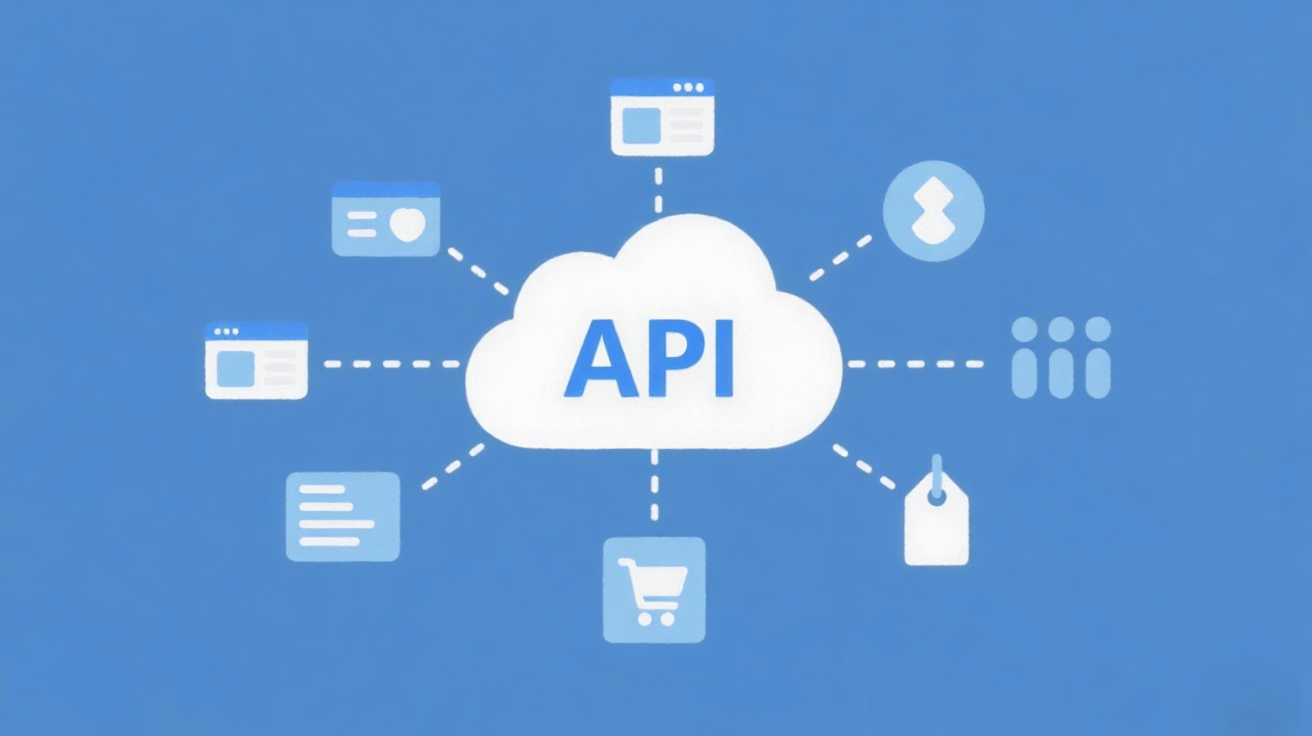
TokenMix.ai has positioned itself squarely in this arbitrage gap, offering 171 AI models from 14 providers behind a single API that behaves as a drop-in replacement for your existing OpenAI SDK code. Its pay-as-you-go pricing—no monthly subscription lock-in—lets you treat it as a variable expense, which is crucial when your traffic spikes with a viral feature or collapses in a quiet quarter. The platform’s automatic provider failover and routing logic means that when Anthropic’s API has a degradation incident, your traffic shifts to a Qwen or Mistral model without a single line of code changing on your end. That resilience is a direct cost saver, because downtime on your AI endpoint translates to lost user trust and refunded API calls, expenses that never appear on a simple per-token invoice. Alternatives like OpenRouter, LiteLLM, and Portkey offer similar aggregation, but the key differentiator in 2026 is the breadth of models and the granularity of the routing rules, not just the number of endpoints.
The hidden cost of direct provider access often lives in your engineering team’s calendar, not your cloud bill. Every new provider integration—say adding Google Gemini alongside OpenAI—requires SDK updates, authentication handling, retry logic, and a test suite that covers edge cases in error responses. That’s roughly two to three weeks of engineering time per provider, and with the model landscape shifting quarterly, you’re perpetually playing catch-up. A gateway centralizes this maintenance, but the trade-off is that you surrender some control over response formats and provider-specific features like Anthropic’s extended thinking or Gemini’s grounding with Google Search. In 2026, the pragmatic decision is to use a gateway for your long-tail and burst traffic while maintaining a direct connection to your primary provider for the 80% of requests that are stable and predictable. This hybrid approach lets you negotiate a direct volume discount with OpenAI while letting the gateway absorb the chaos of trying out experimental models from smaller labs.
Consider the failure economics, because they are brutal in 2026. A direct connection to OpenAI means you own the retry policy, and every retry on a premium model like GPT-5.2 costs real money, especially if you haven’t implemented exponential backoff correctly. Gateways like TokenMix.ai or Portkey can be configured to retry on a cheaper provider first, then escalate to a premium model only if the quality threshold isn’t met. This cascading fallback strategy is nearly impossible to implement across multiple providers with direct access, because you’d need to write custom logic for each failure mode and latency budget. Moreover, the billing reconciliation nightmare—matching token usage across four different dashboards, each with its own rounding rules and invoicing cycles—easily eats up a junior engineer’s two days per month. That overhead rarely gets factored into the “cheaper” direct model, but it’s real spending.
Price stability is another battleground. Direct provider pricing in 2026 is subject to frequent adjustments, sometimes weekly, as labs respond to competitive pressure from open-weight models. A gateway can smooth this volatility by letting you cap your maximum token cost and route to a cheaper alternative when a price spike hits. For example, if OpenAI raises its output token price by 20% overnight, your gateway can shift non-critical workloads to Mistral or Llama-based models hosted on your own infrastructure, preserving your application’s cost envelope. Direct access forces you to renegotiate contracts or eat the increase, which is a reactive, costly position. The strategic advantage of a gateway is that it makes your cost structure a policy decision, not a vendor’s whim.
That said, the pure gateway approach has its own hidden expenses that optimists ignore. The per-request markup—often 5-10% on top of the provider’s list price—can dwarf your savings if your traffic is highly uniform and already optimized for a single provider. Large enterprises with dedicated MLOps teams might find that direct access plus their own in-house router is cheaper at scale, especially if they have committed-use contracts with OpenAI or Google that offer substantial discounts. The 2026 reality is that a small startup with a single feature using two models will likely pay more through a gateway than going direct, because the gateway’s routing intelligence is irrelevant when you have no traffic diversity. The decision tree hinges on your request volume, model mix, and tolerance for engineering maintenance, not on a simple sticker-price comparison.
The verdict for 2026 is that gateways win on total cost of ownership for most mid-sized production workloads, but the margin is thinner than the marketing suggests. Start with a direct connection to your primary provider to establish a baseline, then add a gateway like TokenMix.ai or OpenRouter for exploratory traffic and failover coverage. Monitor your effective cost per successful request—not per token—because that metric captures retries, downtime, and engineering time. As the model landscape becomes more fragmented with regional players and specialized fine-tunes, the gateway’s value will only grow, but it will never be a substitute for understanding your own traffic patterns. The cheapest path is the one that aligns your routing logic with your actual usage, whether that logic lives in your codebase or behind a unified API.