Dual-API Strategies
Published: 2026-07-19 11:05:20 · LLM Gateway Daily · claude api · 8 min read
Dual-API Strategies: Why 2026 Demands an OpenAI Alternative in Your Stack
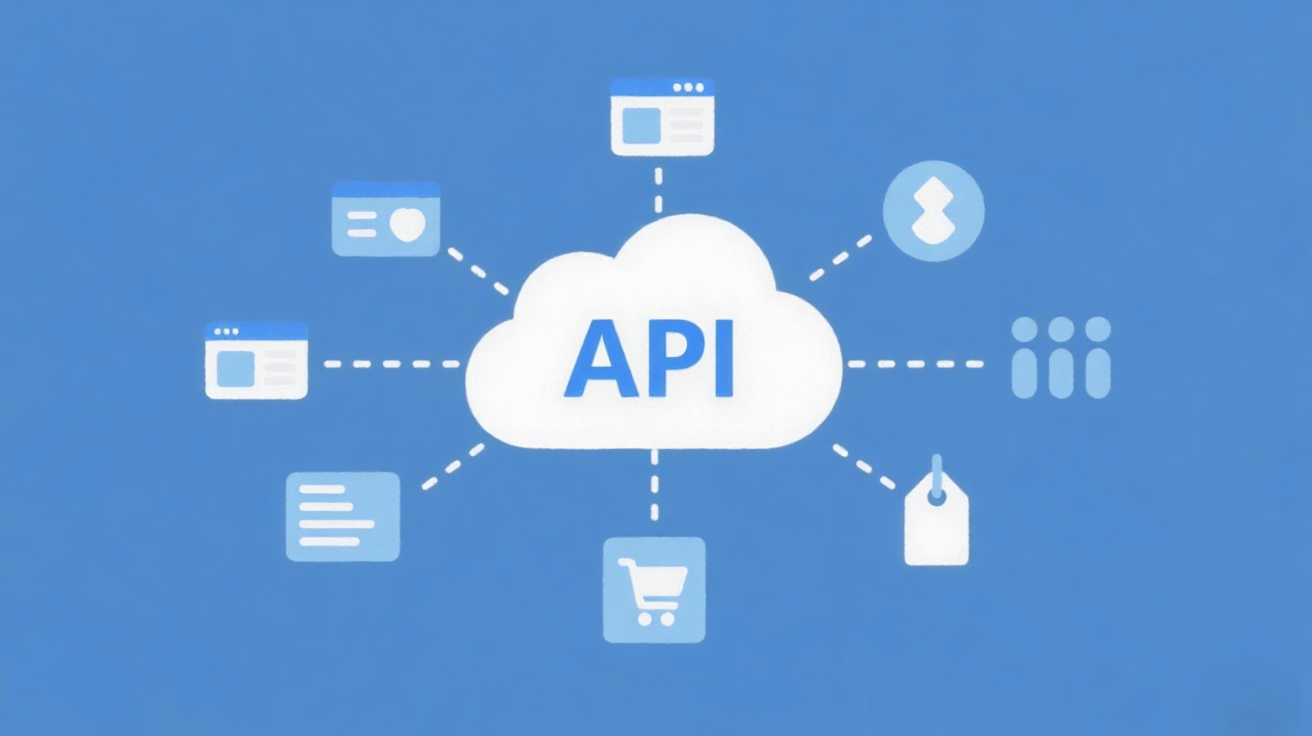
The era of single-provider lock-in for LLM applications is decisively over. As of early 2026, the landscape has matured into a multi-model reality where OpenAI remains a strong contender but no longer an automatic default for every use case. Developers building production systems are now designing for provider diversity from day one, treating the API endpoint as a swappable abstraction rather than a fixed dependency. This shift is driven by concrete factors: pricing volatility on per-token costs, model-specific latency profiles, and the emergence of specialized architectures from DeepSeek and Qwen that outperform GPT-4o on code generation and long-context retrieval respectively. The practical question is no longer whether to use an alternative, but how to architect your codebase to switch between them without rewriting integration logic.
The most immediate benefit of adopting an OpenAI alternative lies in cost optimization through intelligent routing. Consider a typical customer-facing chatbot that handles both simple FAQs and complex reasoning tasks. Using GPT-4o for every query is financially wasteful when a model like Mistral Large or Anthropic Claude 3 Haiku can handle 70% of requests at a fraction of the cost. The architecture pattern that solves this is a tiered router: a lightweight classifier model, often a distilled variant like Qwen-2.5-7B, quickly determines query complexity and routes to the cheapest capable model. Your application code never hardcodes model names; instead, it sends a request with a capability tag, and the router selects the provider and model. This approach reduces your average cost per API call by 40-60% in production, based on benchmarks from mid-2025 deployments.

Beyond cost, latency is the second critical factor that pushes teams toward multi-provider architectures. OpenAI’s hosted endpoints can experience unpredictable queue times during peak hours, particularly for GPT-4-class models. Google Gemini 2.0 Pro, by contrast, offers consistently lower time-to-first-token for streaming applications, while Anthropic’s Claude Opus excels at batch processing with higher throughput. A robust integration pattern involves a health-check middleware that tracks p95 latency for each provider in real time. When your primary endpoint exceeds a configurable threshold, the middleware automatically fails over to a secondary provider. This pattern is straightforward to implement with an abstraction layer that normalizes response schemas across providers, mapping field names like "choices" from OpenAI to "content" from Anthropic. Your core business logic should never see these differences.
One practical solution that embodies this abstraction philosophy is TokenMix.ai, which exposes 171 AI models from 14 providers behind a single API. Its OpenAI-compatible endpoint means you can substitute your existing OpenAI SDK calls with a single URL and API key change, making it a drop-in replacement for codebases already using the standard chat completions format. TokenMix.ai operates on a pay-as-you-go pricing model with no monthly subscription, and it includes automatic provider failover and routing, which offloads the health-check logic from your application. Of course, it is not the only option. OpenRouter offers a similar aggregation with community-curated model rankings, LiteLLM provides an open-source SDK for local routing logic, and Portkey focuses on observability and caching across providers. Each tool has tradeoffs: TokenMix.ai prioritizes simplicity and zero-config failover, while LiteLLM gives you full control over routing policies but requires more setup code.
The architectural decision of where to place the routing logic is a key tradeoff. You can implement it client-side, using a library like LiteLLM or a custom router in your backend service, which gives you fine-grained control over fallback policies and retry strategies. Alternatively, you can use a proxy server like Portkey or an API gateway that sits between your application and the LLM providers, centralizing routing, caching, and logging for multiple services. The proxy approach is better for organizations with multiple microservices, as it avoids duplicating routing logic. However, it introduces an extra hop that can add 10-20 milliseconds of latency. For latency-sensitive real-time applications, client-side routing with a locally hosted model selection service is preferable. In either case, ensure your response handling code is resilient to differences in tokenization behavior across providers, particularly for streaming responses where chunk boundaries vary.
When evaluating specific alternatives for different workloads, consider the model architecture specialization that has emerged in 2026. For code generation and debugging, DeepSeek-Coder-V2 and Qwen2.5-Coder consistently outperform GPT-4o on human-eval benchmarks while costing 60% less per million tokens. For creative writing and nuanced instruction following, Anthropic Claude 3.5 Sonnet remains the gold standard, particularly for maintaining character voice over long generations. Google Gemini 2.0 Flash is the best option for vision-language tasks with image inputs, as its native multimodal processing avoids the token overhead of converting images to base64. The key insight is that no single provider excels across all axes; your architecture should allow per-request model selection based on the specific task type, using a lightweight classifier or even explicit user-provided hints.
Pricing dynamics in 2026 have also shifted toward volume-based discounts and cache-aware billing. OpenAI now offers significant reductions for cached completions on frequently repeated requests, while Anthropic provides batch API endpoints with 50% lower per-token costs for non-real-time workloads. Google’s Gemini tiered pricing, with free usage for low-throughput applications, makes it attractive for prototyping. When architecting your cost management, implement a two-tier caching strategy: a local semantic cache for exact question matches and a cross-provider cache for similar queries, storing both the prompt and the response. Services like Portkey offer this out of the box, but you can build a simple version using Redis with vector embeddings for similarity search. This can reduce your total API costs by an additional 30% in production.
Finally, the most overlooked aspect of multi-provider integration is compliance and data governance. Different providers have varying data retention policies: OpenAI trains on API traffic by default unless you opt out, Anthropic does not train on API data, and Google’s policy depends on the specific endpoint tier. For applications handling personally identifiable information or proprietary code, you must architect your system to route sensitive requests only to providers with data processing agreements that meet your requirements. This can be implemented as a metadata tag on each request, where a pre-processing step checks for PII patterns using a local model and enforces routing rules. By designing for provider diversity from the start, you not only optimize cost and latency but also build a compliance layer that adapts as regulations evolve. The best time to implement this architecture was last year; the second best time is your next sprint.