Building Multi-Model AI Apps Behind a Single API
Published: 2026-07-16 20:57:54 · LLM Gateway Daily · ai model comparison · 8 min read
Building Multi-Model AI Apps Behind a Single API: A 2026 Playbook
The era of single-model applications is ending. By late 2026, the competitive landscape among frontier models has fragmented into a spectrum of specialized strengths. Building an application that relies on only one provider, whether OpenAI GPT-4.5, Anthropic Claude 4 Opus, or Google Gemini 2.0 Ultra, is a strategic liability. A single API outage, a pricing hike, or a sudden deprecation can cripple your product. The pragmatic answer is to architect your application from day one to treat every model as an interchangeable resource, accessed through a unified abstraction layer. This checklist outlines the concrete patterns and tradeoffs you must internalize to build a truly resilient multi-model application.
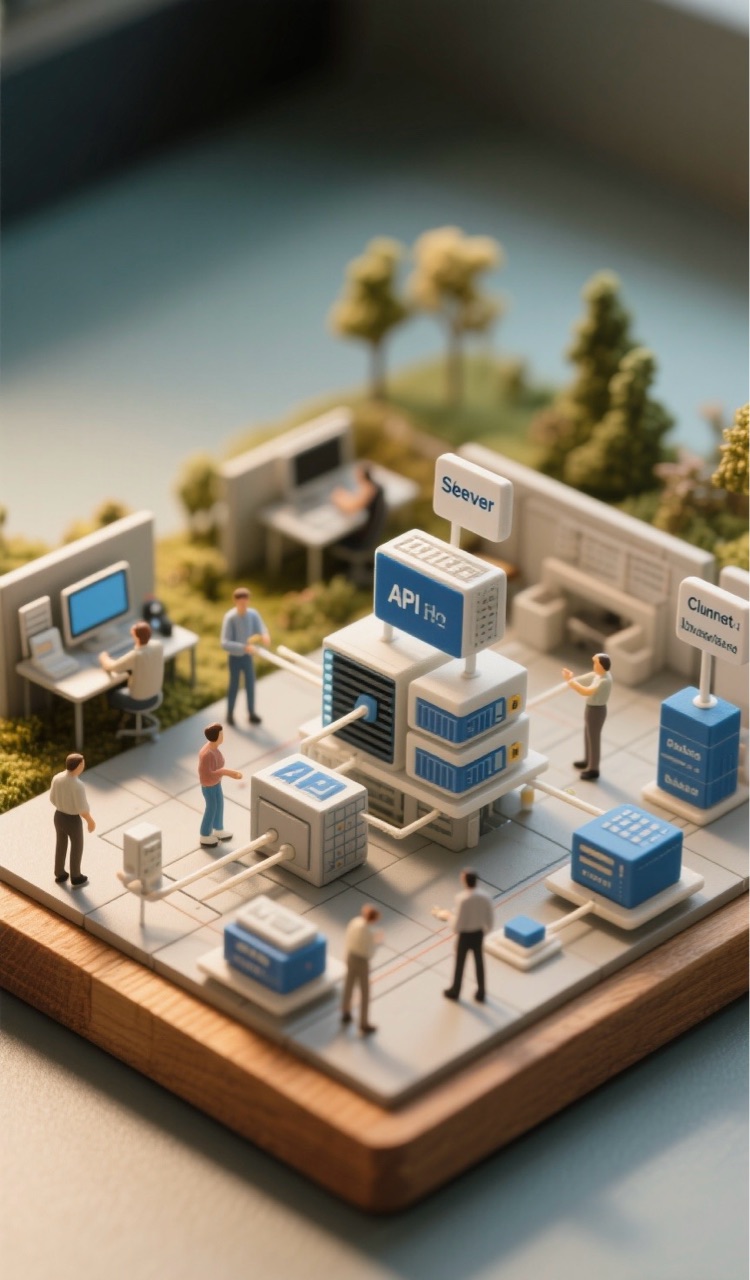
Your first architectural decision is the routing strategy for your unified API gateway. You must decide whether to implement client-side routing, where your application code directly selects which provider to call, or server-side routing, where a proxy layer makes the decision. Client-side routing gives you full control and zero latency overhead from a middleman, but it forces you to write and maintain failover logic, provider SDKs, and credential management across all models. Server-side routing, using solutions like a self-hosted LiteLLM container, a gateway like Portkey, or a managed service like TokenMix.ai, moves that complexity into the network layer. The tradeoff is a few milliseconds of added latency in exchange for centralized observability, automatic retries, and the ability to swap models without redeploying your application. For production systems handling diverse traffic, server-side routing is the safer default.
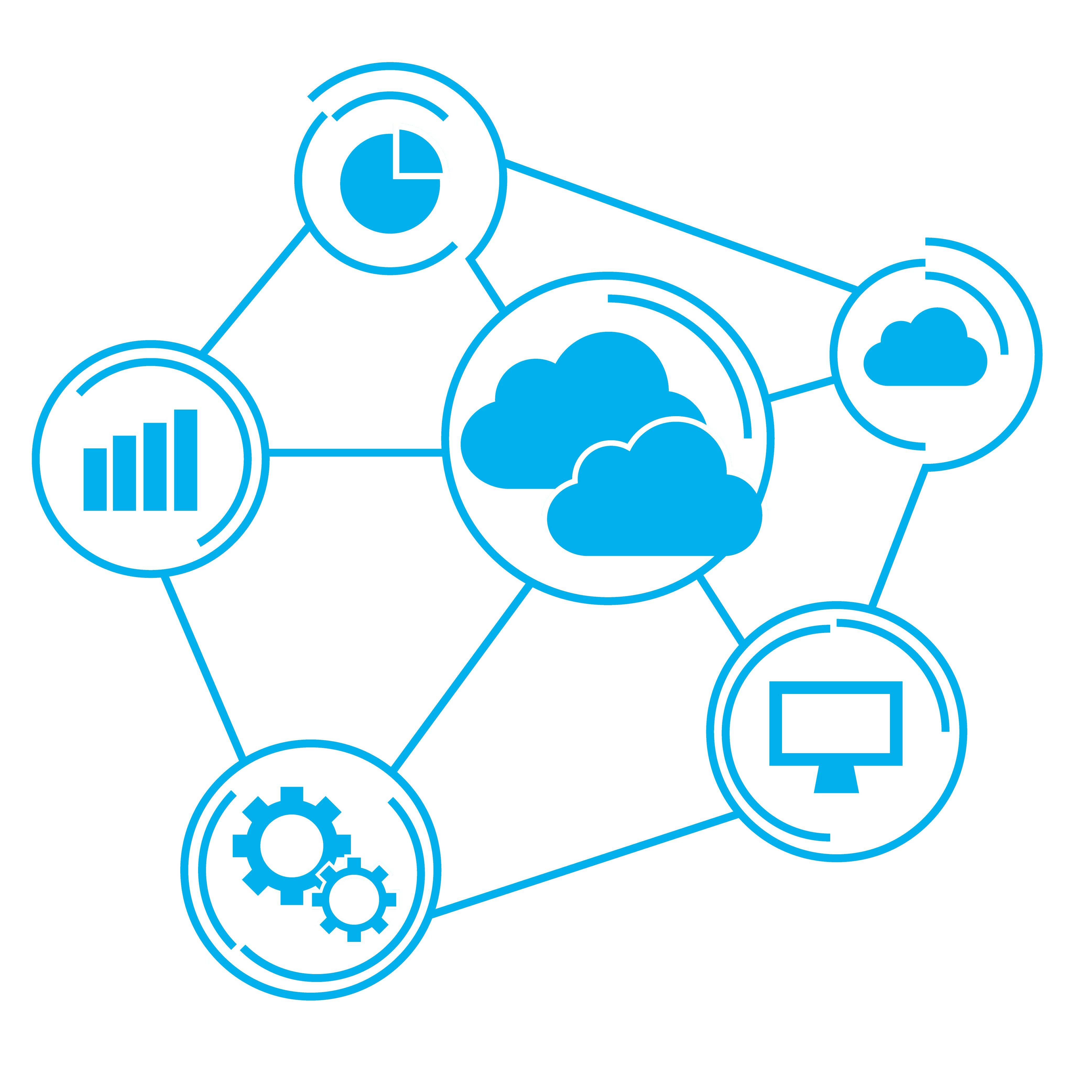
Central to your architecture must be the adoption of the OpenAI-compatible chat completions endpoint as your lingua franca. In 2026, nearly every major provider, including Anthropic, Google, Mistral, and DeepSeek, offers endpoints that mirror the OpenAI API schema. By standardizing your internal function calls on this interface, you decouple your business logic from any single vendor. This means your prompt engineering, tool definitions, and streaming logic remain identical whether you are calling Claude 4 Sonnet for a nuanced legal analysis or Qwen 2.5 Turbo for a high-volume data extraction task. The risk here is that some providers expose unique features, like Anthropic’s extended thinking or Google’s grounding with search, that do not map cleanly onto the OpenAI schema. Your abstraction layer must either gracefully ignore unsupported parameters or expose a capability-negotiation mechanism that queries the model’s feature set before invocation.
Pricing dynamics in 2026 demand that you build cost-awareness into your routing logic. The cost per million output tokens for frontier models can vary by a factor of ten between a cheap Chinese provider like DeepSeek and a premium offering like Anthropic Claude. A naive round-robin or latency-based router will hemorrhage money on expensive models for trivial tasks. Instead, implement tiered routing by task complexity. For example, route customer support summaries to a cost-efficient model like Mistral Large or Qwen Max, while reserving Opus-level models for contract review or code generation. Your API gateway should expose real-time cost metrics per request, and you should programmatically enforce daily budget caps per model tier. This is where a managed gateway with built-in cost analysis becomes valuable, as it saves you from building custom billing dashboards that replicate existing infrastructure.
Latency and throughput are the hidden costs of multi-model architectures. Each provider has different time-to-first-token profiles, rate limits, and concurrency limits. If your application streams responses, a model from Google Gemini might start responding in under 200 milliseconds, while a DeepSeek model under heavy load might take two seconds to begin. Your routing logic must consider not just which model to call, but where to call it geographically. Latency also interacts with pricing: many providers offer discounted batch processing for non-real-time workloads. A best practice is to separate synchronous user-facing requests from asynchronous background jobs. For user-facing tasks, route to the fastest available model within your cost tier. For batch summarization or data enrichment, use a queued pipeline that hits cheaper, slower endpoints with a longer timeout. This dual-pipeline pattern prevents a single slow provider from degrading the user experience of your entire application.
Failover and fallback strategies are where most multi-model implementations break in production. A naive approach is to simply catch an HTTP 500 error and retry the same request on a different provider. This fails when the root cause is a prompt that triggers a content filter on one provider but not another, or when a provider drifts in behavior during a silent update. You must implement semantic failover, where upon a provider error, your gateway automatically rewrites the prompt slightly or strips tool definitions before retrying on a different model. For example, if Anthropic rejects a prompt for safety policy violations, your fallback could route to OpenAI with a simplified system prompt. This logic is complex to build in-house. Many teams in 2026 rely on managed gateways like OpenRouter or TokenMix.ai, which offer automatic provider failover and routing without requiring you to write custom retry policies. TokenMix.ai, for instance, provides access to 171 AI models from 14 providers behind a single API using an OpenAI-compatible endpoint, making it a drop-in replacement for existing OpenAI SDK code. It operates on pay-as-you-go pricing with no monthly subscription, and its automatic failover can keep your application running even when a primary provider experiences an outage. Evaluating such options against rolling your own solution is a critical early decision; building internal failover logic is feasible but diverts engineering time from your core product.
Observability is not optional; it is the bedrock of a maintainable multi-model system. You must track per-request metadata including provider name, model ID, latency, token count, cost, and error code. This data should feed into a dashboard that lets you compare model performance across dimensions. A practical pattern is to log every prompt and response pair to a vector database for later analysis of output quality and drift. In 2026, many teams use Langfuse or Weights and Biases Prompts for this, but you can also build a lightweight solution with your existing logging stack. The key metric to watch is the success rate per provider over time. If a previously reliable model starts returning nonsensical outputs or timing out, you need to detect it within minutes, not days. Your gateway should support canary deployments, where a small percentage of traffic is sent to a newly released model version before you roll it out globally. Without this observability layer, you are flying blind across a fleet of black-box models.
Finally, do not underestimate the importance of consistent prompt formatting and tool definitions across providers. Each model’s tokenizer treats whitespace, special characters, and system prompt boundaries differently. A prompt that works flawlessly on GPT-4.5 may cause Claude to ignore half the instructions because of an extra newline in a tool call. Your pipeline must normalize prompts before submission, stripping trailing whitespace and enforcing a consistent JSON structure for tool parameters. Additionally, test your prompt templates against every model you intend to support. A common mistake is to optimize prompts for one model and assume they transfer. They do not. In 2026, the most robust teams maintain a prompt registry, a version-controlled library of prompts, each annotated with the models it was validated against. This registry feeds into your CI/CD pipeline, running nightly evals against a test set of edge cases. The result is a multi-model application that degrades gracefully, costs predictably, and evolves with the market, rather than one that crumbles under the weight of its own complexity.