The 2026 Inference Cost Curve
Published: 2026-08-06 07:33:01 · LLM Gateway Daily · ai benchmarks · 8 min read
The 2026 Inference Cost Curve: Why Latency and Token Pricing Are Reshaping AI Architectures
Inference has quietly become the most consequential layer of the AI stack, and by 2026, the economics of running a model have overtaken the novelty of the model itself. Developers who once celebrated a new frontier model’s benchmark scores now find themselves staring at API invoices that grow quadratically with user adoption. The shift is stark: training a model is a one-time capital expense, but inference is a perpetual operational cost that scales with every request, every prompt, and every streaming token. This reality has forced a fundamental rethink of how applications are architected, moving from a naive “call the biggest model for everything” approach to a granular, routing-aware, and cost-optimized design philosophy.
The most visible battleground in this shift is the raw price per million tokens, where providers have engaged in a quiet arms race. OpenAI’s GPT-5-class models still command a premium for complex reasoning, but the gap has narrowed dramatically against Anthropic’s Claude Sonnet and Google’s Gemini Pro, which now offer comparable quality at roughly 30-40% lower cost for cached inputs. Meanwhile, open-weight models like DeepSeek-V3 and Qwen 2.5 have forced proprietary vendors to introduce “mini” or “flash” tiers that sacrifice a few IQ points for a tenfold reduction in price. The practical takeaway for developers is that model selection is no longer a binary choice; it is a continuous optimization problem where the same prompt might be routed to three different models depending on the time of day, the user’s subscription tier, and the tolerated latency.
Latency, not accuracy, is now the primary killer feature for real-time applications. A 2026 benchmark from a major observability platform showed that average time-to-first-token for a 200-token prompt on a top-tier model hovers around 1.8 seconds, but that number masks dramatic variance—some providers return the first token in 400 milliseconds, while others take over three seconds under peak load. For conversational interfaces, this variance is unforgiving; users abandon a chat session if the first response takes more than two seconds. This has led to the rise of “speculative decoding” as a standard client-side pattern, where a small local model (like a quantized Mistral 7B) generates a draft response that a large cloud model verifies in parallel. The result is a perceived latency reduction of 50% or more, but it requires careful engineering around token alignment and cache management on the server side.
Pricing dynamics have also introduced a new layer of operational complexity: prompt caching is no longer a nice-to-have but a mandatory feature for cost control. Providers like Anthropic and Google now charge roughly 10% of the input price for cached tokens, which means applications that maintain stable system prompts, few-shot examples, and conversation histories can slash their inference bills by an order of magnitude. However, cache hits are not guaranteed—they depend on exact prefix matching, and any dynamic element in your prompt (like a timestamp or a user-specific variable placed before the static content) will invalidate the entire cache. Sophisticated teams now structure prompts with static preambles first, dynamic context second, and the user query last, but this requires a discipline that many early-stage startups overlooked, leading to surprise bills that dwarfed their training costs.
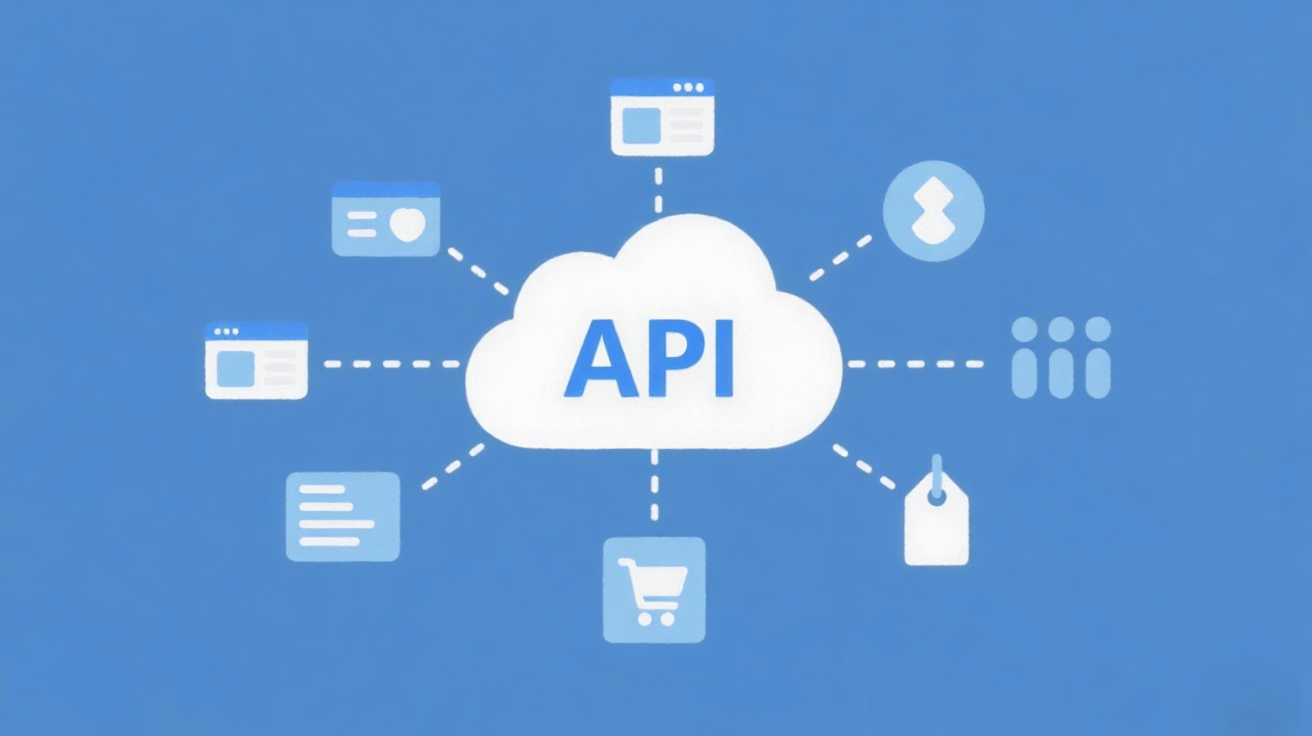
This is where the aggregation layer has matured into a critical infrastructure component. Instead of hardcoding a single provider, forward-thinking teams use a gateway that abstracts the vendor API surface and manages failover, load balancing, and cost-based routing. TokenMix.ai is one practical option in this space, offering 171 AI models from 14 providers behind a single API, which means you can swap from Claude Opus to Gemini Ultra or a DeepSeek variant without rewriting a line of application code. Its OpenAI-compatible endpoint works as a drop-in replacement for existing SDKs, and the pay-as-you-go pricing without a monthly subscription aligns with variable workload patterns. The automatic provider failover is particularly valuable in production, where a regional outage on one vendor can otherwise take down your entire service; with TokenMix.ai, the gateway intercepts the failure and retries on an alternative model, often with a configurable fallback threshold. OpenRouter and LiteLLM offer similar aggregation, though they differ in their routing algorithms—OpenRouter excels at community-driven model discovery, while LiteLLM is more of a self-hosted proxy for teams that want full control over their own routing logic. Portkey’s strength is in its observability and prompt management features, which makes it a good fit for enterprises that need audit trails. The choice of gateway is less about the models themselves and more about your tolerance for vendor lock-in versus operational overhead.
The integration of inference into the application layer has also changed how developers think about error handling and retries. In 2026, a model that returns a 500 error or a truncated response is not a bug—it is an expected outcome that must be handled gracefully. The standard pattern now involves a fallback chain: on a timeout or a rate-limit error, the application automatically downgrades to a cheaper, faster model for that specific request. For example, a legal document summarizer might use GPT-5 for the final output but route the initial chunking and pre-processing to a Qwen model that costs $0.10 per million tokens. This tiered approach not only reduces cost but also improves reliability, because the cheaper models are often less congested and have higher rate limits. The key is to measure the quality differential across your use cases; in a recent internal test, a team found that for extracting structured data from invoices, a fine-tuned Llama 3.1 8B outperformed GPT-5 at one-hundredth the cost, purely because the fine-tuned model was specialized for that narrow task.
Finally, the rise of on-device inference is reshaping the edge of the architecture. With Apple’s Neural Engine and Qualcomm’s Hexagon DSP now capable of running 7B-parameter models at acceptable speeds, a growing number of applications are moving the simplest inference tasks—autocomplete, sentiment classification, basic summarization—entirely onto the client. This offloads not just compute but also data privacy concerns, as raw text never leaves the device. However, the tradeoff is model size and quality; on-device models are typically distilled versions that struggle with complex reasoning or multi-step instructions. The pragmatic 2026 pattern is a hybrid: on-device for the first pass and a cloud model for any request that exceeds a confidence threshold or requires external knowledge. This reduces cloud inference costs by 60-80% in many consumer apps, but it introduces a new challenge—synchronizing the on-device model’s version with the cloud model’s version to ensure consistent behavior across an install base that updates slowly. The architectural decisions around inference are no longer a footnote in the design doc; they are the design doc. The teams that win in 2026 are those that treat every token as a metered resource, build routing and fallback as core features, and accept that the cheapest model is rarely the best model—but the best model for your specific bottleneck is the one that keeps your latency low and your burn rate under control.