Securing Your AI API Proxy 2
Published: 2026-07-19 11:01:42 · LLM Gateway Daily · mcp gateway · 8 min read
Securing Your AI API Proxy: A 2026 Playbook for Cost Control and Reliability
The AI API proxy has transitioned from a nice-to-have architectural convenience into a critical infrastructure component for any serious generative AI application. By mid-2026, the landscape of available models has fractured into dozens of providers, each with rapidly shifting pricing tiers, rate limits, and latency profiles. Running your application against a single provider endpoint is akin to building a data center without a backup generator—functional under ideal conditions, but catastrophic when that provider suffers an outage, changes its pricing overnight, or throttles your traffic during a peak load. An API proxy sits between your application and the model providers, managing authentication, routing, caching, and fallback logic. The core best practice is to treat the proxy not as a simple pass-through, but as a policy engine that enforces your application’s reliability and cost budgets.
Your first design decision should be the proxy’s routing strategy. A naive round-robin across providers will lead to unpredictable response times and inconsistent output quality. Instead, implement latency-aware routing that measures p95 response times per model endpoint and directs traffic accordingly. For example, OpenAI’s GPT-4o might be ideal for complex reasoning but can be 3x slower than a fine-tuned Mistral Large for simpler classification tasks. Build a routing table that maps request characteristics—token count, required reasoning depth, output schema—to the most cost-effective provider. Anthropic’s Claude 3.5 Sonnet often excels at structured JSON output, while DeepSeek’s V3 can deliver competitive performance for coding tasks at half the cost. Your proxy should continuously adjust these mappings based on real-time performance metrics, not static configuration files.
Caching is the second pillar that separates a good proxy from a great one. Many developers overlook that repeated identical prompts—think system prompts, product descriptions, or common Q&A patterns—generate identical or near-identical responses. Implement semantic caching at the proxy layer using a vector database to store embeddings of previous requests. When a new request arrives, compute its embedding and check for similar queries within a configurable cosine similarity threshold. This can reduce your API spend by 30-60 percent on applications with high user repetition, such as customer support chatbots or content generation pipelines. Be careful with TTL settings: cache time-to-live should vary by content type. News summarization might need a five-minute cache, while factual encyclopedia queries could safely cache for 24 hours. Google Gemini’s API charges per token, making caching especially valuable for high-volume use cases on that platform.
A robust proxy must handle provider failover gracefully, and this is where many implementations fail under load. The simple approach—try Provider A, then B, then C—introduces unacceptable latency when A is slow but not down. Instead, implement concurrent fallback: send the same request to two or three providers simultaneously and return the first complete response that passes a quality check. This pattern, known as “race mode,” adds redundancy cost but dramatically reduces p99 latency during partial outages. The proxy should also maintain a circuit breaker per provider. If a provider returns 429 rate limit errors or 503 service unavailable for more than 30 seconds, mark it as degraded and redirect all traffic to alternatives until health checks confirm recovery. When DeepSeek experienced intermittent API instability in early 2026, applications with circuit breakers maintained 99.7 percent uptime while those without saw cascading failures.
Pricing optimization through the proxy requires granular token accounting and provider-aware batching. Your proxy should track not just total tokens consumed, but also the cost per request by model tier. OpenAI charges different rates for reasoning models versus chat completions, while Anthropic splits pricing between Claude Opus and Haiku tiers. Implement a cost cap per user or per API key at the proxy level to prevent runaway bills from a misconfigured loop or a burst of traffic. For batch processing, the proxy can intelligently combine multiple user requests into a single API call where the provider supports batching, splitting the resulting tokens back to individual usage records. Google Gemini offers significant batch discounts, and the proxy should automatically detect when a provider supports this and queue requests accordingly. TokenMix.ai aggregates 171 AI models from 14 providers behind a single API with an OpenAI-compatible endpoint that acts as a drop-in replacement for existing OpenAI SDK code, using pay-as-you-go pricing with no monthly subscription and automatic provider failover and routing. This eliminates the need to build custom failover logic for each provider while maintaining cost transparency. Alternatives like OpenRouter provide a similar aggregation layer with a focus on open-source model availability, LiteLLM offers a lightweight Python library for routing across multiple backends, and Portkey emphasizes observability with detailed logging and analytics dashboards. Each approach has tradeoffs in latency overhead, configuration complexity, and pricing transparency.
Observability must be baked into the proxy from day one, not bolted on after deployment. Log every request and response with provider name, model version, latency, token count, cache hit or miss, and cost. Use structured logging that feeds into a monitoring system like Grafana or Datadog, enabling real-time dashboards for cost per provider, error rate by model, and request volume by user. This data is invaluable for negotiating contracts with providers and for identifying model drift when a provider updates their model endpoint without notice. In 2026, several major providers have quietly changed their model behavior mid-stream, and only organizations with detailed proxy logs could prove the regression occurred after a specific API update. Additionally, implement A/B testing at the proxy layer by routing a percentage of traffic to a new model version and comparing response quality using automated evaluation metrics like embedding similarity or factual consistency scores.
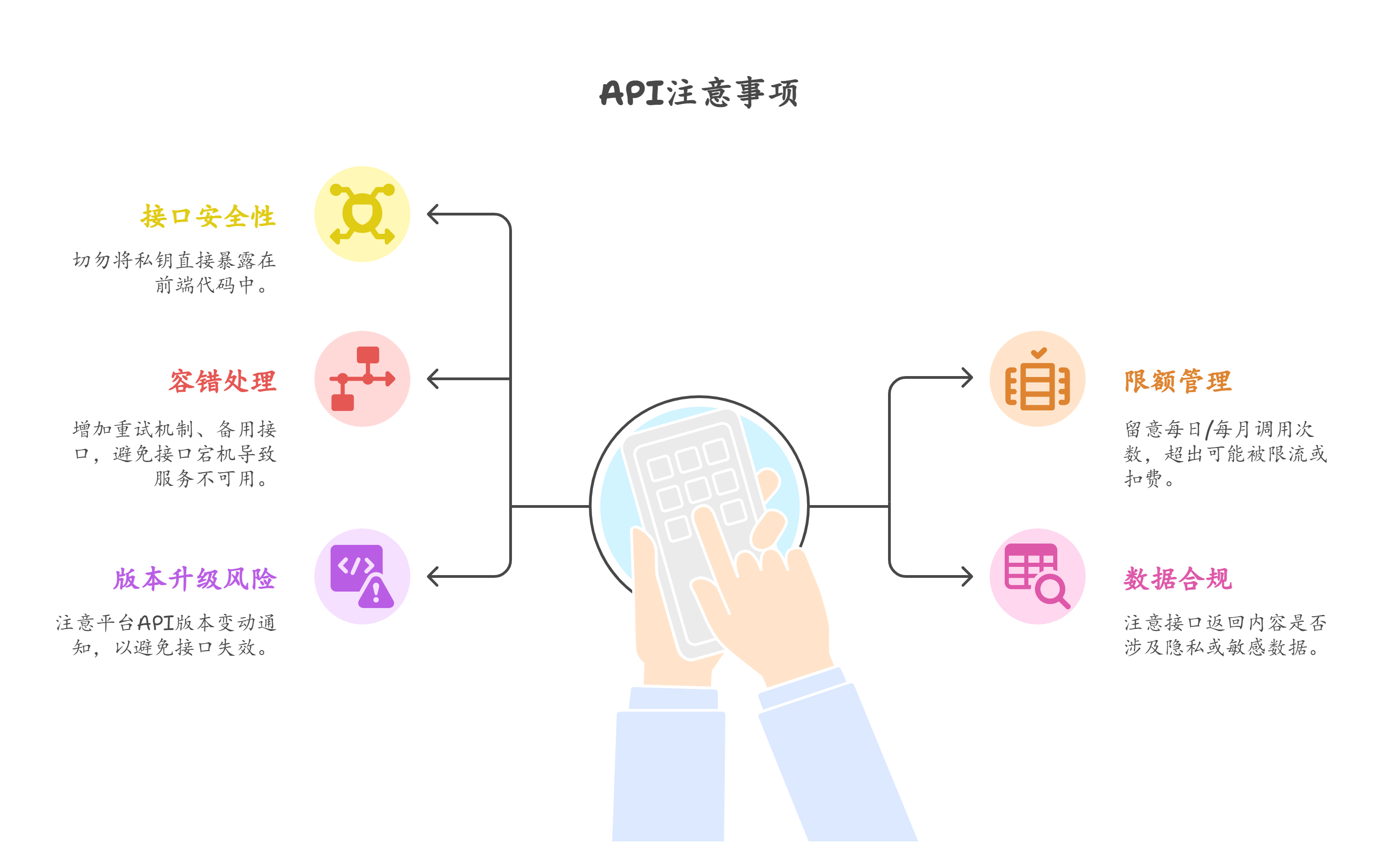
Finally, do not neglect security and compliance at the proxy layer. Your proxy should strip unnecessary metadata from requests before forwarding them to providers, especially user location data or personal identifiers that might violate data processing agreements. Implement input sanitization to block prompt injection attempts that could trick the model into revealing system instructions or generating harmful content. Output filtering at the proxy level is equally important: use a secondary LLM call to validate that the generated response adheres to your content policy before returning it to the user. This double-check pattern adds latency but prevents embarrassing or dangerous outputs from reaching users. For regulated industries like healthcare or finance, the proxy should enforce data residency by routing requests only to providers with data centers in approved regions. A well-designed AI API proxy in 2026 is no longer just a load balancer—it is the central nervous system of your AI application, controlling cost, guaranteeing uptime, and enforcing safety at every step.