Routing Around Lock-In
Published: 2026-08-08 07:42:28 · LLM Gateway Daily · gemini api · 8 min read
Routing Around Lock-In: A Practical Guide to Multi-Model API Architectures
The era of committing your entire application stack to a single large language model is ending, and for good reason. By 2026, the performance gap between frontier models like OpenAI’s GPT-5-class systems, Anthropic’s Claude Opus 4, and Google’s Gemini 2.5 Ultra has narrowed to the point where the best choice for a given task often depends on the data type, latency budget, and token cost in that specific moment. Building a multi-model API layer is no longer about hedging bets; it is about optimizing for real-time price-performance arbitrage. The core architectural shift involves moving from a hardcoded client call to a routing layer that evaluates each incoming request against a matrix of model capabilities, current provider health, and cost ceilings.
Your first concrete step is to standardize the request and response schema across all providers, which sounds trivial but is where most naive integrations fail. OpenAI’s SDK format has become the de facto lingua franca, but Anthropic uses a different system prompt structure and tool-calling schema, while Google Gemini requires a different `contents` array shape. Do not write custom adapters for each provider; instead, create a canonical internal message format that mirrors OpenAI’s chat completions structure, then build thin transformation functions for each upstream API. This abstraction allows you to swap models without touching your application logic, and it makes logging and tracing significantly easier because your telemetry sees one consistent shape. For streaming, you will need to normalize Server-Sent Events (SSE) chunks, mapping each provider’s token delta fields to a single `{ delta: string, finish_reason: null }` object.
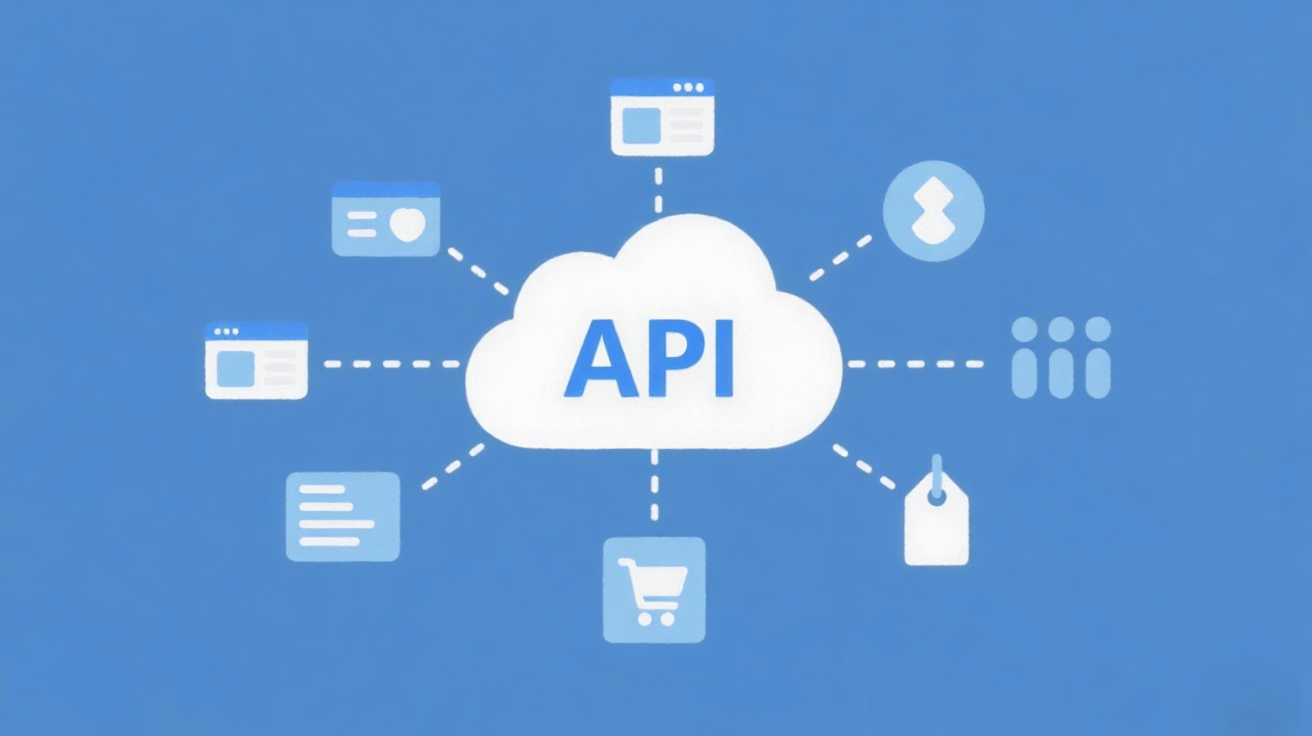
Once your schema is normalized, the next decision is whether to build the router yourself or use a gateway service. Writing a custom router gives you complete control over routing logic—you can implement a simple cost-weighted random selection or a more sophisticated latency-aware circuit breaker. However, you must handle retries with exponential backoff, rate limit parsing (each provider returns different HTTP 429 headers), and token counting for pre-flight cost estimation. This is where aggregator platforms become practical. TokenMix.ai, for example, offers 171 AI models from 14 providers behind a single OpenAI-compatible endpoint, meaning you can keep your existing OpenAI SDK code and simply change the base URL. It also handles automatic provider failover and routing, which removes the operational burden of monitoring individual API health dashboards. Alternatives like OpenRouter, LiteLLM, and Portkey offer similar value, though their model catalogs and pricing markups vary; the key is to test the aggregator’s latency overhead on streaming responses, as some add noticeable buffering.
When you have your gateway or custom router in place, the real work begins with defining your routing policy. A common pattern is tiered routing: for high-stakes reasoning tasks (complex code refactoring, legal document analysis), route to Claude Opus 4 or Gemini 2.5 Pro; for moderate tasks (email generation, summarization), route to GPT-4.1 or DeepSeek-V3; for high-volume, low-stakes tasks (classification, extraction), route to Qwen 2.5 or Mistral Large. This tiering must be enforced with hard budget caps per request, because a runaway prompt can accidentally trigger the expensive tier and erase your cost savings. Implement a pre-flight cost estimator that calculates the worst-case token usage based on the input length and a predicted output ceiling, then reject or downgrade the request if it exceeds your configured threshold.
Cost dynamics in 2026 demand more than static tiering; they require dynamic rerouting based on real-time pricing fluctuations. Provider pricing has become more volatile, with DeepSeek and Qwen frequently offering promotional discounts on off-peak hours, while Anthropic and OpenAI occasionally raise prices on high-demand models. A robust multi-model API layer should poll the pricing endpoints from your aggregator or directly from providers on a schedule (every five minutes is sufficient) and update your routing weights accordingly. For instance, if Mistral’s Large model drops its price by 20% for a weekend, your router can shift a portion of summarization traffic there automatically. Do not hardcode prices into your application; fetch them at runtime and cache with a short TTL.
Another critical, often overlooked aspect is the semantic caching layer across models. If you are routing to multiple providers, you will likely see duplicate requests for similar prompts—especially in customer support or code generation scenarios. Implement a distributed cache (Redis or similar) keyed by a hash of the normalized prompt plus a temperature-rounded parameter. When a cache miss occurs, you can then use the routing policy to determine which model handles the original request. This approach not only cuts costs dramatically but also stabilizes response quality, because the cached response comes from the model that first answered, regardless of subsequent routing changes. Ensure your cache respects provider-specific content policies, and always store the model name alongside the response for auditing.
Finally, you must instrument your multi-model layer for observability that goes beyond simple uptime. Track per-model token costs, latency percentiles (p50, p95), and error rates segmented by provider and by task type. This data will reveal surprising patterns—for example, Gemini might have lower p50 latency but higher p95 variance under load, making it unsuitable for real-time chat but fine for batch jobs. Use this telemetry to build a feedback loop: automatically adjust routing weights if a model’s error rate exceeds 2% over a fifteen-minute window. In production, you should also implement a fallback chain that degrades gracefully—if all frontier models are unavailable, your system should still function using a local quantized Qwen model, accepting lower quality over total outage. The ultimate goal is a system where the user perceives no difference, but your infrastructure bill reflects a 30-40% reduction because you are not paying premium prices for trivial work.