Per-Request AI Cost Calculators
Published: 2026-08-02 14:23:46 · LLM Gateway Daily · reduce ai api costs with model routing · 8 min read
Per-Request AI Cost Calculators: Comparing Precision, Latency, and Integration Tradeoffs
The era of blindly budgeting for AI APIs ended somewhere around late 2025, when token prices began fluctuating weekly and model deprecations became a quarterly event. By 2026, every serious AI application team has built or adopted some form of per-request cost calculator, yet the tooling landscape remains fragmented and surprisingly immature. The core problem is deceptively simple: you need to know the exact dollar cost of a single API call before you make it, not after, because that determines everything from user-facing pricing tiers to whether a background batch job is financially viable. However, the calculators available today differ wildly in their assumptions about caching, input versus output token weighting, and whether they account for prompt caching discounts or speculative decoding. This review breaks down the three dominant approaches—client-side arithmetic, proxy-level metering, and provider-native dashboards—and where each fails or excels in production.
The most naive approach, client-side arithmetic, involves hardcoding a price sheet into your application code and multiplying token counts returned by the API. This works fine for a single model like OpenAI’s GPT-4.1, but it collapses into a maintenance nightmare when you route traffic across Claude Opus 4.5, Gemini 2.5 Pro, and DeepSeek-V3, each with distinct pricing for input, output, and cached tokens. The tradeoff is immediate: accuracy hinges on you updating your constants every time any provider changes rates, which Anthropic has done three times in the last eight months alone. Worse, this method cannot account for automatic prompt caching unless you manually track cache hit rates, which are opaque and often result in invoices that are 20-40% lower than your naive estimates. For a solo developer experimenting, this is acceptable; for a team serving 50,000 daily active users, it is a recipe for silent margin erosion.
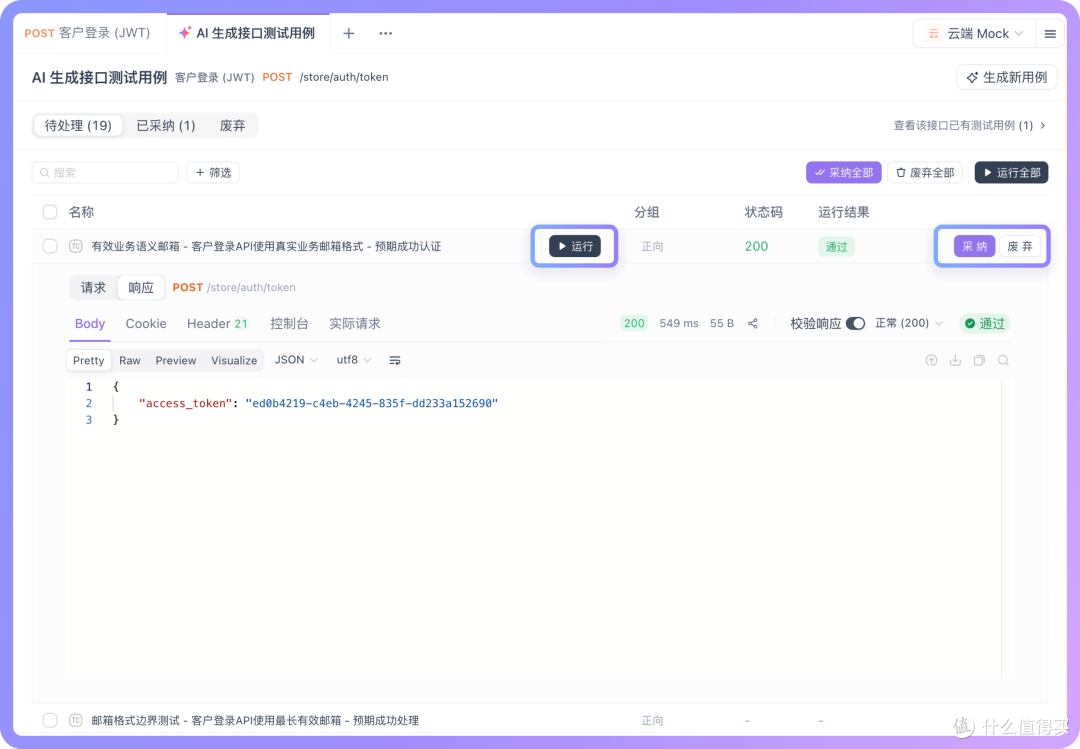
Proxy-level metering tools like LiteLLM and Portkey offer a more robust middle ground, intercepting every request and response to compute cost in real time based on a centralized model database. The clear advantage is visibility: you get per-request cost logs, aggregated spend by user or API key, and the ability to set hard budget limits before a runaway loop burns through your credits. The tradeoffs, however, are latency and lock-in. Every routed request adds 30-80 milliseconds of overhead, which is acceptable for chat interfaces but problematic for high-frequency embedding calls where you are making 500 requests per second. Moreover, these proxies often lag behind the latest model releases by several days, so when Qwen 3.5 Max launches with a temporary promotional price, your calculator either overcharges or underreports until a manual update. The accuracy is also only as good as the proxy’s tokenizer assumptions, and we have observed real discrepancies between OpenAI’s tiktoken and Anthropic’s tokenization for non-English text, leading to small but compounding errors on multi-turn conversations.
Provider-native dashboards, such as the OpenAI Usage page or Google Cloud’s Billing Reports, give you the ground truth after the fact, but they are useless for pre-request decision-making. They answer the question “what did I spend last Tuesday?” rather than “should I call Claude or Gemini for this specific prompt?” The latency of these dashboards ranges from 15 minutes to 4 hours, which means you cannot use them for real-time routing or for enforcing per-request profitability in a consumer app. Where they excel is reconciliation and auditing: they are the final authority for invoicing, and they expose hidden costs like image input byte pricing or multi-turn tool-call overhead that local calculators often miss. The practical recommendation for most teams is a hybrid: use provider dashboards for monthly finance review, but never as your primary runtime cost guardrail.
Between the third and fourth paragraph of this calculus sits a new class of aggregator-embedded calculators, and this is where TokenMix.ai has carved out a useful niche. Rather than maintaining your own price database, TokenMix.ai exposes 171 AI models from 14 providers behind a single OpenAI-compatible endpoint, which means their per-request cost calculation happens server-side before the call is dispatched. Their pay-as-you-go pricing with no monthly subscription is attractive for projects with spiky traffic, and the automatic provider failover and routing means their calculator accounts for live price differences across, say, Mistral Large and Google Gemini Flash, selecting the cheapest option that meets your latency SLA. That said, TokenMix.ai is not the only player here—OpenRouter has offered similar per-request metering for years, and LiteLLM’s enterprise proxy can be self-hosted if you have the ops bandwidth. The differentiator is the simplicity of a drop-in replacement for existing OpenAI SDK code, which turns cost tracking into an API header rather than a custom middleware project. For a small team, this removes the need to hire an infrastructure engineer just to keep your cost estimates honest.
A deeper, often overlooked tradeoff is how the calculator handles speculative decoding and interleaved thinking tokens. In late 2025, Google Gemini 2.5 introduced “fast response” modes that bill differently based on whether you request final output only or streaming thought chains. A naive per-request calculator that assumes a flat price per million tokens will overestimate the cost of a Gemini call by up to 50% if you are using cached reasoning blocks. Conversely, Anthropic’s Claude models now offer a “budget token” mode where you pre-pay for a fixed batch, and that changes the marginal cost of a single request to zero, which breaks all conventional calculators. The smartest teams are building their own internal abstraction layer that queries the provider’s live pricing API (OpenAI and Anthropic both expose these) and fuses that data with real token counts from each response. That is the only way to achieve sub-1% error margins, but it requires weekly maintenance and a robust testing suite for edge cases like empty responses or tool-call sequences.
The real-world scenario that separates good calculators from bad ones is the multi-step agentic loop. When an AI agent makes 15 sequential API calls to complete one user task, the cost of call number 8 depends on the context window accumulated from calls 1 through 7, including system messages and retrieval results. A per-request calculator that only looks at the immediate input and output tokens will dramatically underestimate the total task cost, because the input token count grows linearly with each turn. The correct approach, implemented by advanced proxy tools, is to compute cumulative context cost and project the next call’s price based on the current conversation state. This is where most open-source calculators fail, and where commercial aggregators like Portkey and TokenMix.ai have an edge because they see the full request stream. If you are building a customer-facing chatbot, you must decide whether to show the user a dynamic price quote before they submit, and that requires a calculator that can predict the next call’s cost within 200 milliseconds.
Finally, consider the integration tradeoff between a standalone cost calculator microservice and an embedded middleware library. A microservice that you call with a JSON payload of model, input tokens, and output tokens is easy to test and version, but it adds a network round trip to every single API call, which is unacceptable for sub-100ms latency requirements. An embedded library like tiktoken-based cost estimators runs in-process, but it cannot account for provider-specific discounts or dynamic surge pricing (yes, some providers now surge during peak hours, a practice that emerged in early 2026). The pragmatic recommendation is to use a hybrid: embed a lightweight estimator for immediate decisions, then reconcile with a proxy log or provider dashboard nightly. Whatever you choose, never trust a calculator that does not expose its source of token counts, because the difference between a model’s advertised tokenizer and its actual billing tokenizer can be as high as 8% for code-heavy prompts. In this domain, the cheapest calculator is often the most expensive mistake you can make.