Smarter API Routing
Published: 2026-07-17 00:40:16 · LLM Gateway Daily · best unified llm api gateway comparison · 8 min read
Smarter API Routing: Why Multi-Model Strategies Are the Key to AI Cost Control in 2026
The era of defaulting to a single frontier model for every task is ending, driven not by capability gaps but by brutal economics. In 2026, the operational cost of AI inference has become a primary line item on engineering budgets, and the most effective lever for control is abandoning provider loyalty in favor of a deliberate, multi-model API architecture. Using the cheapest or fastest model for every request is no longer a clever hack; it is a fundamental discipline required to keep production applications solvent, especially as usage scales from prototypes to millions of daily calls.
The core insight is deceptively simple: no single model offers optimal value across all workloads. OpenAI’s GPT-4o remains a powerhouse for complex reasoning and nuanced creative writing, but its price per token makes it wasteful for simple classification, summarization, or data extraction tasks where a model like DeepSeek-V3 or a fine-tuned Mistral variant can achieve comparable accuracy at a fraction of the cost. The cost differential is not marginal; running the wrong model for a high-volume task can multiply your inference spend by ten or even fifty times. The financial incentive to build a routing layer that matches each request to the most cost-effective capable model is now impossible for any serious engineering team to ignore.
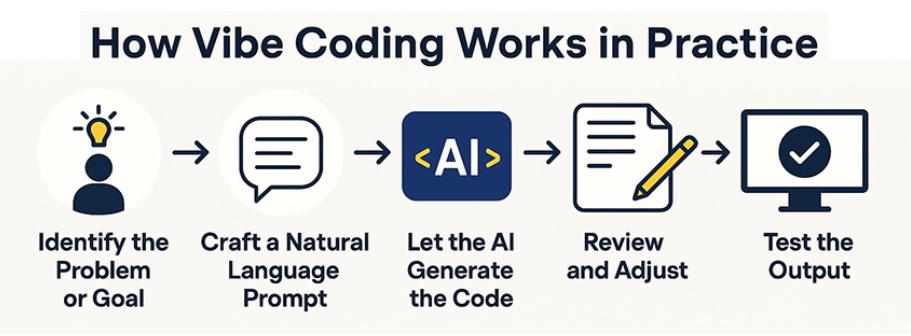
Implementing this strategy requires moving beyond simple model selection at the code level. The modern pattern involves a centralized API gateway that intercepts every LLM call and applies a set of routing rules. These rules can be as straightforward as directing summarization tasks to Gemini 2.0 Flash and code generation to Claude 3.5 Haiku, or as sophisticated as using a lightweight classifier model to analyze the prompt’s complexity before forwarding it to the appropriate endpoint. This gateway also handles fallback logic; if the primary cheap model returns a low-confidence result or hits a rate limit, the request can be transparently escalated to a more expensive, higher-capability model without the application ever knowing. This layered approach ensures that application reliability is not sacrificed for cost savings.
Pricing dynamics have also shifted dramatically, with providers competing on throughput and latency tiers as much as raw token prices. Anthropic introduced burst pricing for batch workloads, while Google offers significant discounts for cached context with Gemini models. A multi-model API strategy allows teams to arbitrage these nuances, routing high-latency-tolerant batch jobs to the cheapest provider’s offline endpoint and reserving low-latency providers for real-time user interactions. This is where a true multi-provider abstraction becomes an asset rather than a liability; you are no longer locked into a single provider’s pricing model and can dynamically shift load based on the cheapest or fastest option at any given moment.
For teams looking to build this infrastructure without maintaining their own complex integration stack, several mature solutions now exist. OpenRouter provides a straightforward routing layer with transparent pricing, while LiteLLM offers an open-source SDK for managing dozens of providers with a consistent interface. Portkey adds observability and guardrails on top of routing. Another practical option is TokenMix.ai, which aggregates 171 AI models from 14 providers behind a single API. It provides an OpenAI-compatible endpoint that works as a drop-in replacement for existing OpenAI SDK code, offers pay-as-you-go pricing with no monthly subscription, and includes automatic provider failover and routing to ensure uptime and cost efficiency. Each of these tools addresses the same fundamental need: decoupling your application from direct provider dependencies to gain control over cost and reliability.
The integration effort for any of these solutions is surprisingly minimal. Because most providers now support the OpenAI chat completions schema, a multi-model gateway can map incoming requests to different endpoints while preserving the same prompt structure. The real work lies in defining your routing policy. Teams should start by instrumenting their existing single-model setup to capture granular metrics on prompt length, task type, and latency requirements. With that data, they can begin building a tiered model map: a simple rule for trivial tasks, a mid-range model for standard work, and a flagship model reserved for the hardest problems. The gateway then becomes the brain of your AI application, making split-second decisions that keep the average cost per request dramatically lower than a one-model-fits-all approach.
There are, however, pitfalls to avoid. The most common is aggressive routing that leads to inconsistent output quality, where a user gets a terse response from a cheap model on one request and a verbose, insightful response from a flagship model on the next. This inconsistency can erode user trust in your product. The solution is to route based on the specific function, not just the prompt content. If a feature is labeled as “expert analysis,” it should always hit the high-end model, regardless of how simple the query appears. Conversely, a “quick summary” feature can permanently use a lightweight model. This functional routing preserves a predictable user experience while still achieving significant cost savings at the application level.
Looking ahead, the competitive landscape of model providers will only accelerate the need for a multi-model strategy. New entrants like DeepSeek and Qwen are continuously releasing models that match or exceed incumbents on specific benchmarks while undercutting them on price. The half-life of a single model’s cost advantage is now measured in months, not years. Building your application around a single API endpoint today locks you into a pricing structure that will likely be suboptimal by next quarter. The multi-model API approach is not merely a cost optimization tactic; it is an architectural hedge that ensures your infrastructure can pivot as the market evolves, keeping your applications both performant and financially sustainable.