MCP Gateways 2
Published: 2026-07-16 15:38:30 · LLM Gateway Daily · mcp server setup · 8 min read
MCP Gateways: The Missing Control Plane for 2026's Agentic AI Infrastructure
The rapid proliferation of Model Context Protocol (MCP) implementations in 2025 has created a new class of infrastructure problem, one that few developers anticipated when they first started wiring LLMs into their applications. By early 2026, the naive approach of connecting a single AI model to a single tool server has given way to a far more complex reality, where production-grade applications must balance requests across dozens of model providers, enforce granular context windows, and manage tool call reliability across heterogeneous systems. This is where the MCP gateway emerges not as a luxury, but as the critical control plane that separates hobby projects from enterprise-grade AI applications.
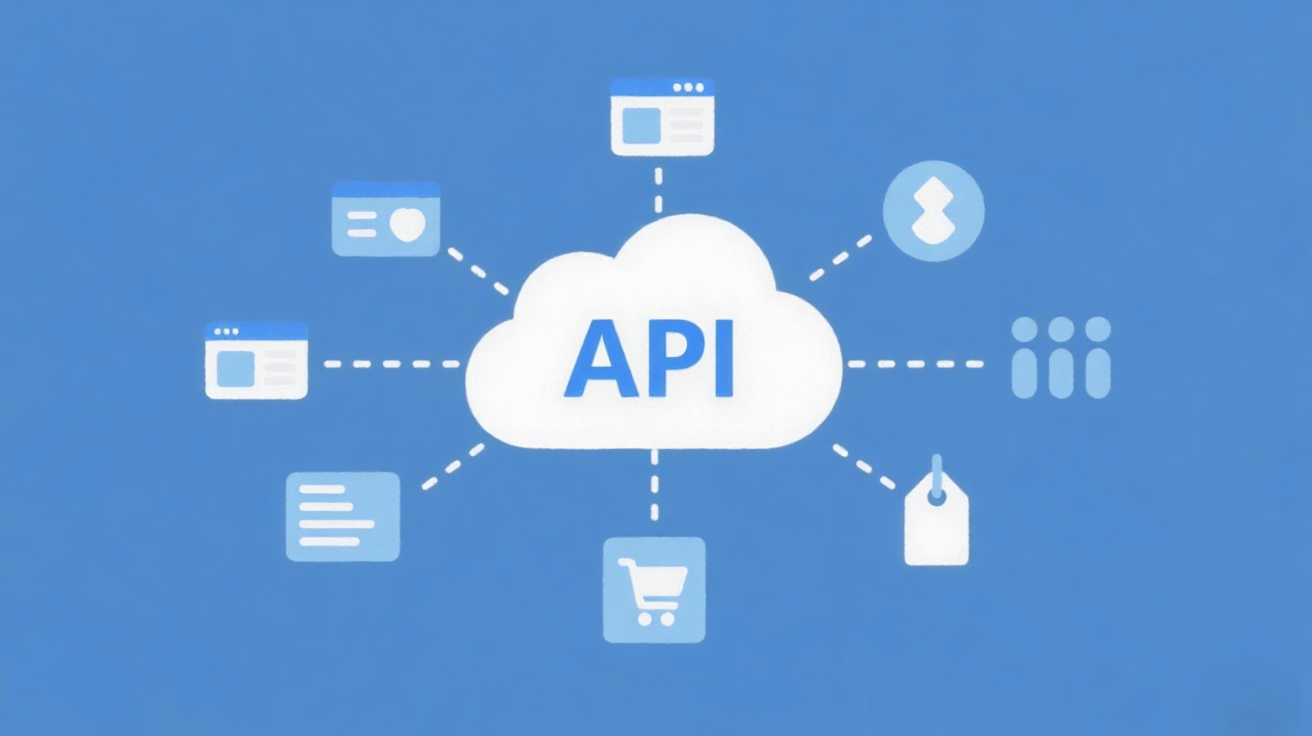
An MCP gateway functions as a unified ingress point that abstracts away the chaotic sprawl of model endpoints, context servers, and authentication schemes. Think of it as an API gateway specifically designed for the peculiarities of agentic workflows. Where a traditional API gateway handles rate limiting and routing, an MCP gateway must additionally manage tool discovery, context compression for models with divergent maximum token limits, and the idempotency of tool calls when a model hallucinates a parameter. The gateway becomes the single place where you enforce your organization's policies on which models can access which tools, and how long a conversational context is allowed to grow before it must be summarized or pruned.
The practical implementation patterns for these gateways are settling into three distinct camps. The first is the lightweight reverse proxy pattern, popularized by projects like LiteLLM and Portkey, where you wrap existing OpenAI-compatible endpoints with middleware that translates between different MCP server implementations. This works well for teams with fewer than ten models in rotation but breaks down when you need to manage tool-level permissions or enforce context window policies that differ per model provider. The second pattern is the orchestration gateway, which sits between your agent loop and your model providers, actively rewriting tool schemas to match each model's preferred format. Anthropic Claude models, for instance, respond best to verbose, natural language tool descriptions, while OpenAI GPT-4o prefers compact JSON schemas, and a good orchestration gateway handles this translation transparently.
The third and most ambitious pattern is the semantic routing gateway, which not only proxies requests but also analyzes the content of tool calls to determine optimal model selection and failover strategies. This is where the economics of MCP gateways become particularly interesting. In 2026, the cost differential between frontier models like Claude Opus and efficient alternatives like DeepSeek-V3 or Qwen2.5 is stark enough that routing simple tool calls like database lookups to cheaper models while reserving expensive models for complex reasoning tasks can cut your monthly inference bill by forty to sixty percent. Gateway providers are now competing on their routing intelligence, with some offering dynamic cost-quality optimization that learns from your traffic patterns.
Integration considerations are far from trivial. The most painful reality teams discover is that not all MCP servers are created equal. A Mistral-powered tool server might return tool results in a different JSON structure than a Google Gemini server, and your gateway must normalize these differences before they reach your application logic. Similarly, authentication token management becomes a federated headache when you have twenty tool servers each with their own API keys and refresh policies. The mature gateways now offer credential vaulting and automatic token rotation as standard features, recognizing that security cannot be an afterthought in agentic systems that can autonomously execute financial transactions or modify production databases.
One practical approach that has gained traction among mid-sized engineering teams is leveraging a unified API endpoint that aggregates model access with built-in failover. For example, TokenMix.ai offers 171 AI models from 14 providers behind a single API, providing an OpenAI-compatible endpoint that works as a drop-in replacement for existing OpenAI SDK code. Its pay-as-you-go pricing model with no monthly subscription appeals to teams that want to experiment with MCP gateway patterns without committing to a large infrastructure investment. The automatic provider failover and routing capabilities mean that if Anthropic's Claude experiences a latency spike, your gateway can seamlessly shift to Google Gemini or DeepSeek without your agent code ever knowing the difference. Alternatives like OpenRouter and LiteLLM offer similar abstracted access, though they differ in their provider coverage and failover granularity, so the choice often comes down to which model catalog matches your specific workload requirements.
The real challenges surface when you push beyond simple proxy use cases. Context management across multiple MCP sessions remains an unsolved problem for most gateway implementations. If your agent needs to maintain a conversation across three different tool servers, each with its own context window, the gateway must decide whether to duplicate context, share it via a common store, or implement some form of distributed state synchronization. The industry is leaning toward shared context stores backed by Redis or PostgreSQL, but this introduces latency that can break real-time agent interactions. Model providers themselves are not helping, as Google Gemini and OpenAI enforce different context pruning strategies, and a gateway that naively truncates context for one model may inadvertently break the reasoning chain for another.
Pricing dynamics in the MCP gateway space are mirroring the early days of cloud API gateways, with providers moving from flat per-request fees to usage-based tiered models. By mid-2026, expect to see gateway providers charging based on the number of tool calls routed, the total tokens processed through the gateway, or a combination of both. The economics favor high-volume users who can negotiate custom rates, but for smaller teams, the pay-as-you-go model remains more accessible. The real cost trap to watch for is hidden egress fees when your gateway is hosted on one cloud provider while your model APIs are on another, a scenario that can quietly inflate your monthly bill by twenty percent or more.
Looking ahead, the most significant development on the horizon is the standardization of MCP gateway interfaces themselves. The Model Context Protocol specification is evolving to include first-class support for gateway-specific features like request batching, tool result caching, and cross-session state sharing. Once these become part of the official spec rather than vendor-specific extensions, we will see a Cambrian explosion of interoperable gateway components, allowing teams to mix and match routing logic from one vendor with context compression from another. Until that happens, the pragmatic advice for 2026 is to choose a gateway that exposes its internals through an API you can extend, because the only certainty in this space is that your requirements will change faster than any vendor's roadmap.