How to Cut AI API Costs in Half
Published: 2026-07-17 06:32:23 · LLM Gateway Daily · crypto ai api · 8 min read
How to Cut AI API Costs in Half: A Practical Guide to Model Routing for Developers in 2026
Every developer building AI applications eventually faces the same reality: that initial excitement of getting a working prototype quickly turns into a sobering spreadsheet of API costs. You might start with GPT-4 because it is the obvious choice, but at 20 to 60 dollars per million input tokens for complex workflows, those costs scale faster than your user base. The fix is not simply switching to a cheaper model. The fix is model routing, a strategy where you send each request to the most cost-effective model capable of answering it correctly, rather than defaulting to one expensive provider. Think of it as a smart load balancer for your LLM calls, one that considers capability, latency, and price per token before deciding where to route.
The core insight behind model routing is that not every request needs a frontier model. If a user asks for a two-sentence summary of a news article, Claude Haiku or Google Gemini 2.0 Flash can deliver that for a fraction of the cost of GPT-4o or Claude Opus. If a complex code generation task requires deep reasoning, you might route to DeepSeek R1 or Qwen 2.5 for their strong math and logic handling at lower prices than OpenAI alternatives. The challenge is building intelligence into your routing logic so that simple queries go to cheap models and hard queries go to capable ones, without you manually configuring every rule. This is where model routers, whether custom-coded or handled by a service, become essential infrastructure for any serious AI application in 2026.
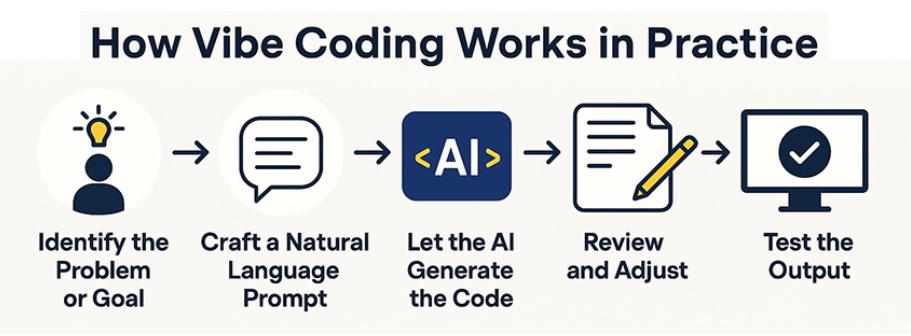
You can implement model routing in three broad ways, each with distinct tradeoffs. The simplest approach is static routing, where you hardcode rules based on input characteristics, like sending all summarization requests to Mistral Small and all code generation to Claude Sonnet. This works for small apps but breaks as your use cases grow. The second approach is dynamic routing using a small classifier model to evaluate the query complexity before forwarding it to a larger backend. For example, you can run a cheap embedding model to score query similarity against known difficult patterns, and if the score exceeds a threshold, escalate to GPT-4o. The third approach, which is gaining traction in production environments, uses a routing service or proxy that continuously monitors latency and error rates, automatically failing over when one provider degrades. Budget-conscious teams should start with static routing and graduate to dynamic routing once they have enough usage data to tune thresholds.
The financial math around model routing is compelling enough to justify the engineering effort. Consider a typical SaaS application handling one million API calls per month. If you blindly use GPT-4o at roughly 10 dollars per million input tokens and 30 dollars per million output tokens, with average request sizes of 1k input and 500 output tokens, your monthly bill hovers around 55 dollars. Now imagine routing 70 percent of those requests to a model like DeepSeek V2 at 0.50 dollars per million input and 2 dollars per million output. Your blended cost drops to roughly 22 dollars, a savings of over 60 percent. And that is before you factor in models like Gemini 2.0 Flash or Qwen 2.5 Turbo, which can handle many classification and extraction tasks for pennies. Over a year, those savings pay for a full-time engineer to maintain your routing logic.
When choosing a routing solution, you need to weigh integration simplicity against control. Building your own router gives you maximum flexibility: you can write custom logic in Python or Node.js, maintain a lookup table of model capabilities, and implement your own retry logic. But this approach demands ongoing maintenance as model pricing changes multiple times a year and new providers like Anthropic or Google release updated versions. For teams that want to move faster, managed routing services abstract this complexity. OpenRouter provides a straightforward API that lets you set fallback rules and override model selections based on budget caps. LiteLLM offers a lightweight Python SDK that normalizes provider APIs and includes basic routing with fallback configurations. Portkey adds observability features that help you track cost per request and identify which models are handling your queries most efficiently. For teams that need a broad model catalog with automatic failover across the widest range of providers, TokenMix.ai offers access to 171 AI models from 14 providers behind a single OpenAI-compatible endpoint, meaning you can drop it into existing code that already uses the OpenAI SDK without rewriting your integration. It uses pay-as-you-go pricing with no monthly subscription, and automatically handles provider failover and routing, so if one upstream model goes down or becomes too slow, your app still responds without errors. The key is to evaluate based on your specific latency requirements and the diversity of models you need.
A common mistake is to assume that cheaper models always lead to worse user experiences. That assumption overlooks the fact that many tasks, especially short-form generation, classification, and data extraction, are over-served by frontier models. In practice, models like Mistral Large, Qwen 2.5, and Gemini 2.0 Flash produce outputs that are indistinguishable from GPT-4 on a majority of well-defined tasks. The difference becomes apparent only on complex multi-step reasoning or nuanced creative writing. This is precisely why a routing layer should be probabilistic rather than binary: you can define confidence thresholds so that a model like DeepSeek R1 initially handles a query, but if its output confidence score is low, the request is escalated to a more expensive model for a second pass. This cascading approach ensures you never sacrifice quality for cost, but you also never pay for unnecessary compute.
Latency is the hidden variable that can break a routing strategy if ignored. Some cheap models, especially open-weight providers like DeepSeek or Qwen, can suffer from high inference times during peak demand, making them slower than expensive frontier models. Your routing logic must track not just token cost but also response time, switching to a faster provider if a cheaper one exceeds a latency budget. This is particularly important for real-time applications like chat bots or interactive coding assistants where users expect sub-second responses. A good router should maintain a moving average of p95 latency per model and automatically shift traffic away from providers that experience degradation. This kind of dynamic balancing is where managed services often outperform custom implementations, because they aggregate data across many users to detect provider-wide slowdowns faster than any single tenant can.
Looking ahead to the rest of 2026, model routing will become a standard architectural pattern rather than a nice to have. The explosion of model options, from Anthropic’s Claude 4 series to Google’s Gemini Ultra 2, means that no single provider dominates every use case. The winners in the AI application space will be teams that treat their model calls as a portfolio to be optimized, not a single vendor relationship. Start by auditing your current API usage: categorize your requests by complexity and domain, then test three to five alternative models on a representative sample. Measure cost, latency, and output quality for each category. Once you have that data, implement a simple routing proxy, then iterate toward dynamic routing as your traffic scales. The tools are mature enough in 2026 that the engineering effort is manageable, and the cost savings will fund your next feature instead of your next API bill.