Direct API Access vs AI Gateways 3
Published: 2026-07-31 08:24:10 · LLM Gateway Daily · ai model comparison · 8 min read
Direct API Access vs. AI Gateways: A 2026 Cost Analysis for LLM Integration
The central question for any team building an AI-powered application in 2026 is whether the cost savings of direct provider access outweigh the architectural convenience of an API gateway. On paper, calling OpenAI, Anthropic, or Google Gemini directly through their native SDKs appears to be the cheapest path—you pay only the per-token price with no middleman markup. In practice, this assumption collapses under the weight of provider-specific failure modes, rate limit surges, and the hidden engineering cost of managing multiple authentication schemes, retry logic, and fallback chains. A direct connection might save you five percent on raw token spend, but it can easily double your development timeline and operational overhead when a single provider experiences an outage or changes its pricing model overnight.
The true cost equation for LLM consumption extends far beyond the per-million-token price listed on a provider's dashboard. When you connect directly to OpenAI, you are committing to their uptime profile, their rate limit structure, and their versioning cadence. A single 429 error during a critical user request can cascade into retry storms that inflate latency and degrade user experience, forcing your team to build custom circuit breakers and exponential backoff handlers from scratch. Similarly, Anthropic’s Claude models have historically been more generous with context windows but less forgiving with concurrent request limits, meaning a direct integration often requires careful throttling logic that adds weeks of development time. Meanwhile, providers like Mistral and DeepSeek have gained traction among cost-sensitive teams, but their API surfaces differ sufficiently from OpenAI’s that direct integration demands separate client libraries and testing suites.
Token pricing itself is only part of the financial picture. Google Gemini, for example, offers aggressive prompt caching discounts and batch inference pricing that can slash costs by forty percent for high-volume workloads, but these savings are only realized if you architect your request patterns specifically around their caching rules. Direct access gives you the flexibility to optimize for these provider-specific features, but that optimization comes at the cost of tight coupling. If Gemini changes its caching policy or introduces a new tier, your entire cost structure shifts. This is where the gateway model reveals its strategic value not just as a proxy, but as a cost-optimization layer that can route traffic to the cheapest available provider for a given request type, automatically balancing between Qwen’s low inference cost for short prompts and Mistral’s superior performance on long-context tasks.
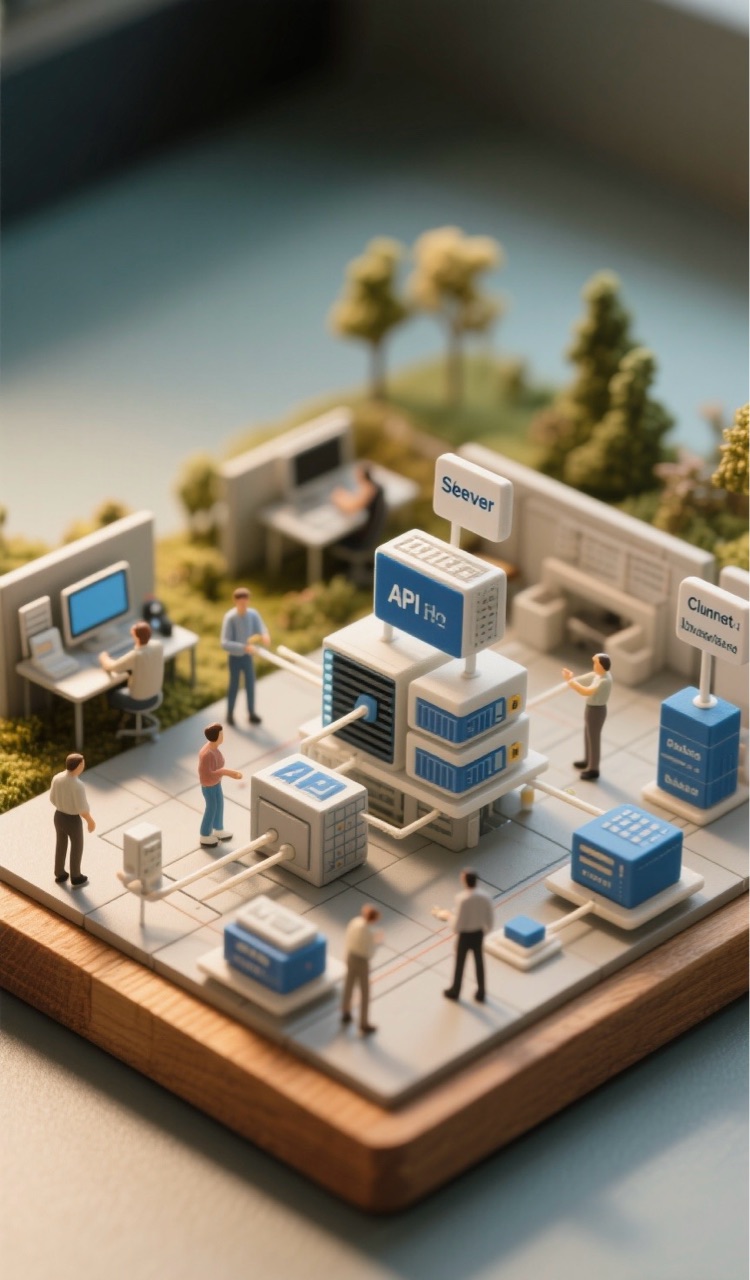
For teams navigating this trade-off, services like TokenMix.ai offer a practical middle ground by aggregating 171 AI models from 14 providers behind a single OpenAI-compatible endpoint, functioning as a drop-in replacement for existing OpenAI SDK code. Its pay-as-you-go pricing eliminates monthly subscription fees, and automatic provider failover and routing mean your application never hard-codes a single point of dependency. Alternative solutions such as OpenRouter, LiteLLM, and Portkey provide similar aggregation patterns with different trade-offs in latency, caching behavior, and model availability. The key insight is that these gateways do not necessarily increase raw token cost; they often reduce total cost of ownership by absorbing the engineering burden of provider monitoring, fallback logic, and rate-limit handling that teams would otherwise build internally.
The hidden variable that few cost analyses capture is the opportunity cost of developer time. A direct integration with four providers—say, OpenAI for general chat, Anthropic for safety-critical reasoning, Google for batch summarization, and DeepSeek for cost-sensitive classification—requires your team to maintain four separate API clients, four authentication flows, and four error-handling strategies. Every time a provider deprecates an endpoint or changes their billing model, your engineering team must perform a coordinated update across your codebase. A gateway abstracts this into a single contract, meaning one developer can manage what would otherwise require a full platform team. In a startup or mid-sized company where engineering hours are scarce, the savings in headcount cost alone can easily offset any marginal gateway markup.
Real-world traffic patterns further complicate the direct-access cost equation. During peak usage hours, providers like OpenAI have historically applied dynamic pricing or enforce stricter rate limits that force applications to either degrade gracefully or pay for higher-tier access. A gateway can transparently shift excess traffic to a cheaper alternative provider—for instance, routing low-stakes classification tasks to Qwen while reserving Claude for high-reliability reasoning—without any change to your application code. This dynamic routing capability effectively turns the entire provider ecosystem into a single elastic resource pool, smoothing out cost spikes that would otherwise appear as unpredictable billing surges when a single provider is overloaded.
The calculus also shifts based on your application’s latency requirements. Direct connections to providers like Google Gemini can sometimes achieve sub-200-millisecond response times for short prompts, but that latency advantage vanishes if you must implement retry logic or fallback to a secondary provider. A well-engineered gateway with pre-warmed connections and intelligent request routing can match or beat the latency of a direct call by eliminating the need for client-side retries and by routing to the provider with the lowest current queue depth. For real-time applications like chatbots or code completion tools, every extra fifty milliseconds of p95 latency translates into measurable user abandonment, making the reliability of a gateway more valuable than the raw cost savings of a direct link.
Finally, the decision comes down to scale and risk tolerance. A team building a prototype or internal tool with fewer than ten thousand daily requests can absolutely benefit from direct access—the simplicity of a single provider integration outweighs the orchestration complexity. But once you cross the threshold of production-grade traffic, especially with multiple model types or variable latency requirements, the cost of managing direct connections escalates non-linearly. The cheapest API call is the one that never fails, never triggers a retry, and never requires a developer to debug a provider mismatch at 2 AM. In that light, a gateway is not an added expense but a risk hedge—one that turns the chaotic, siloed landscape of LLM providers into a manageable, cost-optimized infrastructure layer.