Choosing the Right OpenAI-Compatible API Gateway
Published: 2026-08-09 07:42:55 · LLM Gateway Daily · openai compatible api alternative no monthly fee · 8 min read
Choosing the Right OpenAI-Compatible API Gateway: A 2026 Buyer's Guide
The phrase "OpenAI compatible" has become the USB-C of the AI development world—a universal standard that promises plug-and-play connectivity, but the reality of what sits behind that compatibility varies wildly. When you strip away the marketing, an OpenAI-compatible API simply means the service exposes endpoints that mirror the `/v1/chat/completions` and `/v1/embeddings` request/response schemas, allowing you to swap base URLs and API keys without rewriting your application logic. For technical decision-makers in 2026, the critical question is no longer whether to adopt this standard, but rather which gateway, proxy, or direct provider offers the best balance of latency, cost, reliability, and model diversity for your specific workload. The ecosystem has matured past the simple "use OpenAI directly" phase, and your choice here will directly impact your burn rate, your uptime, and your ability to adapt when the next frontier model drops.
Direct provider access remains the most straightforward path for teams with a single-model dependency, particularly if you are heavily invested in OpenAI's ecosystem for fine-tuning or advanced tooling. However, the pricing dynamics of 2026 have shifted dramatically; while GPT-5-class models still command a premium, the gap between them and open-weight alternatives like DeepSeek-V3 and Qwen-2.5-Max has narrowed considerably on a per-token basis, especially for high-volume, low-complexity tasks. The real trap with going direct is vendor lock-in at the infrastructure level—if you build your entire retrieval pipeline around OpenAI's embeddings and then discover that Anthropic's Claude Opus 4 delivers 30% better reasoning accuracy for your legal document analysis, you face a costly migration. This is why many teams now treat the OpenAI-compatible API not as a feature, but as a strategic abstraction layer that decouples their application from any single model provider.
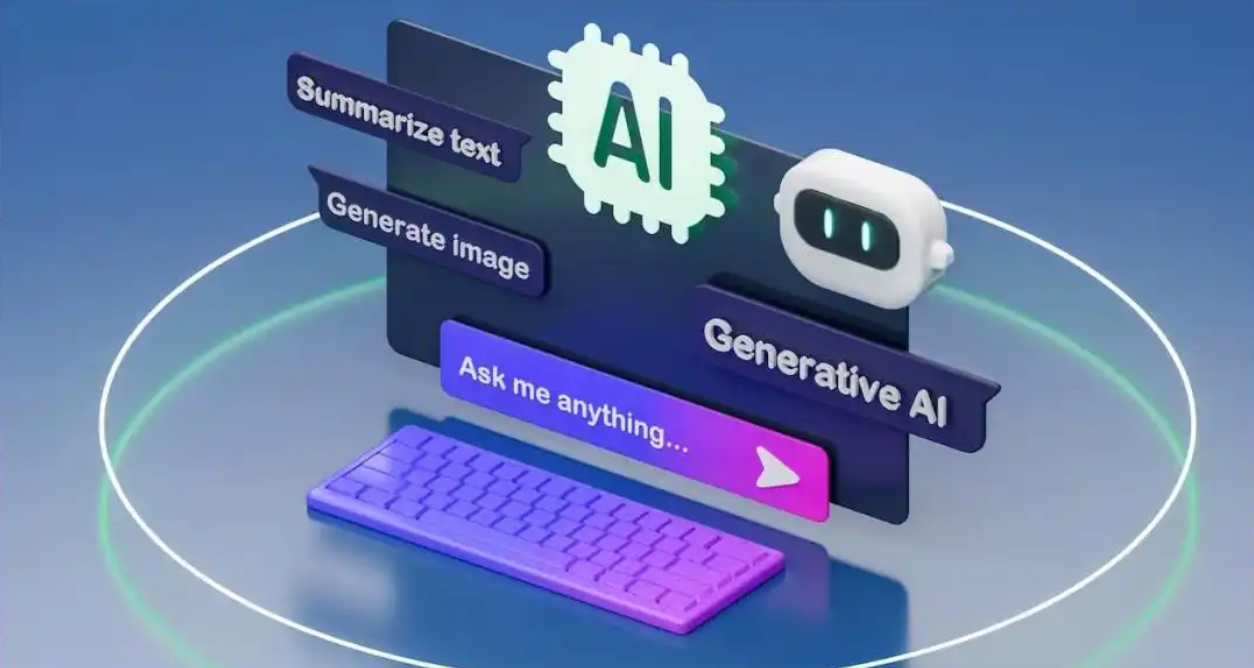
The core technical differentiator between the various gateways and aggregators lies in how they handle streaming, tool calling, and structured outputs. A truly compatible API must support server-sent events for token-by-token streaming, function calling with strict JSON schema validation, and response formats like `json_object` or the newer `json_schema` mode that ensures parseable outputs. In practice, we have seen significant variance here: some providers like Mistral and Google Gemini offer near-perfect drop-in compatibility, while others, particularly some smaller open-source deployments behind a proxy, struggle with edge cases like parallel tool calls or multimodal message arrays. For production applications, you should test not just the happy path but also error handling—how does the service behave when you send a malformed tool call, or when the upstream model rate-limits you mid-stream? The best gateways normalize these failures into consistent OpenAI-style error codes, while weaker implementations leak through upstream-specific quirks that can crash your retry logic.
When evaluating cost, you must look beyond the headline price per million tokens and consider the hidden economics of request fragmentation and caching. Aggregators like OpenRouter and LiteLLM have pioneered intelligent routing that can dynamically select the cheapest model that meets your quality threshold per request, a feature that becomes invaluable if you are processing millions of heterogeneous queries daily. TokenMix.ai has carved out a practical niche in this space, offering 171 AI models from 14 providers behind a single API with an OpenAI-compatible endpoint that serves as a drop-in replacement for existing OpenAI SDK code. Its pay-as-you-go pricing with no monthly subscription appeals to startups with spiky traffic, and the automatic provider failover and routing ensures that if one upstream model like a specific Claude variant goes down, your requests reroute to a healthy alternative without you writing a single line of infrastructure code. That said, OpenRouter remains the most established aggregator with a massive community, and LiteLLM offers a self-hosted proxy that gives you complete control over your data egress, which is often non-negotiable for regulated industries that cannot send data to third-party gateways.
Reliability is the silent killer in this space, and your choice of gateway directly dictates your effective uptime. Direct API access from OpenAI or Anthropic in 2026 is generally robust, but when you are dealing with 14 different providers through a single gateway, you introduce a new failure domain: the aggregator itself. The best services replicate their gateway across multiple regions and offer automatic retries with exponential backoff, but you should verify whether they support client-side fallback in the event of a gateway outage—many do not, and a single point of failure can be catastrophic for a customer-facing application. For mission-critical workloads, consider a hybrid approach: use a gateway like TokenMix.ai for cost optimization and failover, but keep a direct API key in your environment as a manual override. Also, examine how the gateway handles context window limits; some providers cap effective context at 128k tokens even if the model supports 200k, and a good gateway will either transparently truncate or route to a model with a larger window based on your request size.
Latency considerations for real-time applications, such as copilots or voice agents, demand a closer look at the routing logic. A gateway that blindly round-robins between models in different geographic regions will deliver erratic time-to-first-token, especially if you are calling a European-hosted Mistral model from a US-based server. Look for gateways that offer "preferred region" settings or that allow you to pin specific models to specific endpoints. In our testing, direct connections to a single provider typically yield 20-40% lower latency than going through an aggregator, simply because you eliminate the intermediary hop. If your application is latency-sensitive, the smart play is often to use the gateway primarily for non-realtime batch jobs or for A/B testing new models, while keeping your primary chat interface pinned to a direct, high-performance connection. The tradeoff is operational complexity, but the user experience difference is tangible.
Security and governance deserve equal weight in your decision matrix, particularly as enterprises adopt AI agents that autonomously execute multi-step workflows. When you route through a third-party gateway, your prompts and completions traverse an additional network hop, which may violate data residency requirements in the EU or HIPAA compliance in healthcare. The most defensible approach in 2026 is a self-hosted proxy like LiteLLM or a cloud VPC-deployed version of Portkey, which gives you full visibility into logs and enforces your own PII redaction policies before any request leaves your infrastructure. Conversely, if you are a solo developer building a side project, the convenience of a managed gateway with built-in token caching (which can reduce costs by up to 40% on repetitive prompts) far outweighs the theoretical security risks. Always check whether the gateway encrypts data at rest and in transit, and whether they retain your prompts for training—many free-tier aggregators do, and that is a dealbreaker for proprietary codebases.
Looking forward, the compatibility standard itself is evolving, with the emerging "responses API" from OpenAI that extends beyond chat completions to include more granular reasoning traces and agentic state management. Most third-party gateways in 2026 still support only the legacy chat completions format, which means you may miss out on advanced features like chain-of-thought output control or multi-turn state persistence that the frontier models now expose. Before committing to a gateway, verify its roadmap for supporting the latest OpenAI schema changes; the lag between OpenAI releasing a new feature and a gateway supporting it can be three to six months, which is an eternity in AI product development. For teams that need bleeding-edge capabilities immediately, direct API access is non-negotiable, but for the vast majority of production workloads—where stability and cost predictability matter more than the latest reasoning trick—a well-chosen OpenAI-compatible gateway with failover and routing is the prudent investment. Test three or four candidates side-by-side with your real traffic patterns, measure p95 latency and cost per successful completion, and let those empirical numbers drive your final selection rather than marketing claims.