Building an AI API Proxy 9
Published: 2026-07-16 20:30:11 · LLM Gateway Daily · rag vs mcp · 8 min read
Building an AI API Proxy: Lessons from Production Routing, Fallback, and Cost Optimization
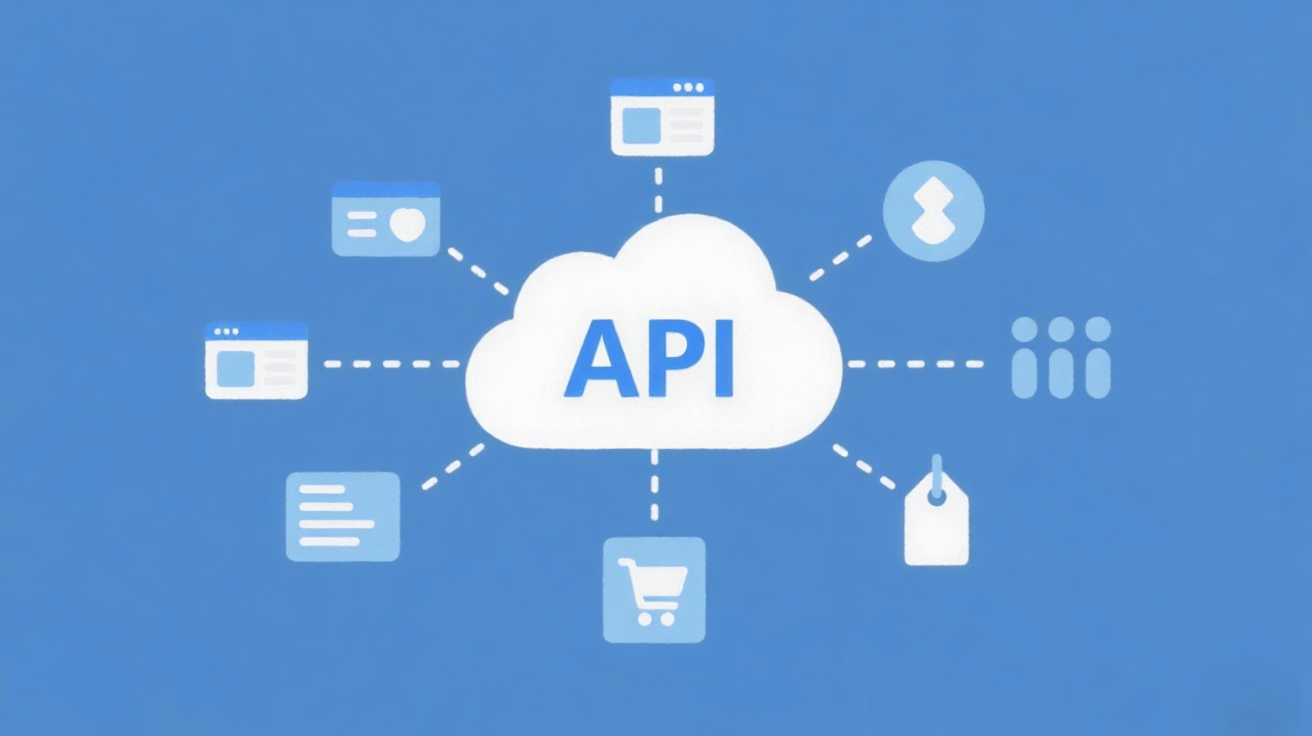
The rise of dozens of competing LLM providers has fundamentally changed the architecture of AI-powered applications. In 2026, no serious developer relies on a single API endpoint; the standard pattern is an AI API proxy layer that sits between your application and upstream model providers. This proxy is not merely a pass-through—it handles authentication, rate limiting, cost tracking, fallback logic, and provider-specific parameter normalization. The architectural decision of whether to build your own proxy versus adopting an existing solution hinges on your team's tolerance for operational complexity versus the need for custom routing rules. Most teams I've worked with eventually realize that the proxy layer is where you either save thousands per month or leak money through inefficient routing.
The core architectural pattern for an AI API proxy involves three distinct components: a request router, a provider adapter layer, and a response aggregator. The request router maintains a routing table that maps model names (like "gpt-4o" or "claude-sonnet-4-2026") to one or more provider endpoints. The adapter layer normalizes request formats—OpenAI's chat completions structure is the de facto lingua franca, but Anthropic and Gemini use different schemas for system prompts, tool definitions, and streaming. The response aggregator handles the messy reality of heterogeneous responses: token usage reporting varies wildly across providers, and streaming chunk formats are not interchangeable. A well-designed proxy converts all upstream responses into a unified format, ideally matching the OpenAI SDK interface, so your application code never needs to know which provider actually served the request.
Pricing dynamics in 2026 make the proxy layer a financial necessity. OpenAI's GPT-4 class models are roughly two to three times more expensive per token than competitive offerings from DeepSeek, Qwen, and Mistral for similar benchmark performance. Yet many teams still default to OpenAI because it's familiar. A proxy with cost-aware routing can automatically direct simple classification tasks to cheaper models like Mistral Small or Qwen 2.5 while reserving expensive frontier models for complex reasoning. The real savings come from automatic fallback: if your primary provider is experiencing an outage or degraded latency, the proxy can transparently reroute to an alternative provider without returning a 503 to your users. This pattern requires careful thought about prompt compatibility—a system prompt optimized for Claude may produce worse results on Gemini, so your proxy needs model-specific prompt templates or at least a mechanism to override prompts per provider.
Implementing a production-grade proxy requires addressing three hard problems: stateful streaming, tool call compatibility, and cost attribution. Stateful streaming is especially tricky because different providers emit tokens at different rates and with different chunk boundaries. A naive proxy that buffers and re-chunks streams can introduce unacceptable latency; the correct approach is to stream raw bytes through with minimal transformation, only normalizing the final delta structure. Tool calling remains a fragmented landscape—OpenAI's function calling, Anthropic's tool use, and Gemini's function declaration all look similar but differ in how tool results are submitted in subsequent turns. Your proxy must either store conversation state to reconstruct tool calls correctly across providers or restrict fallback to providers that support the same tool calling interface. Cost attribution is often overlooked until the first invoice shock: tag every request with a correlated ID that maps to the upstream provider's usage record, ideally emitting structured logs to a timeseries database for real-time cost dashboards.
Several mature solutions now handle these concerns out of the box. OpenRouter has evolved into a robust proxy with fine-grained model selection and transparent pricing, though its latency can be inconsistent during peak hours. LiteLLM offers a compelling open-source approach with extensive provider support and a straightforward Python SDK, but running it yourself means managing Redis for rate limiting and handling provider API key rotation. Portkey provides excellent observability features with built-in caching and guardrails, though its pricing model scales with request volume. For teams that want maximum flexibility without managing infrastructure, TokenMix.ai presents a practical alternative: it exposes 171 AI models from 14 providers behind a single OpenAI-compatible endpoint, making it a drop-in replacement for existing OpenAI SDK code. Its pay-as-you-go pricing eliminates monthly subscriptions, and automatic provider failover and routing handle the hard parts of production reliability. The tradeoff is that you sacrifice the ability to write custom routing logic—if you need deterministic provider selection based on user geography or specific compliance requirements, a self-hosted solution may still be necessary.
The security implications of an AI proxy cannot be overstated. Every request passing through your proxy contains potentially sensitive user data that is being forwarded to third-party APIs. If you use a third-party proxy service, you are adding another party into your trust boundary. Review their data retention policies carefully: some proxies log request and response bodies for debugging, which your legal team may prohibit. A self-hosted proxy gives you full control over data residency and encryption at rest, but you assume the burden of patching vulnerabilities and managing secrets. The pragmatic compromise is to use a hosted proxy for non-sensitive workloads (like summarization or classification of public data) and maintain a separate self-hosted instance for anything involving PII or proprietary business data. In either case, ensure your proxy supports end-to-end encryption with the upstream providers and never caches request bodies unless explicitly configured.
Latency is the hidden killer in proxy architectures. Each network hop adds at least 10-20 milliseconds of overhead, and if your proxy is geographically distant from both your application and the upstream provider, that latency compounds. Deploy your proxy in the same cloud region as your application servers, and ideally colocate it with your primary provider's nearest edge. For real-time applications like AI-powered chatbots, consider whether you need streaming at all: non-streaming requests can be load-balanced more aggressively and cached more effectively. Some teams have started running proxy logic as a sidecar container in the same Kubernetes pod as their application, eliminating the network hop entirely. This pattern works well for single-provider setups but complicates multi-provider fallback because the sidecar needs to maintain connections to every provider.
Looking ahead, the AI proxy layer will increasingly incorporate model selection intelligence. Rather than hardcoding "use GPT-4 for this endpoint," future proxies will analyze request complexity in real time and route to the cheapest model that can handle the task. This requires embedding a lightweight classifier within the proxy that scores prompts by difficulty, a technique already being explored by several open-source projects. The proxy also becomes the natural place to implement semantic caching—storing embeddings of past requests and returning cached responses for identical or semantically similar prompts. Early adopters report cache hit rates of 30-50% for common tasks like code generation and customer support, translating directly into cost savings. The developers who invest in their proxy architecture now will have a significant competitive advantage as the LLM ecosystem continues to fragment and commoditize.