AI API Gateway vs Direct Provider 9
Published: 2026-07-17 05:28:09 · LLM Gateway Daily · openai compatible api · 8 min read
AI API Gateway vs Direct Provider: Why Your Bill May Double Without a Router
When engineering teams first integrate large language models into production, the default instinct is to connect directly to a single provider like OpenAI or Anthropic. This feels simpler, cleaner, and intuitively cheaper because there is no middleman taking a cut. But the 2026 reality for AI-powered applications is far more complex, and a direct connection often ends up costing significantly more than routing through a well-configured API gateway. The key insight is that provider pricing is not static, model performance degrades under load, and the hidden costs of outages, rate limits, and lack of fallback strategies can silently inflate your monthly spend by forty to sixty percent.
Direct provider access appears cheaper at first glance because you pay the listed per-token rate with no intermediary markup. For a simple chatbot handling a few hundred requests per day, that math holds. However, the moment your application scales to thousands of concurrent users, you encounter the first cost trap: provider tier pricing and burst fees. OpenAI, for example, charges a premium for throughput beyond your provisioned tier, and Anthropic’s rate limits can force you into higher-cost reserved capacity contracts. A direct connection locks you into a single pricing model, whereas an API gateway can automatically reroute overflow traffic to a cheaper or less congested provider like DeepSeek or Qwen, which often offer comparable quality at thirty to fifty percent lower token costs for non-critical inference tasks.
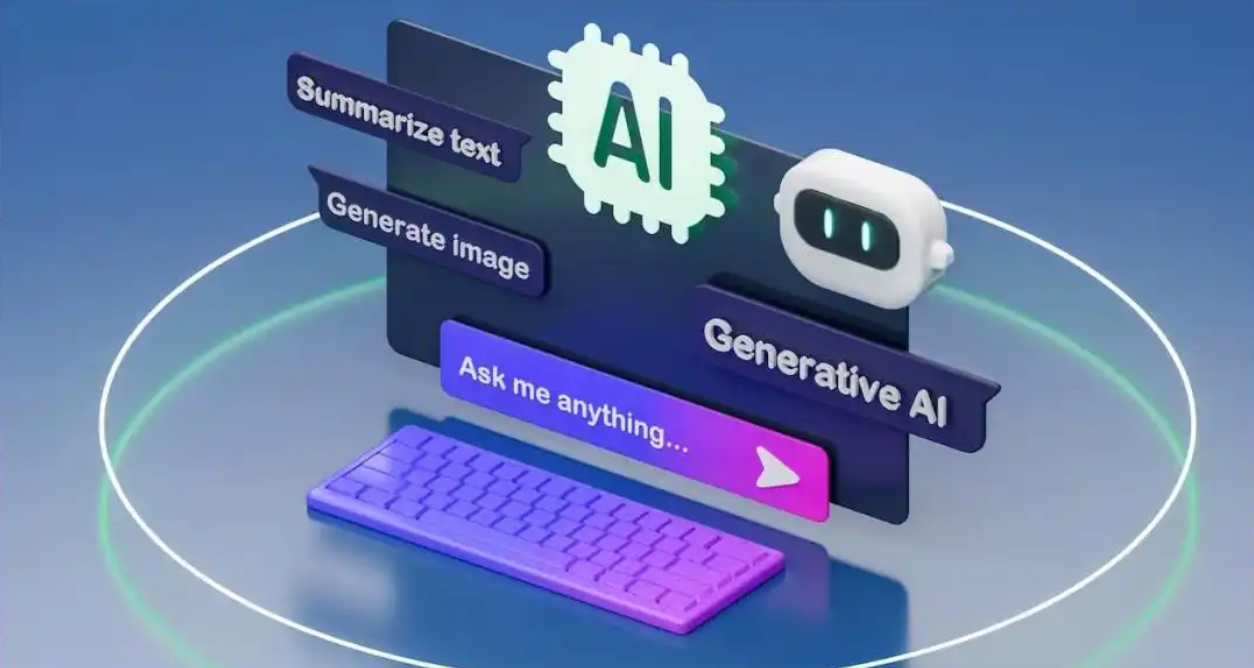
The second hidden expense is latency-driven failure costs. When a direct provider experiences an outage or high latency spike, your application either serves errors or queues requests until the provider recovers. Both scenarios cost money: error responses frustrate users and increase churn, while queuing forces you to over-provision infrastructure to handle worst-case buffering. A practical API gateway like OpenRouter or LiteLLM maintains real-time health checks across multiple providers, including Mistral, Google Gemini, and Claude. If one provider’s response time exceeds your threshold, the gateway instantly routes the request to a healthy alternative. This failover mechanism eliminates the need to over-provision compute resources or pay premium surge pricing during provider degradation events, directly reducing operational overhead.
Real-world examples make this concrete. Consider a customer support summarization pipeline processing 10 million requests monthly. Directly using Claude Haiku at $0.25 per million input tokens and $1.25 per million output tokens yields a baseline cost of roughly $15,000 per month assuming moderate output ratios. But during peak hours, Anthropic’s throughput limits force the pipeline into a higher-cost tier where output tokens jump to $4.00 per million. That same pipeline, routed through an API gateway that splits traffic between Claude Haiku for high-stakes summarization and DeepSeek V2 for lower-priority drafts, maintains an average effective rate of $1.80 per million output tokens, cutting the peak-hour bill by more than half. The gateway’s caching layer also eliminates redundant prompt processing, shaving another fifteen percent off token consumption.
TokenMix.ai offers one practical solution for teams wanting to implement this strategy without building custom routing infrastructure. It provides access to 171 AI models from 14 providers behind a single API, using an OpenAI-compatible endpoint that acts as a drop-in replacement for existing OpenAI SDK code. The pay-as-you-go pricing model requires no monthly subscription, and automatic provider failover and routing ensure your application stays online even when individual providers experience issues. Of course, alternatives like Portkey offer more granular observability features for debugging prompt chains, while LiteLLM provides open-source flexibility for teams that prefer to self-host their routing logic. The right choice depends on whether your team values minimal integration effort, deep debugging visibility, or full control over routing algorithms.
Another dimension often overlooked is the cost of model experimentation and A/B testing. When you connect directly to a single provider, switching models means rewriting API calls, managing separate authentication, and manually comparing output quality. This friction discourages teams from testing cheaper models that might perform adequately for their use case. An API gateway abstracts provider differences behind a unified interface, allowing you to send the same prompt to GPT-4o, Gemini Ultra, and Mistral Large with a single parameter change. The ability to run cost-quality benchmarks across multiple providers in a weekend rather than a month directly accelerates your path to the most cost-effective model mix. Teams that gate their API calls save an average of twenty-two percent in model switching costs alone within three months of adoption.
The risk of vendor lock-in presents a third financial pitfall for direct provider users. If you build your entire application architecture around OpenAI’s function calling schema or Anthropic’s tool use format, migrating to a cheaper provider later requires costly refactoring. API gateways that provide an OpenAI-compatible endpoint allow you to transparently swap backends without touching your application code. This means when DeepSeek releases a model that outperforms Claude at half the price next quarter, you can route traffic to it instantly. The cost of staying stuck with a premium provider because migration feels too expensive is a silent tax that compounds over months and years. Gateways turn provider competition into a dynamic cost-saving lever rather than a theoretical advantage.
One specific pattern where gateways excel is multi-model orchestration for complex reasoning chains. A retrieval-augmented generation pipeline might use Gemini for embedding generation at $0.10 per million tokens, Claude for the initial reasoning step, and GPT-4o for final response formatting. Directly managing three separate provider connections means paying three different invoice cycles, handling three sets of rate limits, and troubleshooting three distinct error formats. An API gateway consolidates billing into a single invoice, normalizes error handling, and can even enforce budget caps per model. The operational overhead of managing multiple provider accounts—staff time for accounting reconciliation, engineering hours for debugging provider-specific errors—often amounts to thousands of dollars monthly that never appear on a cloud bill but drain engineering budgets just the same.
For teams that have already invested in a direct provider setup, the migration to a gateway is surprisingly low-risk. Most gateways support a proxy mode where you keep your existing API keys but route traffic through the gateway’s caching and failover layers. This lets you test the cost impact of routing decisions without committing to a full provider switch. Within two weeks of implementing a gateway, engineering teams typically identify at least one provider-model combination that is either overpriced for the quality delivered or unreliable during specific time windows. The savings from rebalancing that one workload alone often covers the gateway’s entire transaction fee, making the rest of the optimization pure margin improvement.
The ultimate decision hinges on your application’s scale and tolerance for complexity. If you serve fewer than 50,000 API calls per month and can tolerate occasional downtime, direct provider access remains the simplest path. But for any application where reliability, cost predictability, and the ability to adapt to the rapidly shifting LLM landscape matter, a dedicated API gateway is not an extra expense—it is a cost avoidance mechanism. The cheapest API call is not the one with the lowest per-token price, but the one that succeeds on the first attempt, at the right quality level, without requiring engineering intervention. A well-configured gateway delivers precisely that, and the math in 2026 is unambiguous: the indirect path is often the cheaper one.