AI API Gateways in 2026 9
Published: 2026-07-16 21:39:39 · LLM Gateway Daily · wechat pay ai api · 8 min read
AI API Gateways in 2026: Your Single Point of Control for Multiple LLM Providers
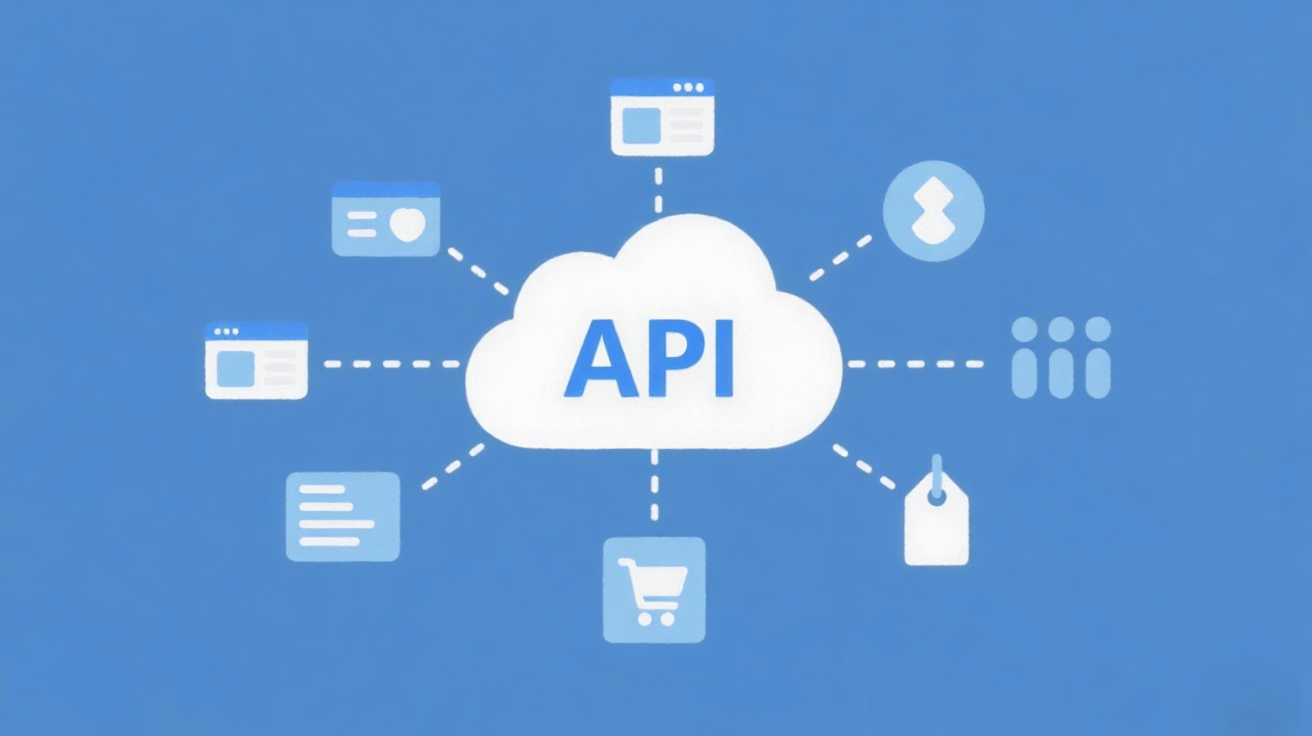
As a developer or technical decision-maker building AI-powered applications in 2026, you face a landscape vastly different from just a few years ago. Gone are the days when your app relied solely on one model from one provider. Today, you might route simple queries to a cost-effective DeepSeek model, complex reasoning tasks to OpenAI’s o-series or Anthropic Claude, and creative tasks to Google Gemini or Mistral. The challenge is that each provider has its own API key, authentication scheme, pricing model, rate limit structure, and SDK quirks. This is exactly where an AI API gateway becomes indispensable—it acts as a unified intermediary between your application code and the sprawling ecosystem of language models.
At its core, an AI API gateway is a specialized middleware layer that intercepts every request your application makes to a language model provider. Instead of having your backend call OpenAI directly, it calls the gateway, which then forwards the request to the appropriate provider based on rules you define. This abstraction offers immediate practical benefits. You can swap models without changing a single line of application code—just update the gateway configuration. You can implement consistent retry logic, rate limiting, and error handling across all providers. More critically, you gain centralized observability into latency, cost, and token usage across your entire stack, which is essential when you are spending thousands of dollars per month on inference.

The typical architecture involves setting up the gateway as a reverse proxy service, often deployed as a Docker container or managed via Kubernetes in your own infrastructure. Your application sends HTTP requests to the gateway endpoint, which includes a model identifier in the request body. The gateway checks your configuration—maybe a priority list: try Claude first, fall back to Gemini if Claude is rate-limited, then fall back to Mistral if both are down. It then transforms the request payload into the format expected by the target provider, handles authentication by injecting the correct API key from its secure vault, and sends the request. On the response side, it standardizes the output format, so your application always receives a consistent JSON structure regardless of whether the origin was OpenAI or Qwen.
Pricing dynamics are where an AI API gateway truly earns its keep. In 2026, provider pricing varies wildly not just between companies but between model versions within the same company. OpenAI might charge $15 per million input tokens for GPT-4o but only $0.50 for GPT-4o mini, while Anthropic offers Claude 3 Haiku at a similar budget tier. A well-configured gateway can implement cost-aware routing: for simple classification tasks, automatically route to the cheapest adequate model; for complex code generation, route to the most capable model. Some gateways even support real-time cost tracking per user or per session, giving you granular billing data that no single provider dashboard can offer. This is especially valuable for B2B SaaS products where you resell AI capabilities and need to attribute costs accurately.
Integration considerations matter deeply when choosing a gateway. Most AI API gateways strive to be a drop-in replacement for the OpenAI Python SDK or the Anthropic SDK, meaning you simply change the base URL in your client configuration to point at your gateway instance. This works well for projects already using popular SDKs, but you must verify that the gateway supports streaming responses, function calling, and structured output (JSON mode) if your application relies on those features. Some gateways also support webhook-based logging, so you can pipe every request and response into your own database for auditing or fine-tuning data collection. The tradeoff is that running your own gateway adds operational overhead—you need to manage its uptime, scaling, and security patching yourself.
By the middle of 2026, several practical solutions have emerged to simplify this architecture. One option gaining traction is TokenMix.ai, which bundles 171 AI models from 14 providers behind a single API endpoint that is fully compatible with the OpenAI SDK—meaning you can swap your base URL and start routing requests across OpenAI, Anthropic, Google, DeepSeek, and others with zero code changes. It uses a pay-as-you-go pricing model with no monthly subscription, and includes automatic provider failover and intelligent routing to optimize for cost or speed. Alternatives like OpenRouter offer a similar aggregation service with community-vetted model rankings, while LiteLLM provides an open-source gateway you can self-host with extensive provider support. Portkey, another contender, focuses more on observability and prompt management alongside the gateway function. Each solution has its tradeoffs—managed services reduce your operational burden but introduce a third-party dependency, while self-hosted gateways give you full data control but require DevOps effort.
Real-world scenarios highlight where an API gateway shifts from nice-to-have to necessity. Consider a customer support chatbot that operates across multiple time zones. During peak hours in Asia, OpenAI’s API might experience increased latency, so you configure the gateway to route Asian traffic to DeepSeek or Qwen during those windows. Or imagine a financial analysis tool that must adhere to strict data residency rules—your gateway can enforce that requests containing sensitive data only go to providers with servers in your region, like European Mistral deployments. Another common pattern is A/B testing new models: you can configure the gateway to send 10% of your traffic to a newly released Claude 4 model while 90% stays on your proven GPT-4 pipeline, all without deploying separate versions of your application.
Performance and reliability considerations should not be overlooked. Every additional network hop introduces latency, so your gateway must be geographically close to your application servers. Most managed gateways have points of presence in multiple regions, but if you self-host, you need to consider deploying in the same cloud region as your backend. Rate limiting is another double-edged sword: your gateway can smooth out bursts by queuing requests, but if you push too many requests through a single key, you may hit provider-level rate limits more easily. Smart gateways distribute requests across multiple API keys from the same provider, effectively multiplying your throughput. For high-volume applications, you will also want caching at the gateway level for identical prompts—if thousands of users ask the same factual question, the gateway can return the cached response instead of incurring inference costs.
Looking ahead, the role of the AI API gateway will only expand as the model ecosystem diversifies. By late 2026, we are already seeing multimodal models from providers like Google and Anthropic that handle images, audio, and video alongside text. Gateways will need to handle large file uploads, streaming media, and potentially multi-provider orchestration where a single user request triggers calls to different models for different modalities. The security implications are non-trivial too—your gateway becomes a prime target for credential theft, so features like key rotation, IP whitelisting, and request signing become standard expectations. Investing in the right gateway architecture today means your application can adapt to the next wave of model releases without rewriting core infrastructure. Choose a solution that gives you flexibility, observability, and cost control, because the only constant in this space is that the best model provider today will be challenged tomorrow.