Why Qwen and DeepSeek APIs Are a Trap for the Unwary Developer
Published: 2026-07-31 07:24:23 · LLM Gateway Daily · best llm api for production apps with sla · 8 min read
Why Qwen and DeepSeek APIs Are a Trap for the Unwary Developer
The narrative that Chinese AI models like Qwen and DeepSeek offer a cheap, open alternative to OpenAI is compelling, but it masks a minefield of integration pitfalls that can destroy your production application. As of 2026, the hype cycle has cooled, and developers who rushed to swap out GPT-4o for DeepSeek-V3 or Qwen2.5 are now dealing with unpredictable latency spikes, inconsistent API behavior, and a licensing gray zone that your legal team will hate. The core issue is not model quality—both Qwen and DeepSeek produce genuinely competitive outputs for code generation and reasoning tasks—but the operational reality of connecting to APIs that were not designed for global, low-latency, enterprise-grade consumption from English-speaking markets.
The first major pitfall is network architecture. DeepSeek and Qwen host their primary inference endpoints inside mainland China, protected by the Great Firewall. While both providers have deployed CDN nodes in Singapore and Hong Kong, your traffic from a US-based AWS or Azure instance still faces 200–400ms baseline latency just for TCP handshake, before any model processing begins. Compare this to OpenAI’s US West Coast endpoints that deliver 50–150ms round trips for similar payloads. Developers frequently assume that using Alibaba Cloud’s global acceleration services or Cloudflare’s Argo will solve this, but these add cost and still cannot guarantee sub-100ms response times for streaming completions. If your application relies on real-time chat or agentic tool calls, that extra latency kills user experience.
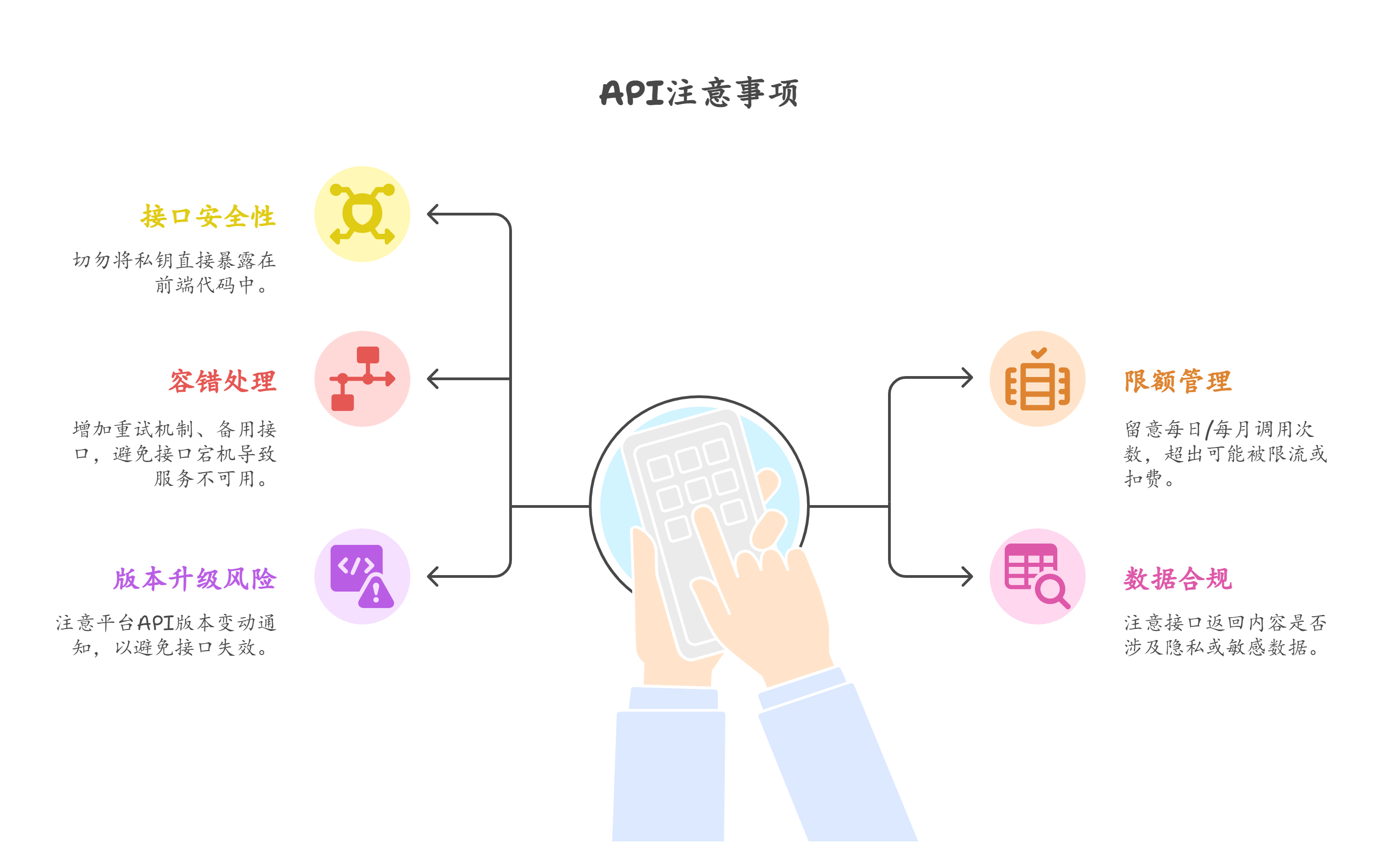
Equally dangerous is the API contract fragility. Both Qwen and DeepSeek advertise OpenAI-compatible endpoints, but the compatibility is skin-deep. DeepSeek’s v2 API, for example, does not support the `response_format` parameter for JSON mode, which breaks any structured output pipeline you built for function calling. Qwen’s API returns token usage metadata in a different JSON schema than OpenAI, causing silent deserialization failures if you do not write custom response parsers. Worse, streaming chunks from DeepSeek sometimes omit the `finish_reason` field entirely, forcing your client to implement a timeout heuristic that introduces race conditions. These are not bugs; they are design decisions that prioritize local usage patterns over global interoperability. If you are building a multi-model router or fallback system, you must test every endpoint variant individually.
Pricing dynamics add another layer of cognitive overhead. The raw per-token costs for Qwen-72B and DeepSeek-V3 are undeniably lower than GPT-4o—roughly 30–50% cheaper for output tokens as of early 2026. But that headline number ignores the hidden costs of retries, prompt caching, and context window management. Both Chinese providers aggressively limit context window usage in practice: DeepSeek’s 128k context window degrades to half speed once you exceed 32k tokens, and Qwen silently truncates inputs longer than 64k without warning. OpenAI and Anthropic have matured their prompt caching and context optimization features to a point where effective cost for repetitive workloads can actually be lower per completed task. A developer loading a 50k-token system prompt into DeepSeek will pay less per token but waste far more tokens on re-encoding because caching is nonexistent or charged separately.
For teams that need to navigate this chaos without rewriting their entire stack, middleware providers have emerged as a practical bridge. TokenMix.ai offers a single API that normalizes these differences across 171 AI models from 14 providers, including both Qwen and DeepSeek alongside OpenAI, Anthropic, and Mistral. Its OpenAI-compatible endpoint means you drop in a new base URL and API key without touching your existing SDK code, and the pay-as-you-go pricing avoids monthly commitments. Automatic failover and routing handle the latency variance and API contract quirks behind the scenes. Alternatives like OpenRouter, LiteLLM, and Portkey also tackle this problem, each with different tradeoffs: OpenRouter prioritizes community model curation, LiteLLM gives you open-source control over proxy logic, and Portkey focuses on observability and cost tracking. The right choice depends on whether you need raw throughput, custom routing rules, or auditability.
A deeper strategic concern is data sovereignty and model licensing. When you send prompts to DeepSeek or Qwen, those requests are processed on servers governed by Chinese data laws, including the Personal Information Protection Law and the Data Security Law. For any application handling PHI, PII, or proprietary code under GDPR or CCPA, routing traffic through mainland China creates compliance exposure that most legal teams will flag immediately. Both providers offer dedicated data residency options in Singapore, but those come with premium pricing that erases the cost advantage. Meanwhile, open-weight versions of Qwen and DeepSeek are freely downloadable, but self-hosting requires substantial GPU clusters—A100 or H100 capacity that costs more per token than using OpenAI’s API for all but the highest-volume deployments. The tradeoff is not binary; it is a spectrum where the inflection point depends on your monthly inference volume, latency tolerance, and regulatory requirements.
Finally, the community and support ecosystem for these APIs remains thin compared to the Western incumbents. If your DeepSeek streaming breaks at 2 AM on a Saturday, you will be searching through Chinese-language GitHub issues or a Discord server with a 12-hour timezone offset. OpenAI, Anthropic, and Google have dedicated enterprise support SLAs and extensive documentation in English, including official SDK examples for Python, Node, Go, and Rust. Qwen and DeepSeek rely on community translations and third-party wrappers that often lag behind the actual API changes. For a startup shipping a customer-facing AI product, this support asymmetry is a direct risk to uptime and developer velocity. The models themselves are impressive, but the operational maturity gap is real and costly.
The pragmatic takeaway is that Qwen and DeepSeek are excellent options for specific workloads—batch processing of non-sensitive data, code generation that can tolerate occasional latency, or cost-sensitive internal tools—but they are not drop-in replacements for OpenAI in a global, user-facing application without significant engineering investment. If you do choose to integrate them directly, budget for dedicated proxy infrastructure, write extensive integration tests that probe edge cases in streaming and function calling, and maintain a fallback to a Western provider for compliance-sensitive requests. The hype will tell you these are the future. The reality is they are powerful tools that demand careful handling, not shortcuts.