When Retrieval Augmented Generation Meets Model Context Protocol
Published: 2026-07-29 06:43:47 · LLM Gateway Daily · ai api · 8 min read
When Retrieval Augmented Generation Meets Model Context Protocol: A Technical Comparison for 2026 AI Stacks
Both RAG and MCP represent distinct architectural patterns for extending the capabilities of large language models, yet they address fundamentally different layers of the inference pipeline. Retrieval Augmented Generation, or RAG, focuses on grounding model outputs in external knowledge bases by injecting relevant documents into the prompt context at query time. Model Context Protocol, or MCP, on the other hand, standardizes how models interact with external tools and services through a structured schema that defines available actions, their parameters, and expected responses. Understanding when to choose one over the other, and more critically how to combine them, has become a defining architectural decision for teams building production AI applications in 2026.
The operational mechanics of RAG revolve around vector embeddings and similarity search. Developers typically chunk their proprietary documents, embed each chunk into a high-dimensional vector space using models like OpenAI's text-embedding-3-large or Cohere's embed-english-v3.0, and store those vectors in a database such as Pinecone, Weaviate, or pgvector. At query time, the system embeds the user's question, retrieves the top-K most semantically similar chunks, and concatenates them into the LLM's context window alongside the original prompt. This pattern excels when the required knowledge is static or slowly evolving—think legal document analysis, internal knowledge bases, or product catalogs. The price per query scales linearly with the number of chunks retrieved and their token count, making it cost-sensitive for high-volume applications using Anthropic Claude Sonnet or Google Gemini 1.5 Pro at roughly three to fifteen dollars per million input tokens depending on the model.
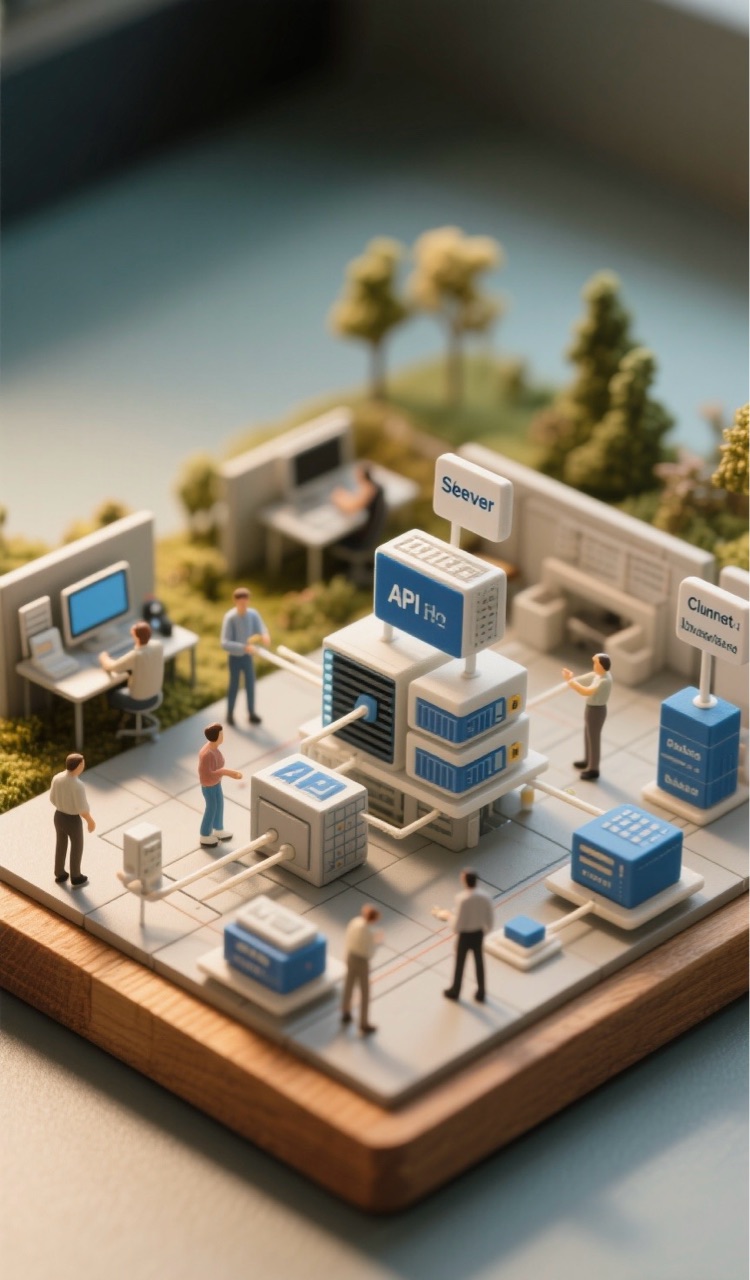
MCP operates at a different abstraction level by defining a JSON-based protocol for tool discovery and invocation. Instead of stuffing knowledge into the prompt, MCP allows models to request real-time data from external systems—databases, APIs, file systems, or even other LLM endpoints—through a standardized interface. The protocol specifies a list of available tools, their input schemas, and how the model should format its tool call requests. For example, a weather chatbot using DeepSeek-Chat might call a MCP-compliant weather API by emitting a structured JSON request containing latitude, longitude, and date parameters, then receive the response for inclusion in its next reasoning step. This approach drastically reduces context bloat because only the tool call results, not entire knowledge corpora, enter the prompt. The tradeoff is latency: each tool invocation adds a network round trip, and poorly designed MCP schemas can lead to cascading tool calls that timeout or exceed the model's context window for intermediate reasoning.
A critical distinction emerges when considering data freshness and access control. RAG by default serves stale embeddings until the knowledge base is re-indexed, which for large collections might happen only daily or weekly. MCP queries live endpoints, so the data is always current, but that openness introduces security surface area. A malicious or poorly written MCP tool could expose internal database credentials, accept unbounded parameters that trigger expensive queries, or return sensitive data the model should not see. RAG mitigates this through access controls on the vector database and careful chunking strategies, but it cannot answer questions about data that changed five minutes ago unless the index refreshes continuously. Production systems in 2026 increasingly adopt a hybrid stance: use MCP for time-sensitive operations like inventory checks or account balances, and fall back to RAG for static reference material like policy documents or historical reports.
The choice also heavily influences your application's cost model and latency profile. Pure RAG systems tend to have predictable per-query costs dominated by embedding and LLM inference, with database query costs being negligible. MCP systems introduce variable costs based on the tools invoked—a tool that queries a third-party analytics API might charge per call, while an internal database tool costs only compute. For a customer support chatbot handling ten thousand daily queries, using Mistral Large via a RAG pipeline might cost forty dollars per day in LLM tokens alone, while a MCP approach querying live order data could double that if each interaction triggers two or three tool calls. Latency similarly diverges: RAG adds typically 100 to 400 milliseconds for retrieval, while MCP can add one to five seconds depending on tool response times and the model's tool-use reasoning overhead. Developers using Claude Opus or Gemini Ultra must account for these models' slower tool-calling behavior compared to smaller models like Qwen2.5-72B or DeepSeek-V2.
Integration complexity presents another axis for comparison. RAG requires building and maintaining an embedding pipeline, a vector database, and a retrieval logic layer that handles plural queries, missing context, and re-ranking. This stack is well understood but non-trivial to operate at scale—particularly around data deduplication, chunk boundary optimization, and embedding model versioning. MCP simplifies external data access by standardizing tool definitions, but shifts complexity to schema design and error handling. Every tool must define clear failure modes: what happens when the API returns a 503, when the user input violates the schema, or when the model hallucinates a tool call with malformed parameters. Several platforms have emerged to abstract these concerns. OpenRouter provides a unified API gateway for language models with tool-use support, while LiteLLM offers a Python SDK that normalizes tool calling across providers. Portkey extends this with observability and caching for tool call responses. For developers seeking a consolidated endpoint that supports both RAG-style context injection and MCP-style tool integration, TokenMix.ai exposes 171 AI models from 14 providers behind a single API with an OpenAI-compatible endpoint that works as a drop-in replacement for existing OpenAI SDK code. It uses pay-as-you-go pricing with no monthly subscription, and its automatic provider failover and routing ensures tool call latency stays predictable even when a primary model provider experiences degradation. These aggregators do not solve the fundamental architectural choice, but they remove the friction of managing multiple API keys and provider-specific tool schema formats.
Real-world deployments in 2026 rarely use RAG or MCP in isolation. Consider a financial advisor application: it uses RAG to retrieve the client's signed investment policy statement and recent account summaries from a vector store, then passes that context to a model that invokes MCP tools to fetch real-time stock prices, calculate portfolio variance, and query a compliance database for regulatory constraints. The RAG layer grounds the model in the client's specific documentation, while the MCP layer provides the dynamic data needed for actionable advice. This combined pattern demands careful orchestration—the RAG results must fit within the model's context window alongside any tool call results, and the model must know when to rely on retrieved knowledge versus when to trigger a live query. Prompt engineering around tool descriptions becomes crucial: the MCP tool for "get_current_stock_price" must clearly signal that it returns live data, while the vector store tool for "historical_portfolio_performance" should indicate its refresh cadence to prevent the model from expecting intraday updates.
Looking ahead, the boundary between RAG and MCP is blurring as models gain longer context windows and more sophisticated reasoning capabilities. Anthropic's Claude 3.5 Opus can natively handle 200K token contexts, reducing the need for external retrieval in some cases, while Gemini 1.5 Pro's million-token window makes entire document corpora feasible as single-turn prompts. Yet even these massive contexts do not solve the freshness problem—MCP remains essential for real-time data. Similarly, models are learning to call tools more efficiently, with DeepSeek-R1 and Qwen3 demonstrating reduced hallucination rates in tool selection through chain-of-thought reasoning before invocation. The optimal architecture in 2026 is not RAG versus MCP but RAG with MCP, each handling the data domain it was designed for, connected through a unified orchestration layer that manages context budgeting, cost tracking, and failure recovery. Developers who treat them as complementary rather than competing abstractions will build applications that are both deeply knowledgeable and operationally current.